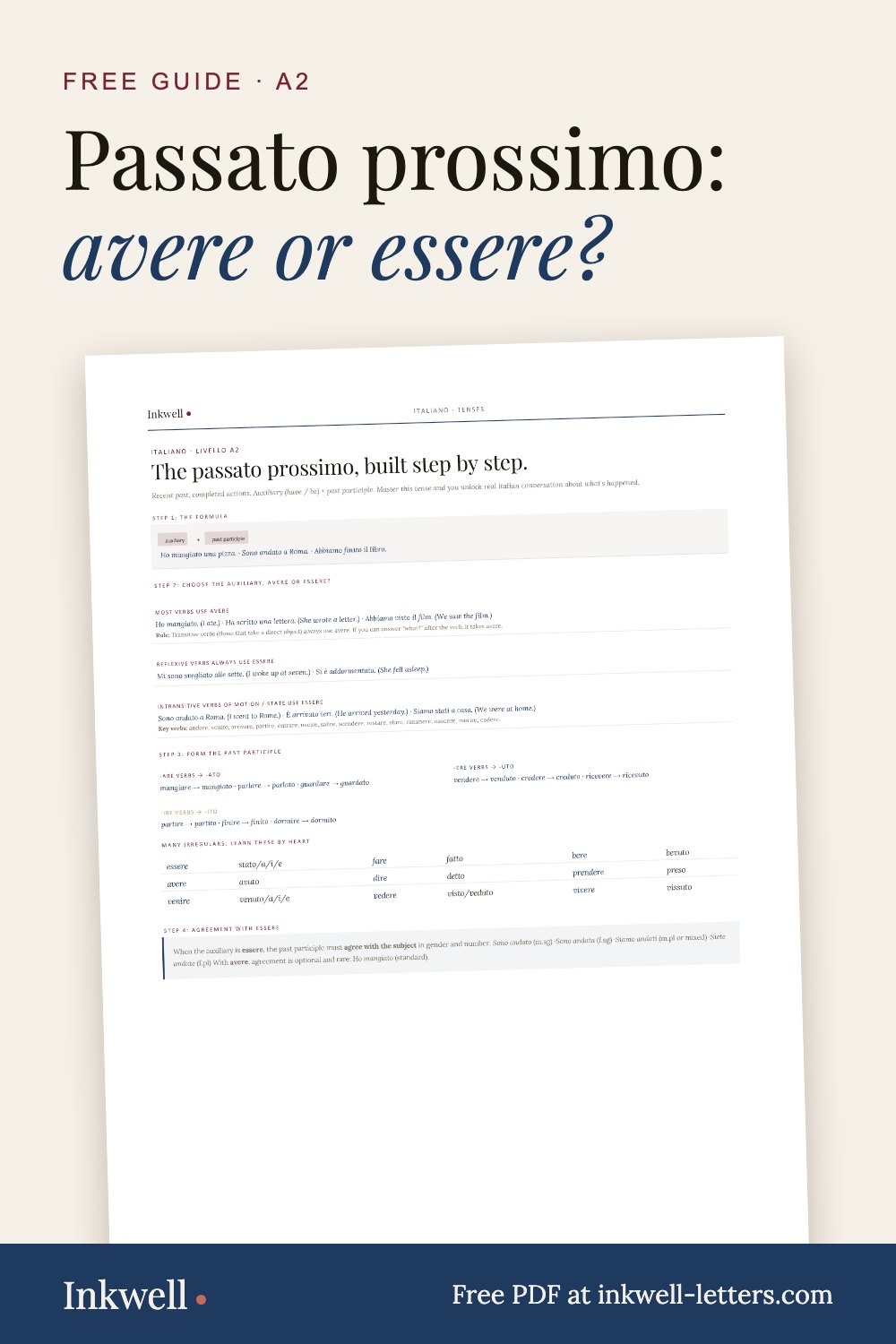
Printable PDF · Italian · A2
The Passato Prossimo, Built Step by Step
A free A2 guide to the Italian passato prossimo in three steps: the formula, choosing avere or essere, and forming the past participle, with the irregular participles to learn by heart.
Leave your email once and every worksheet on the Dispatch unlocks on this device. We’ll also send you new worksheets and articles. Unsubscribe at any time.
The passato prossimo is the tense Italians use to tell you what happened: ho mangiato, sono andata, abbiamo finito. It’s built from two pieces, and once you can choose the right auxiliary, you can talk about your week, your trip and your last letter.
What’s inside
- Step 1, the formula: auxiliary (avere or essere) + past participle
- Step 2, choosing the auxiliary: most verbs take avere; reflexive verbs and verbs of motion or change of state take essere, with the key list (andare, venire, arrivare, partire, uscire, restare, nascere...)
- Step 3, the past participle: -are > -ato, -ere > -uto, -ire > -ito
- The irregulars to learn by heart: stato, fatto, bevuto, detto, preso, visto, vissuto and more
How to use it
- Ask “what?” after the verb. If there’s an answer (ho mangiato... una pizza), it takes avere.
- With essere, remember that the participle agrees: sono andato, sono andata, siamo andati.
- Write five sentences about what you did yesterday, mixing both auxiliaries.
- Learn three irregular participles a day until the list is automatic.
An example in Italian
Sabato sono andata al mercato, ho comprato i carciofi e la sera ho cucinato per i miei amici.
(On Saturday I went to the market, bought artichokes, and in the evening I cooked for my friends.)
Sono andata takes essere and agrees with a female speaker; ho comprato and ho cucinato take avere.
Who it’s for
A2 learners meeting the past for the first time, and B1 learners who still hesitate between ho and sono. Letters are full of “what happened since I last wrote”, so this is the tense you’ll use most. To practice it with a native teacher, you can learn Italian by letter.
More Italian grammar
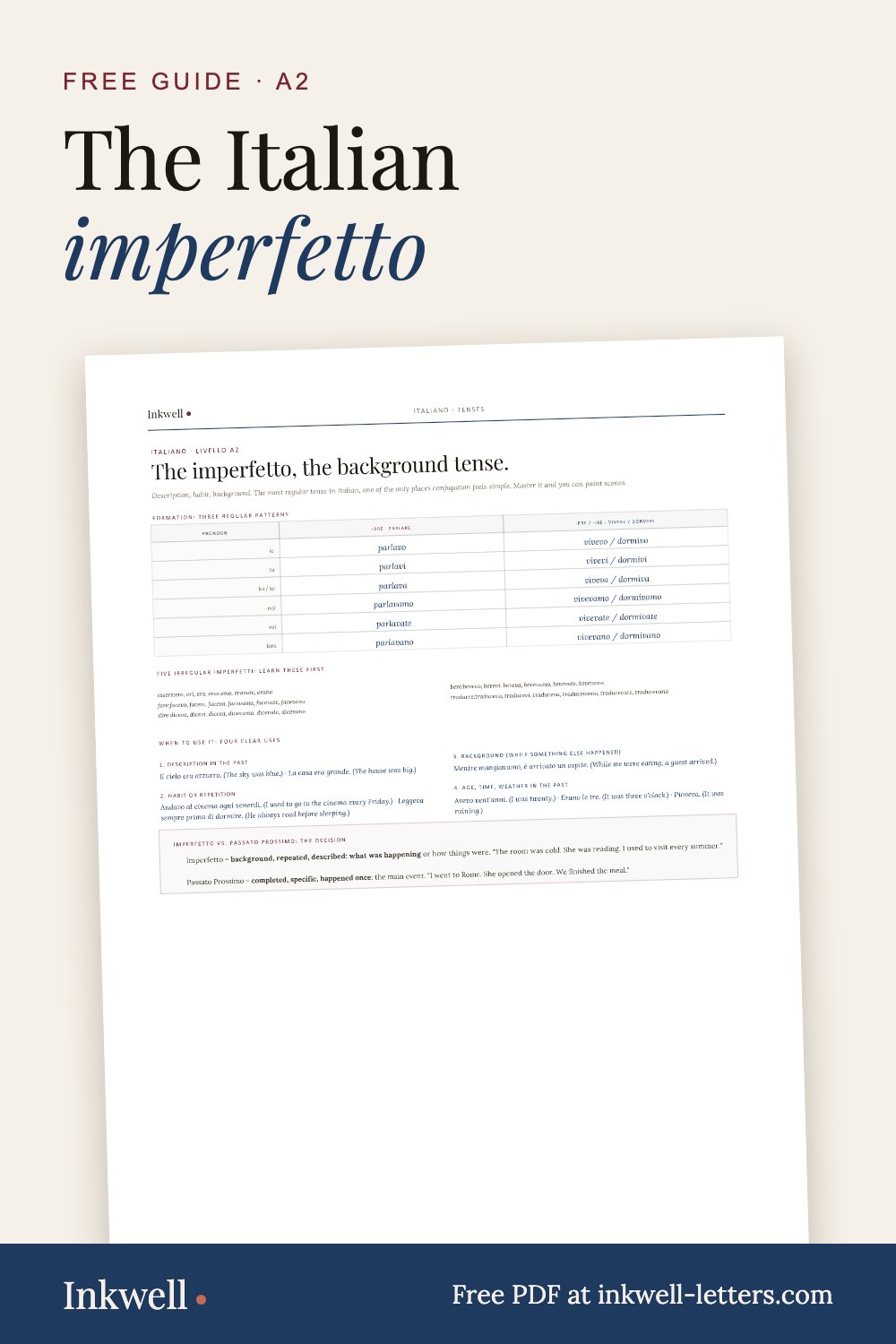 The Imperfetto: Italian's Background TenseGuide, Italian
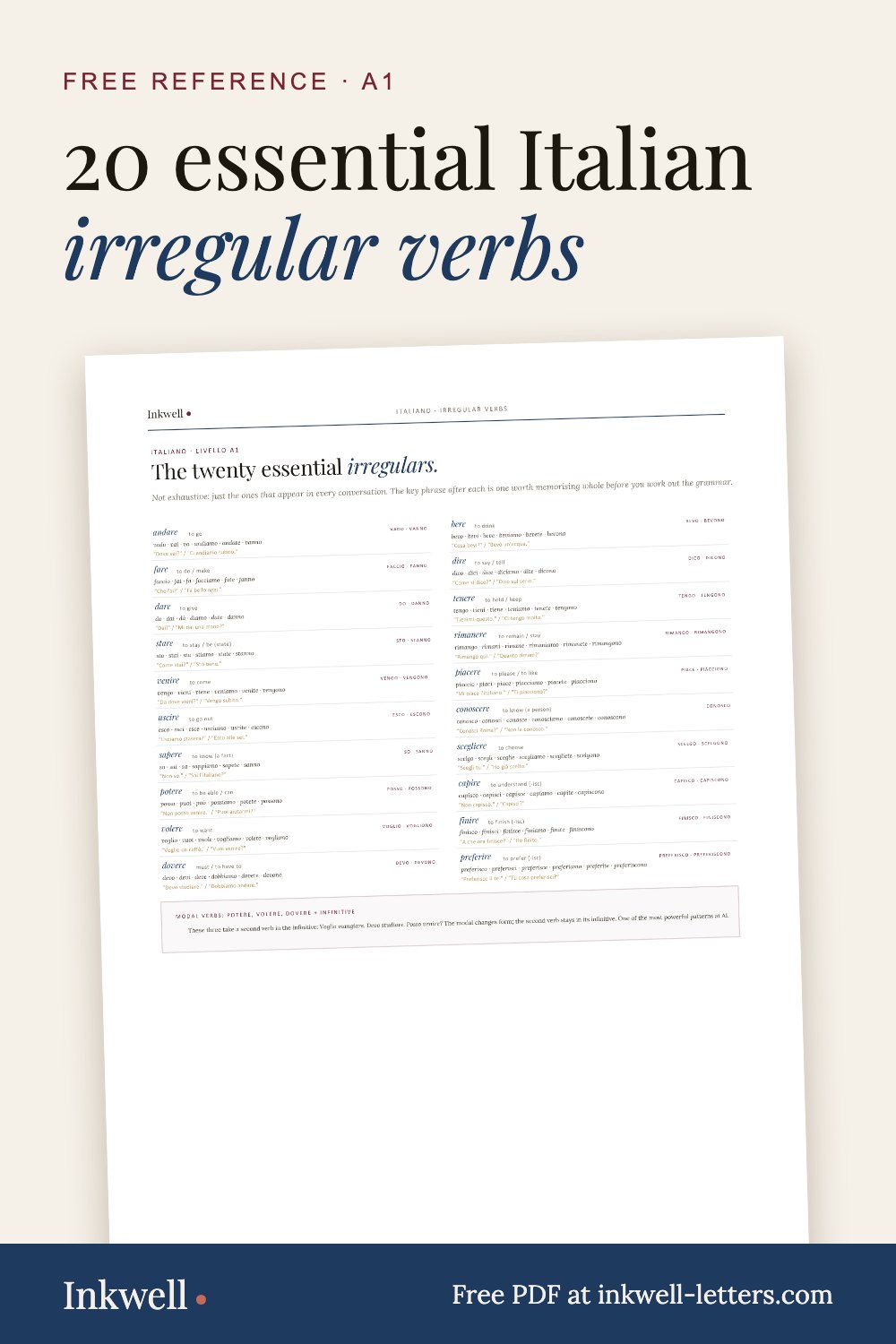 The Twenty Essential Italian Irregular VerbsReference, Italian
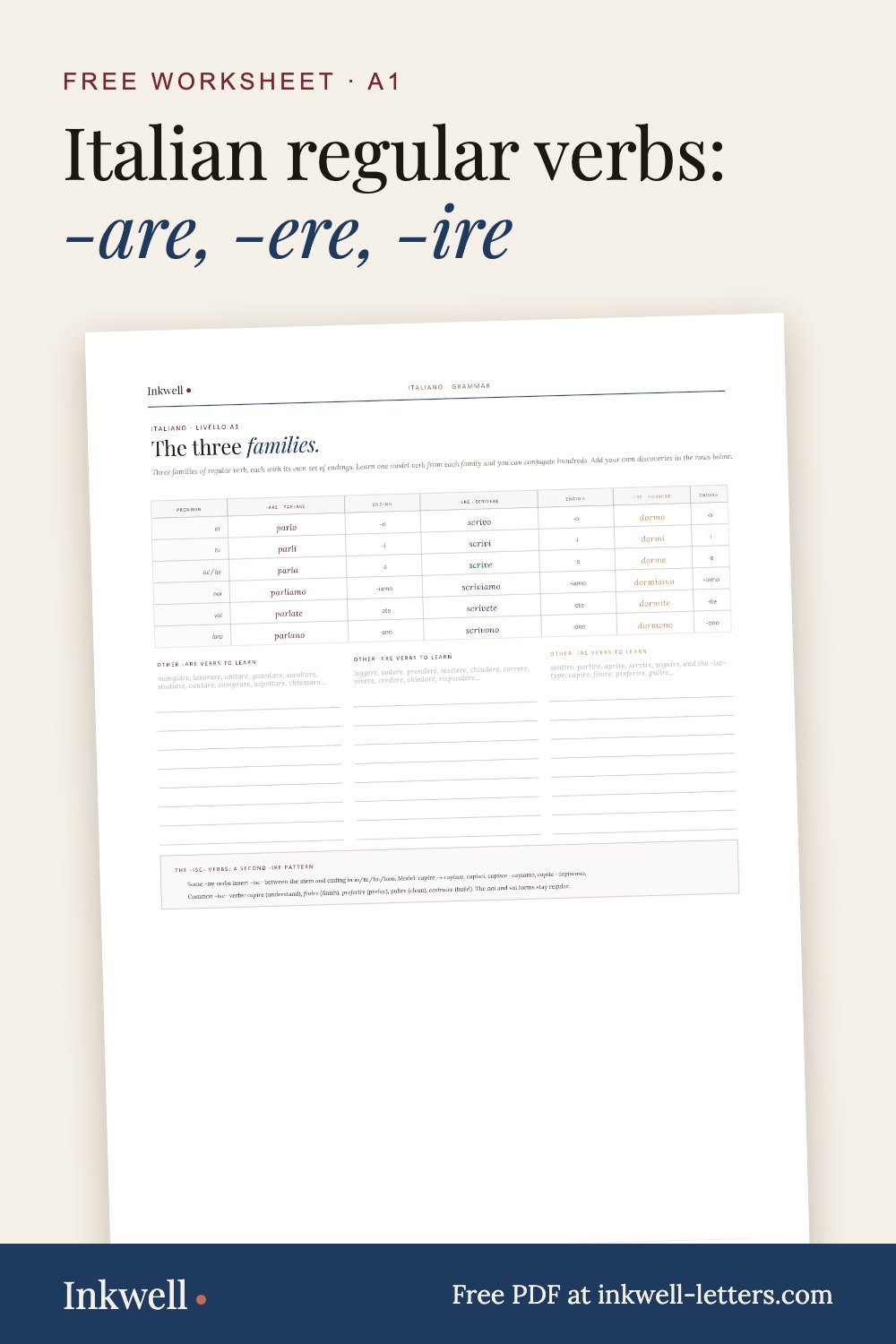 Italian Regular Verbs: The Three Families (-are, -ere, -ire)Worksheet, Italian
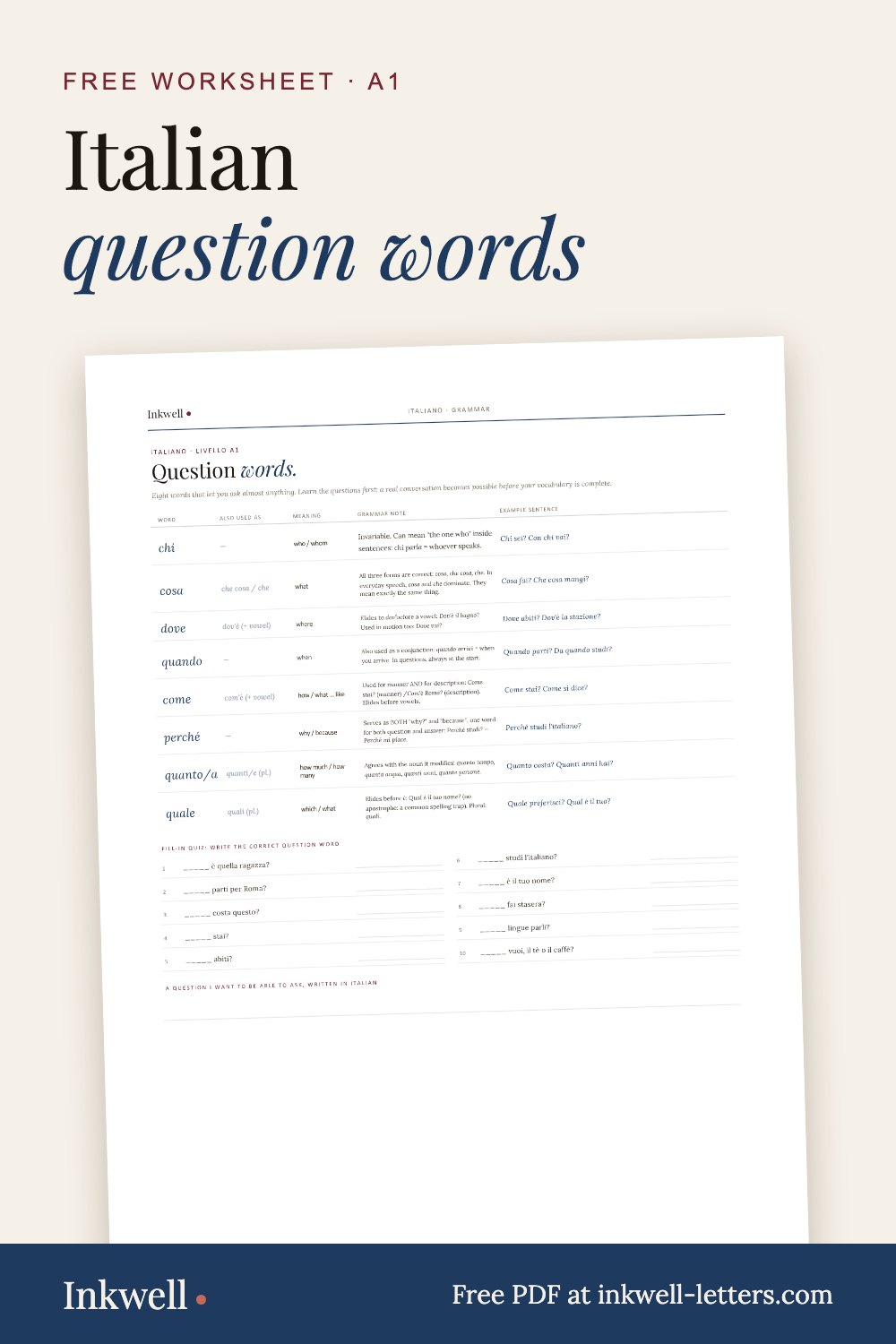 Italian Question Words: Chi, Cosa, Dove, Quando and MoreWorksheet, Italian
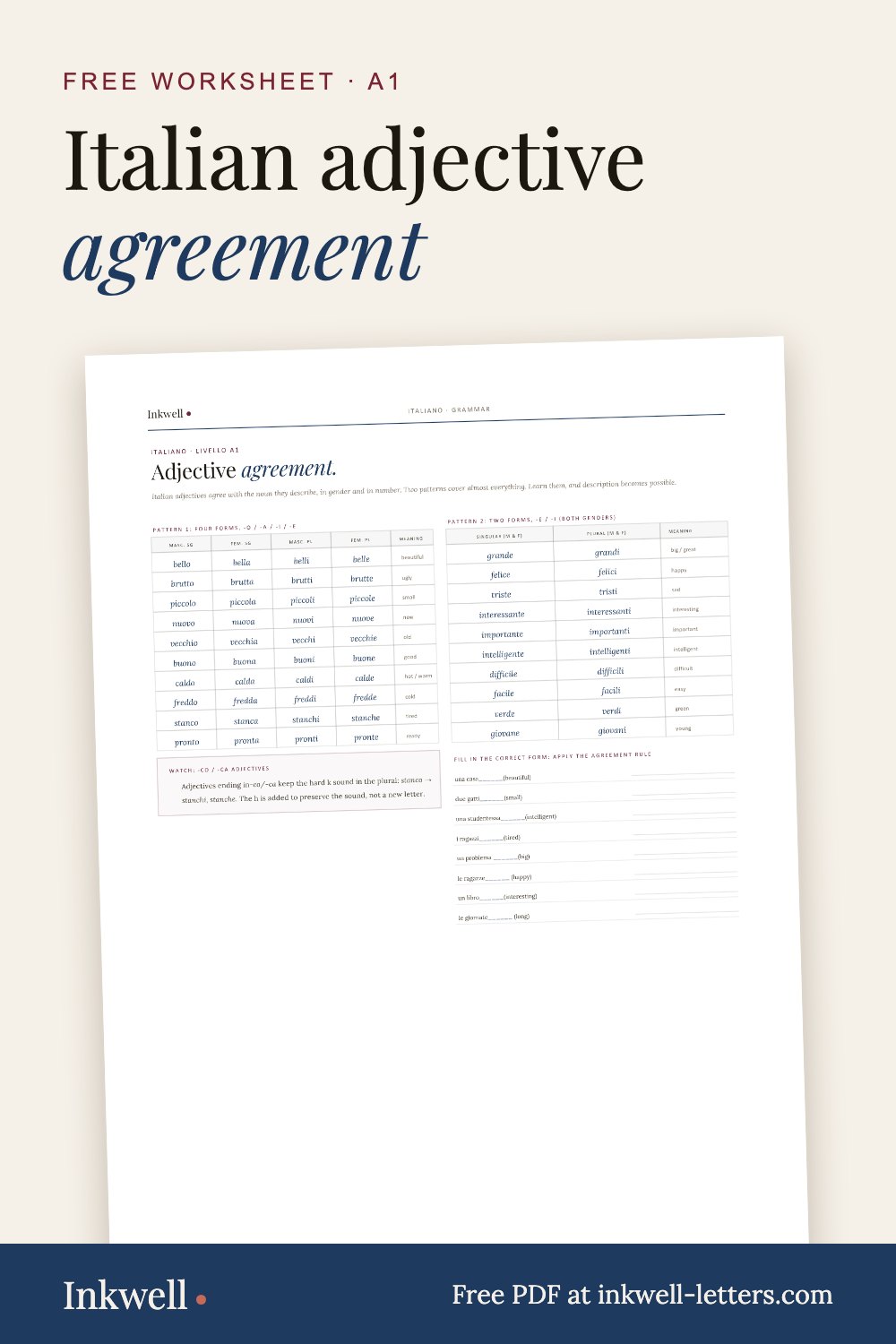 Italian Adjective Agreement: Two Patterns That Cover Almost EverythingWorksheet, Italian