Printable PDF · Italian · A1
Italian Regular Verbs: The Three Families (-are, -ere, -ire)
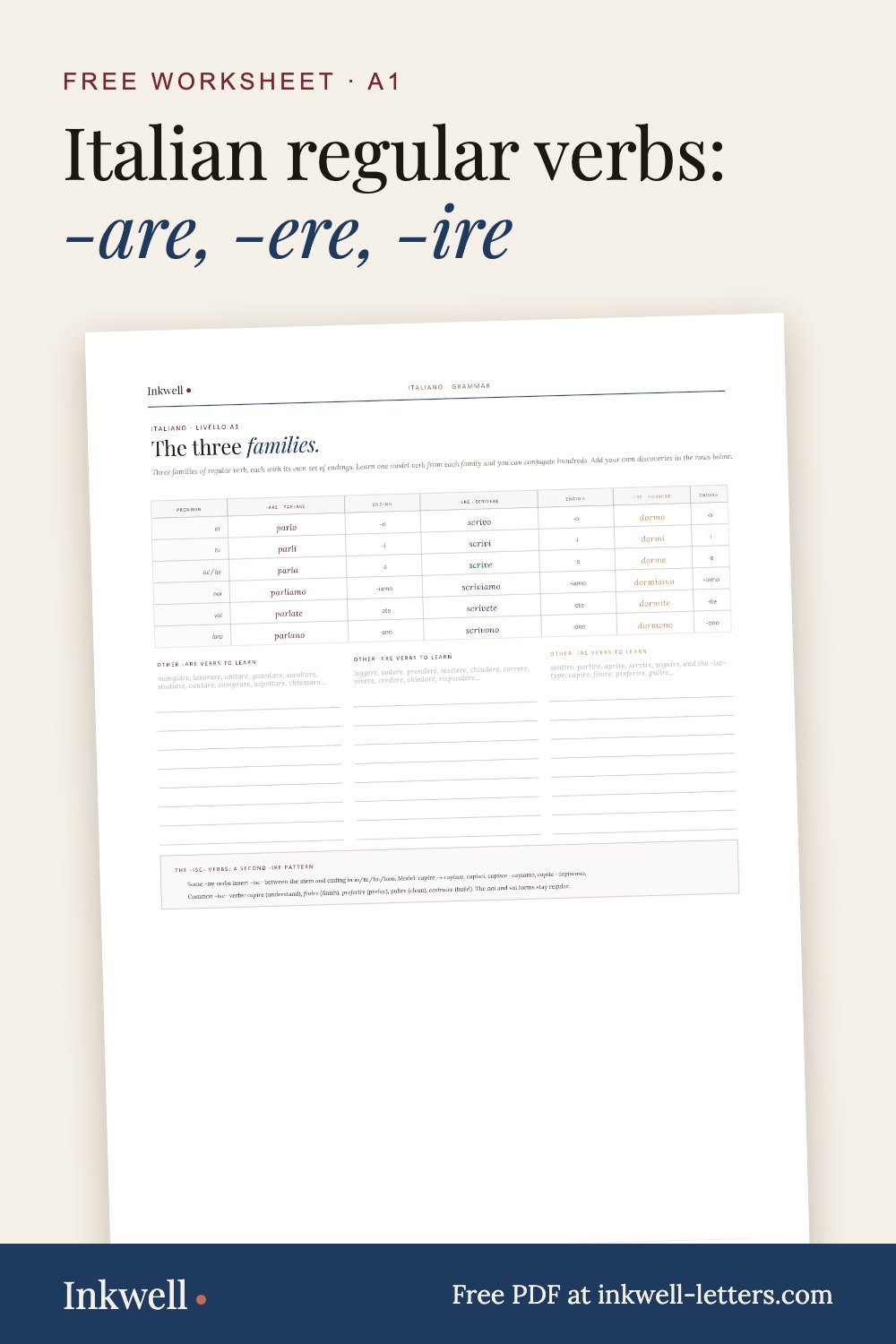
A free A1 worksheet on Italian regular verbs in the present tense: parlare, scrivere and dormire as models for the -are, -ere and -ire families, plus the -isc- verbs like capire and finire.
Leave your email once and every worksheet on the Dispatch unlocks on this device. We’ll also send you new worksheets and articles. Unsubscribe at any time.
Every regular Italian verb belongs to one of three families, recognizable by its ending: -are, -ere or -ire. Learn one model verb from each family and you can conjugate hundreds of others in the present tense.
What’s inside
- A side-by-side table of parlare, scrivere and dormire with the endings highlighted
- Rows to add your own -are, -ere and -ire verbs as you meet them
- A box on the -isc- verbs, a second -ire pattern: capire > capisco, capisci, capisce, capiamo, capite, capiscono
- The common -isc- verbs: capire, finire, preferire, pulire, costruire
How to use it
- Conjugate each model verb aloud, then write it out from memory.
- Notice what the families share: the noi form always ends in -iamo.
- Add three new verbs to each family from your reading this week.
- Test yourself with an -isc- verb, the most common source of errors at A1.
An example in Italian
Io scrivo lettere la domenica, mio marito legge il giornale e i bambini dormono fino a tardi.
(I write letters on Sundays, my husband reads the newspaper and the children sleep in.)
Three families in one sentence: scrivo (-ere), legge (-ere) and dormono (-ire).
Who it’s for
A1 learners meeting Italian verbs for the first time, and anyone who wants a clean one-page reference. Present-tense verbs carry most of a beginner’s letter. To use them with a native teacher, you can learn Italian by letter.
More Italian grammar
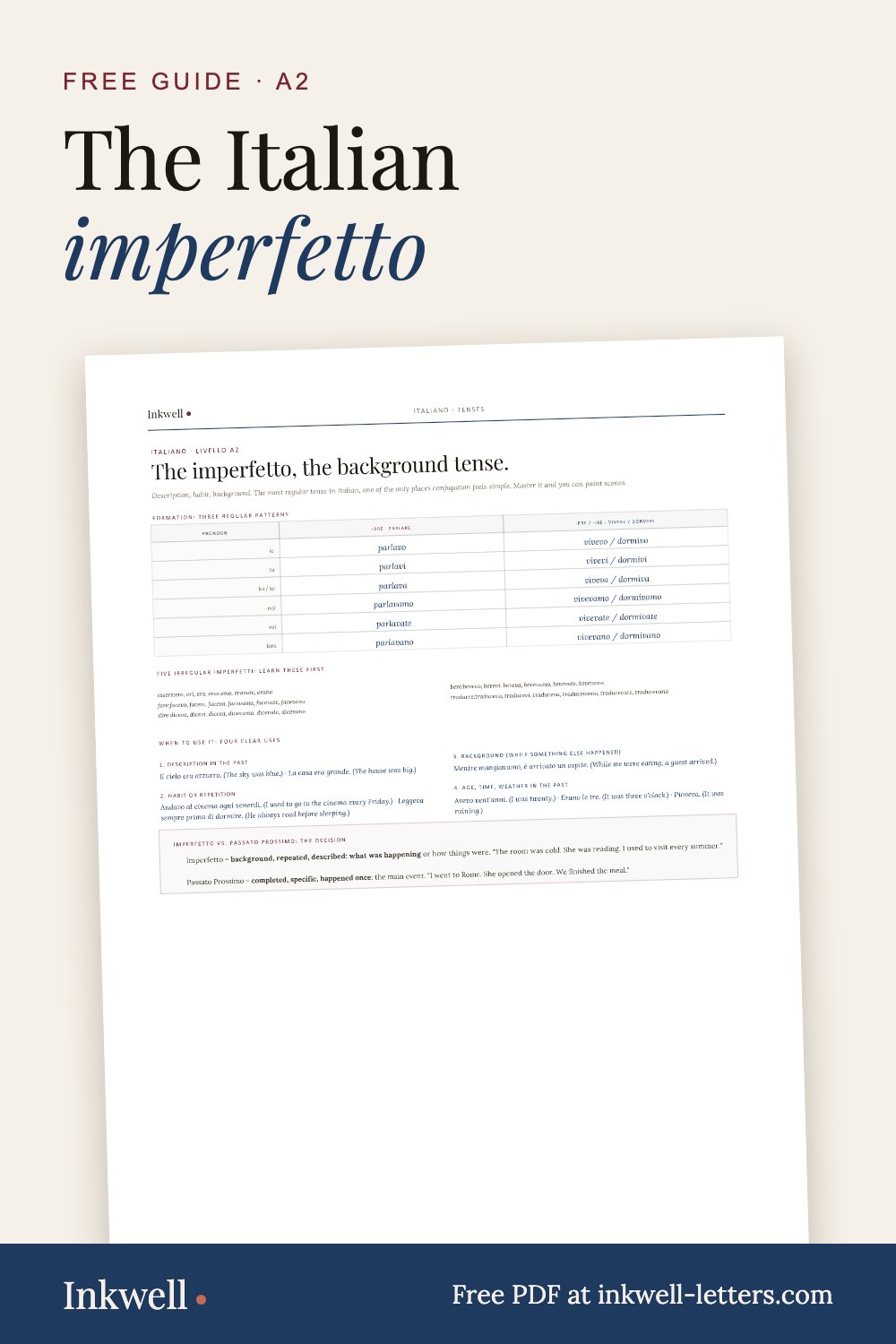 The Imperfetto: Italian's Background TenseGuide, Italian
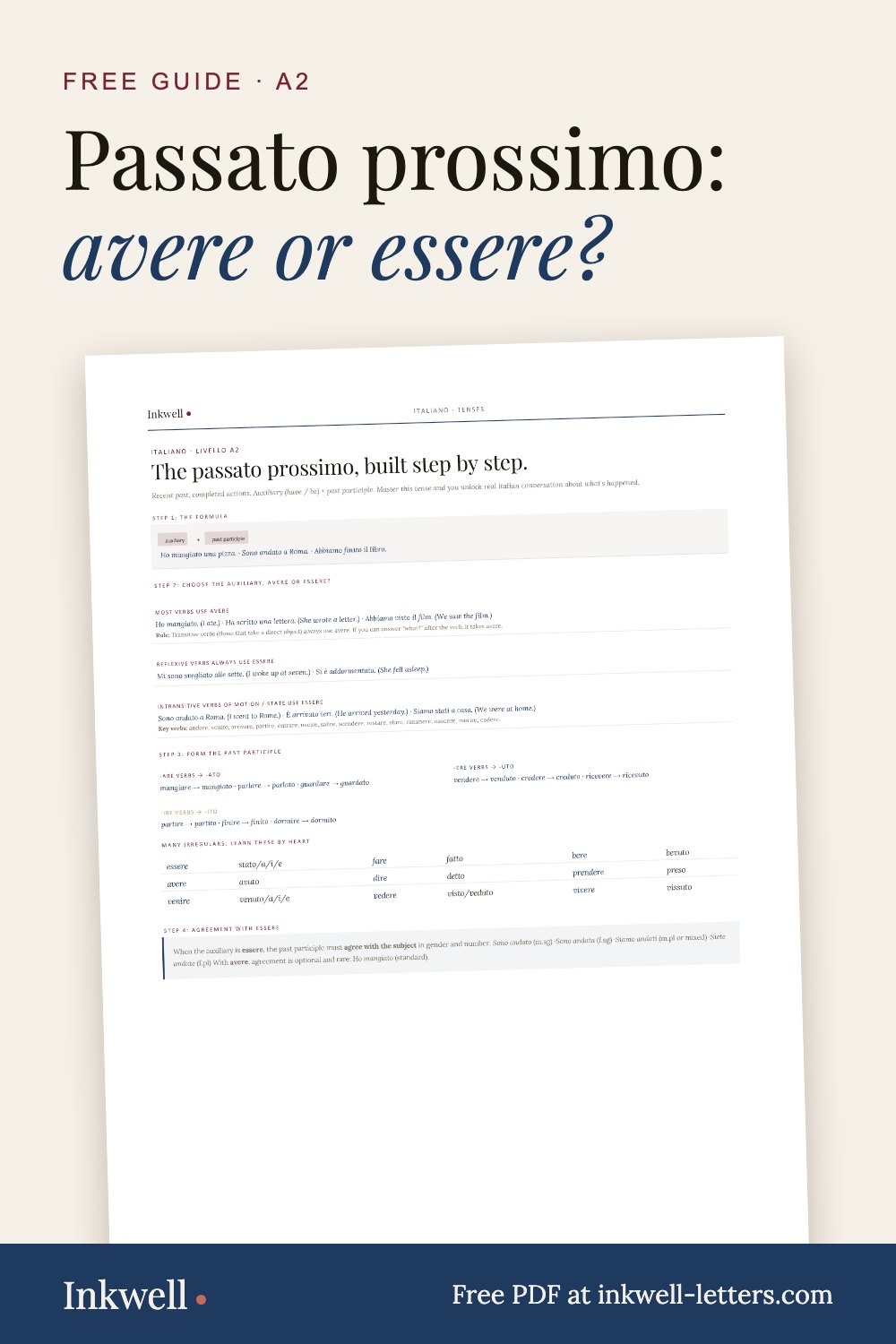 The Passato Prossimo, Built Step by StepGuide, Italian
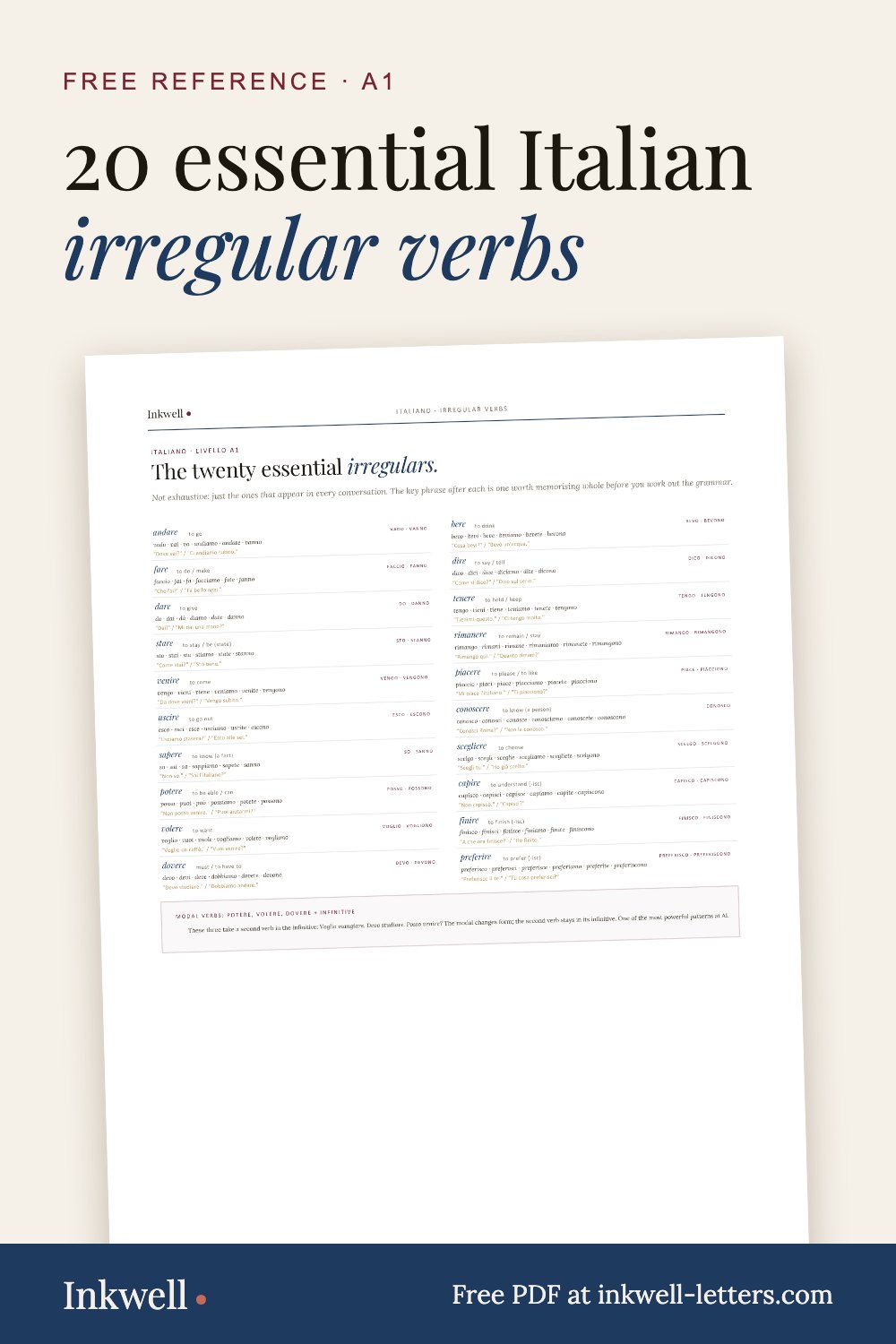 The Twenty Essential Italian Irregular VerbsReference, Italian
 Italian Question Words: Chi, Cosa, Dove, Quando and MoreWorksheet, Italian
 Italian Adjective Agreement: Two Patterns That Cover Almost EverythingWorksheet, Italian