Printable PDF · Italian · A1
Italian Adjective Agreement: Two Patterns That Cover Almost Everything
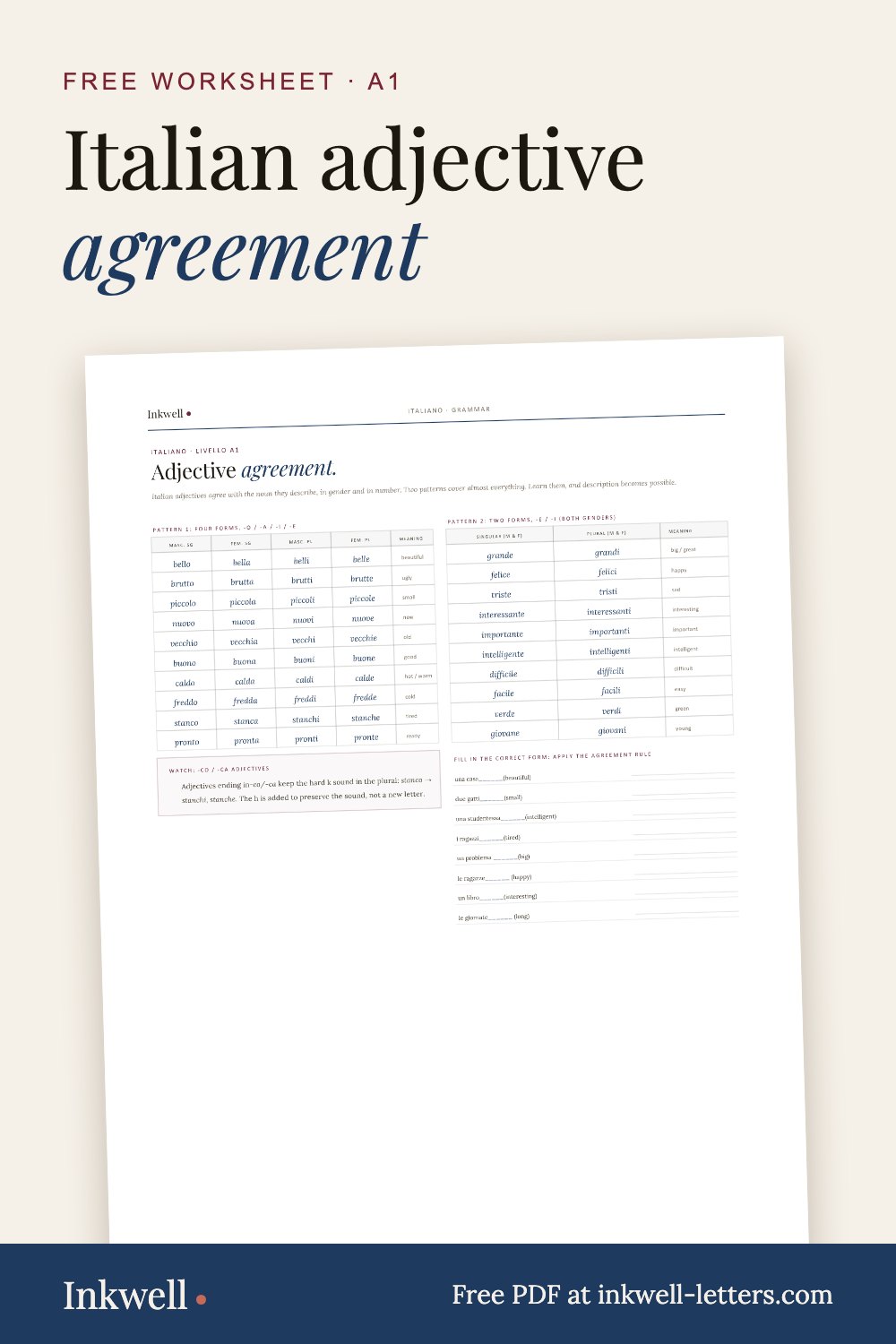
A free A1 worksheet on Italian adjective agreement: the four-form -o/-a/-i/-e adjectives, the two-form -e/-i adjectives, twenty common examples and a fill-in exercise.
Leave your email once and every worksheet on the Dispatch unlocks on this device. We’ll also send you new worksheets and articles. Unsubscribe at any time.
In Italian an adjective changes its ending to match the noun it describes: un libro nuovo, una casa nuova, due libri nuovi, due case nuove. It sounds like a lot to remember, but two patterns cover almost every adjective you will meet at A1 and A2.
What’s inside
- Pattern 1, four forms: ten common adjectives like bello, piccolo, nuovo, vecchio, stanco in masculine and feminine, singular and plural
- A note on -co/-ca adjectives: why stanco becomes stanchi, with an h to keep the hard sound
- Pattern 2, two forms: ten adjectives like grande, felice, difficile, giovane that use -e in the singular and -i in the plural for both genders
- A fill-in exercise of eight short phrases
How to use it
- Read Pattern 1 across each row aloud: bello, bella, belli, belle.
- Notice that Pattern 2 only has two endings. Many learners overcomplicate it.
- Complete the exercise, then write three sentences describing your street or your home.
- Watch for the exceptions in Pattern 2 nouns: un problema grande keeps the masculine.
An example in Italian
La mia cucina è piccola ma luminosa, e le sedie sono vecchie e scomode.
(My kitchen is small but bright, and the chairs are old and uncomfortable.)
Who it’s for
A1 learners starting to describe people and places, and A2 learners who want to clean up their endings. Description is where letters come alive, so this is a good page to master early. To practice it with a native teacher, you can learn Italian by letter.
More Italian grammar
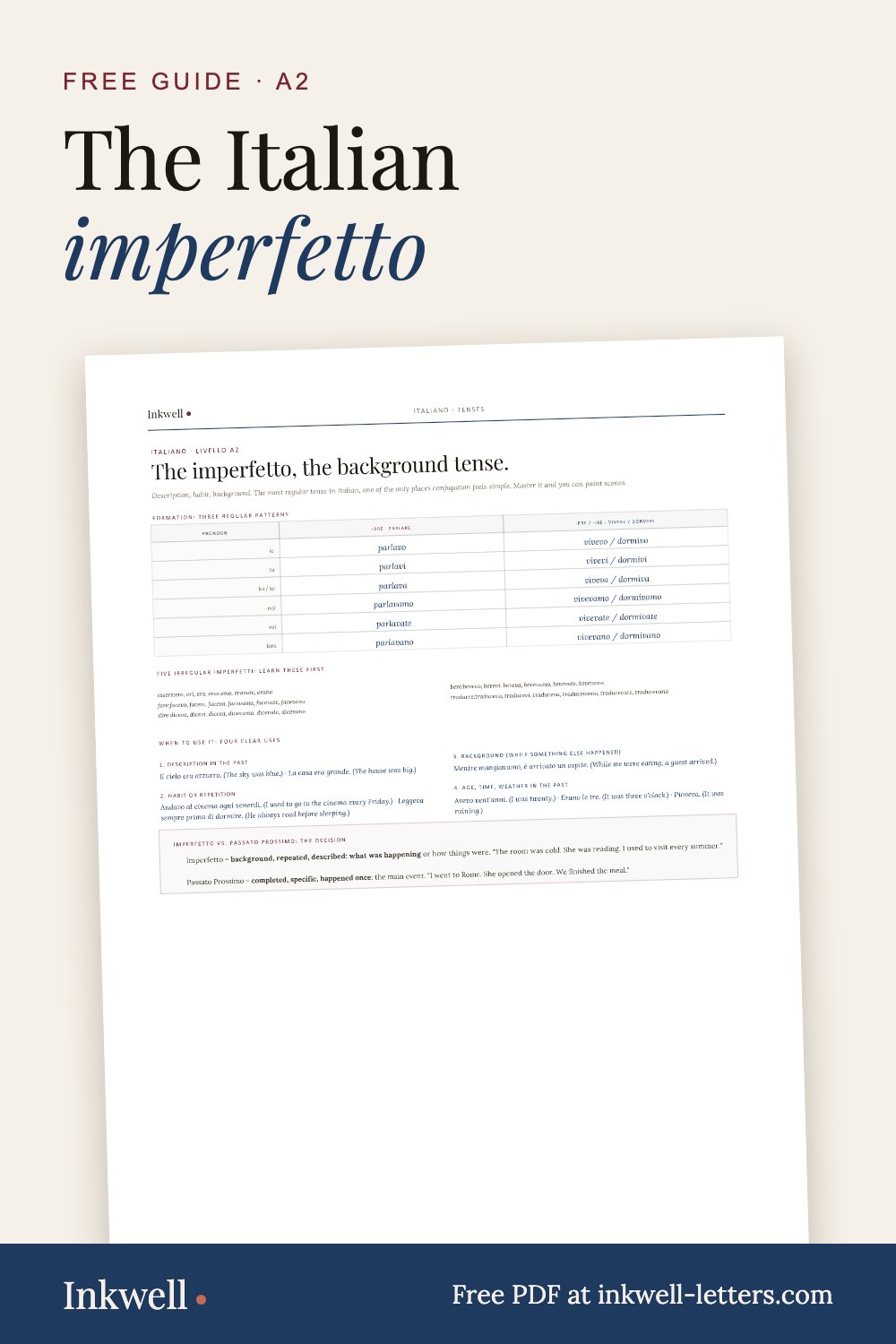 The Imperfetto: Italian's Background TenseGuide, Italian
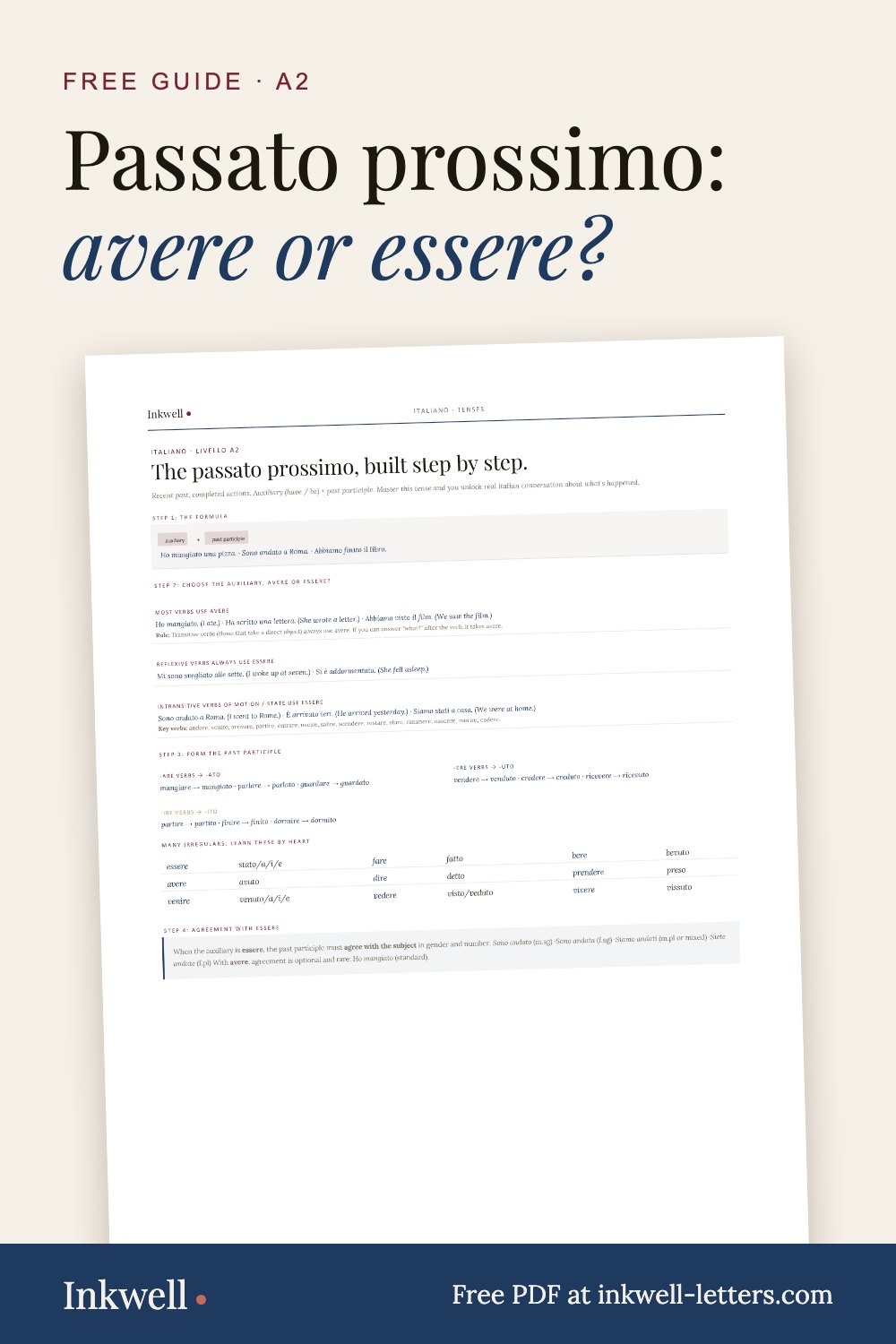 The Passato Prossimo, Built Step by StepGuide, Italian
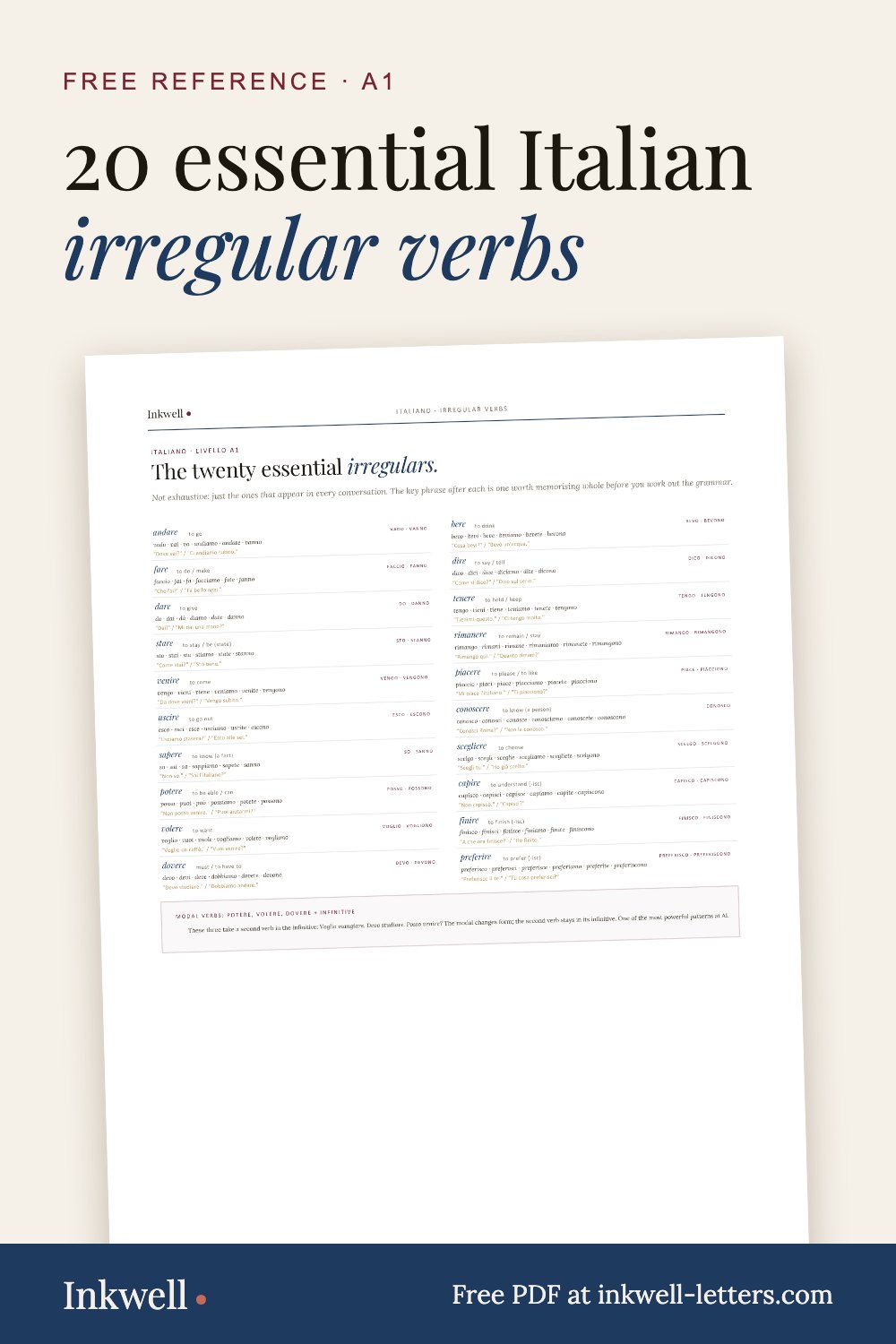 The Twenty Essential Italian Irregular VerbsReference, Italian
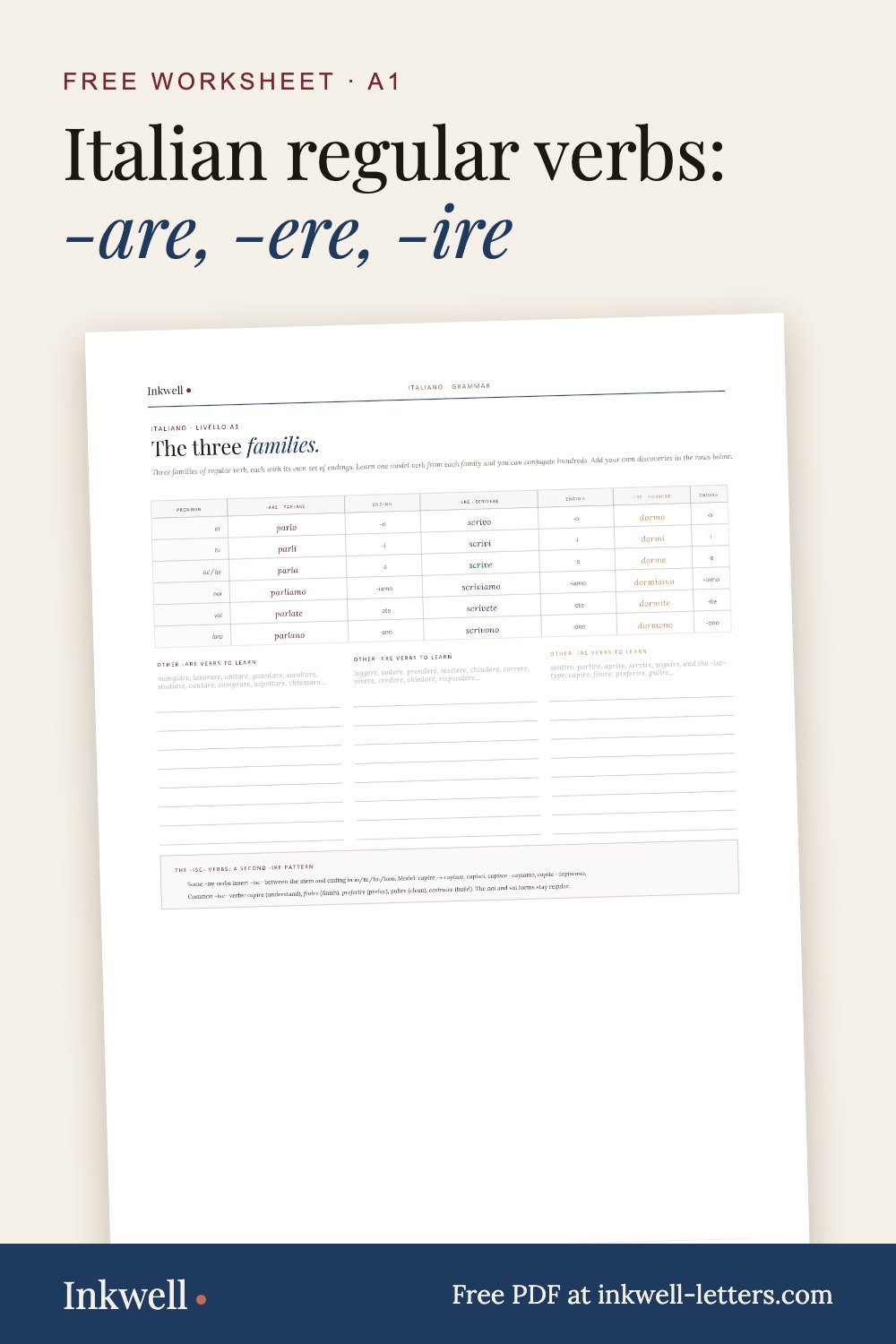 Italian Regular Verbs: The Three Families (-are, -ere, -ire)Worksheet, Italian
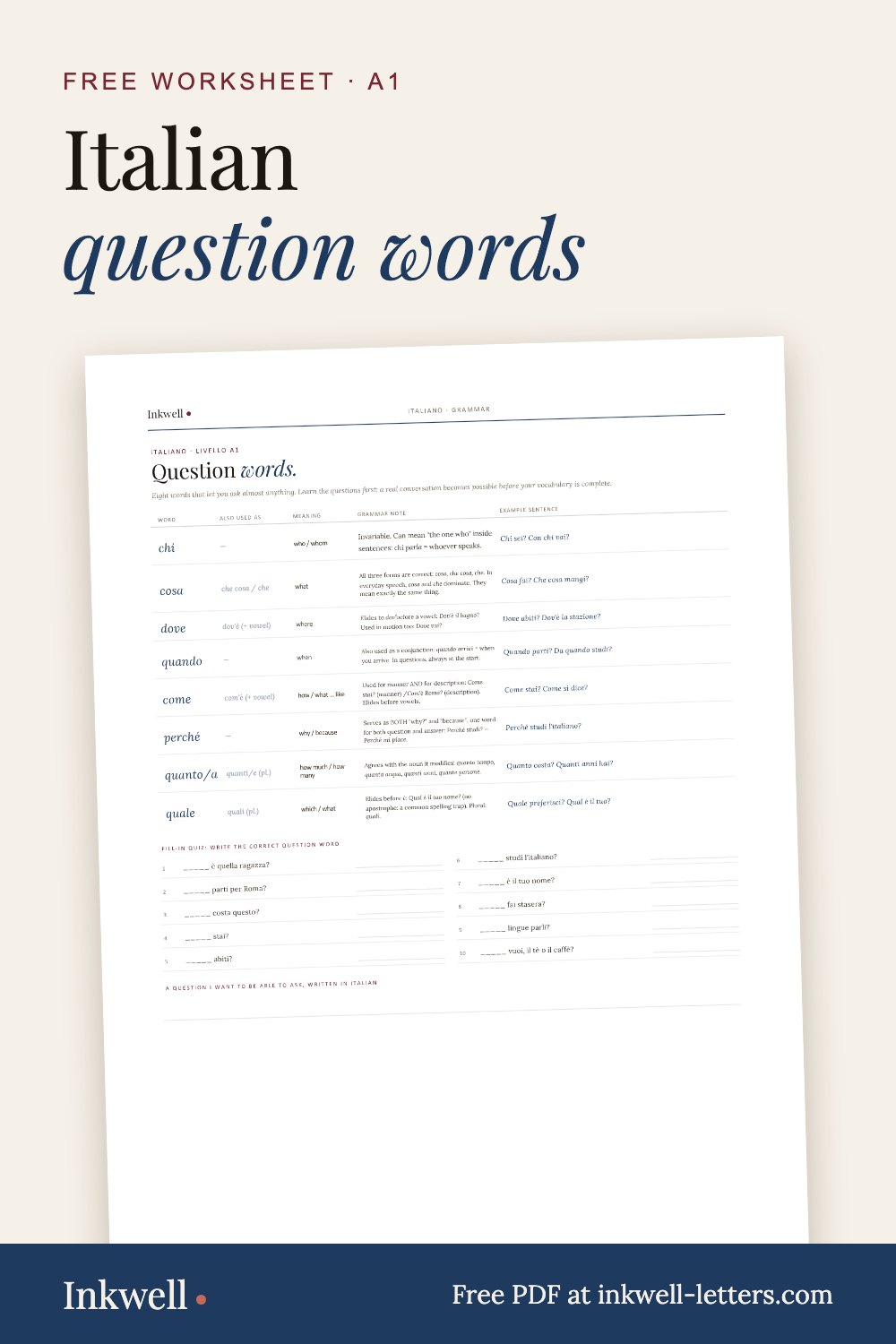 Italian Question Words: Chi, Cosa, Dove, Quando and MoreWorksheet, Italian