Printable PDF · Italian
The Twenty Essential Italian Irregular Verbs
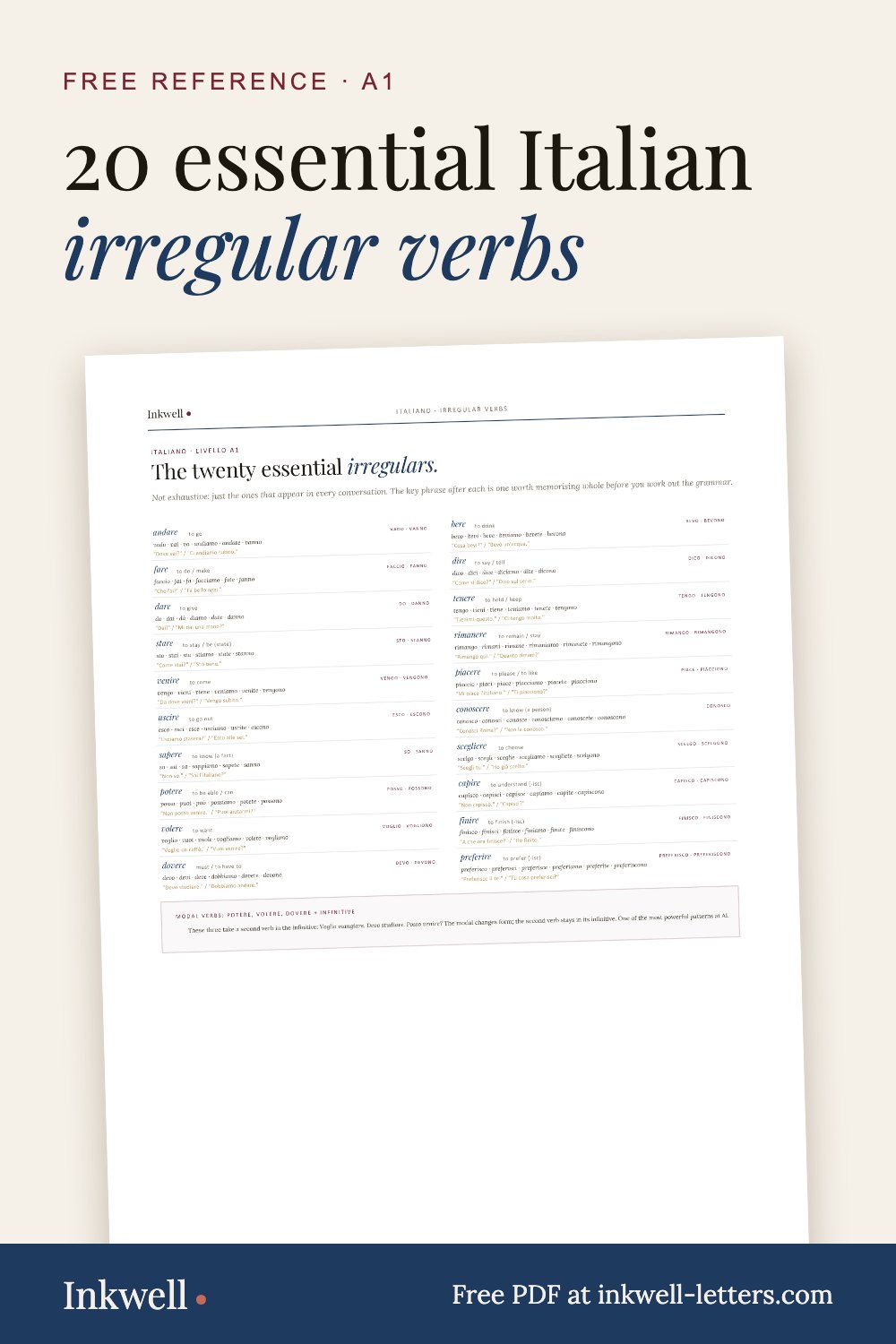
A free reference sheet of the twenty Italian irregular verbs you'll hear in every conversation, from andare and fare to volere and dovere, with full present-tense forms and a key phrase for each.
Leave your email once and every worksheet on the Dispatch unlocks on this device. We’ll also send you new worksheets and articles. Unsubscribe at any time.
The irregular verbs are the ones you need most: going, doing, wanting, being able to, having to. This sheet gives you the twenty that appear in almost every Italian conversation, each with its full present tense and a short phrase worth memorizing whole.
What’s inside
- Twenty verbs including andare, fare, dare, stare, venire, uscire, sapere, potere, volere, dovere, bere, dire, tenere, rimanere
- For each one: the meaning, the two forms to remember first (vado, vanno), the full conjugation and a key phrase
- Phrases you’ll hear every day: Dove vai? Che fai? Come stai? Non so. Mi dai una mano?
How to use it
- Learn the key phrases first, as whole units. The grammar follows.
- Group the verbs by pattern: vengo, tengo, rimango all take a -g- in the io form.
- Cover the conjugations and test yourself on five verbs a day.
- Use the modal verbs (potere, volere, dovere) to write three sentences about your week.
An example in Italian
Stasera non posso uscire: devo finire una lettera e voglio spedirla domani mattina.
(I can’t go out tonight: I have to finish a letter and I want to send it tomorrow morning.)
Three irregular modal verbs, one after another, each followed by an infinitive.
Who it’s for
A1 and A2 learners, and anyone who still hesitates over vengo or escono. If you’d like a native teacher to correct your verbs in real letters, you can learn Italian by letter.
More Italian grammar
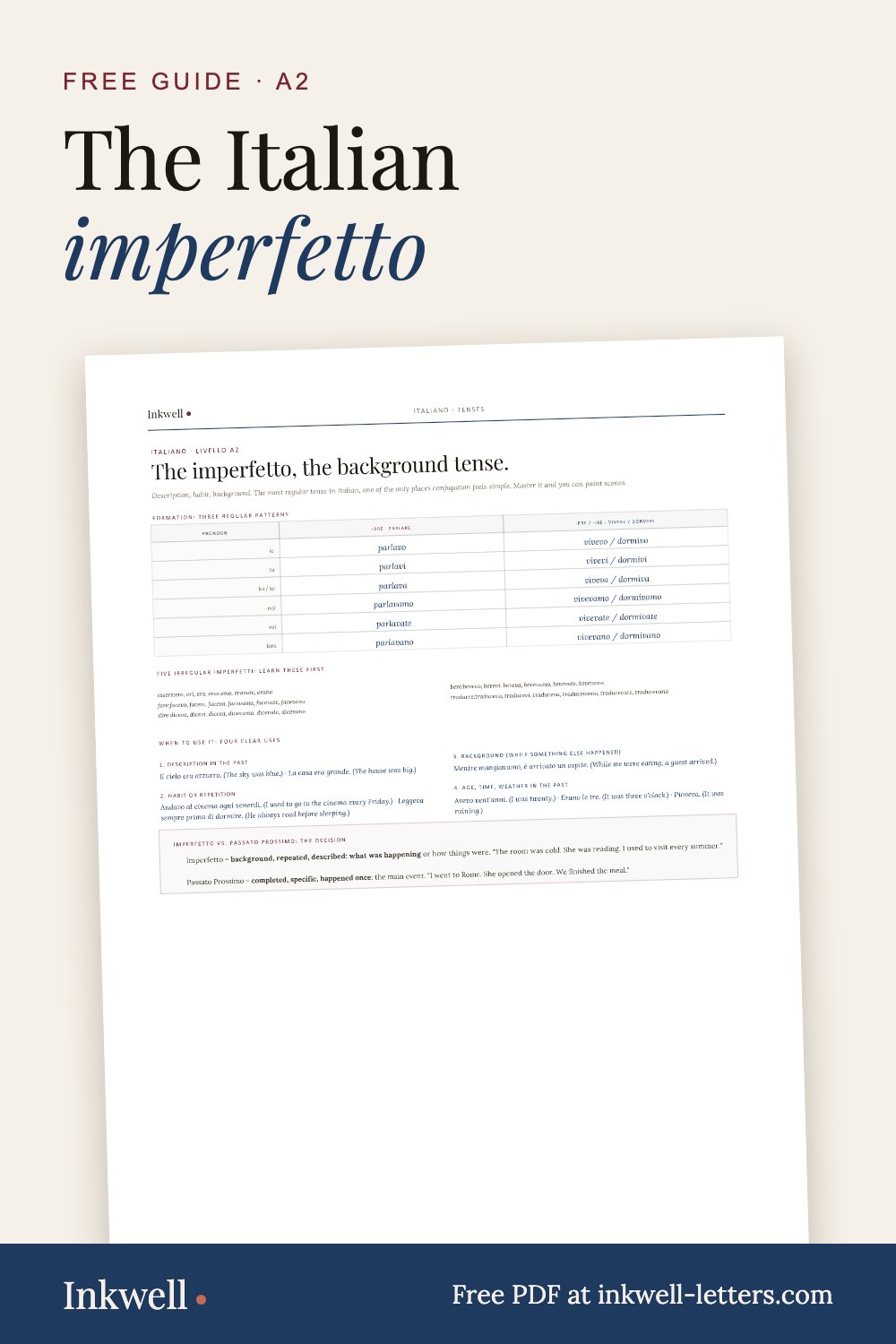 The Imperfetto: Italian's Background TenseGuide, Italian
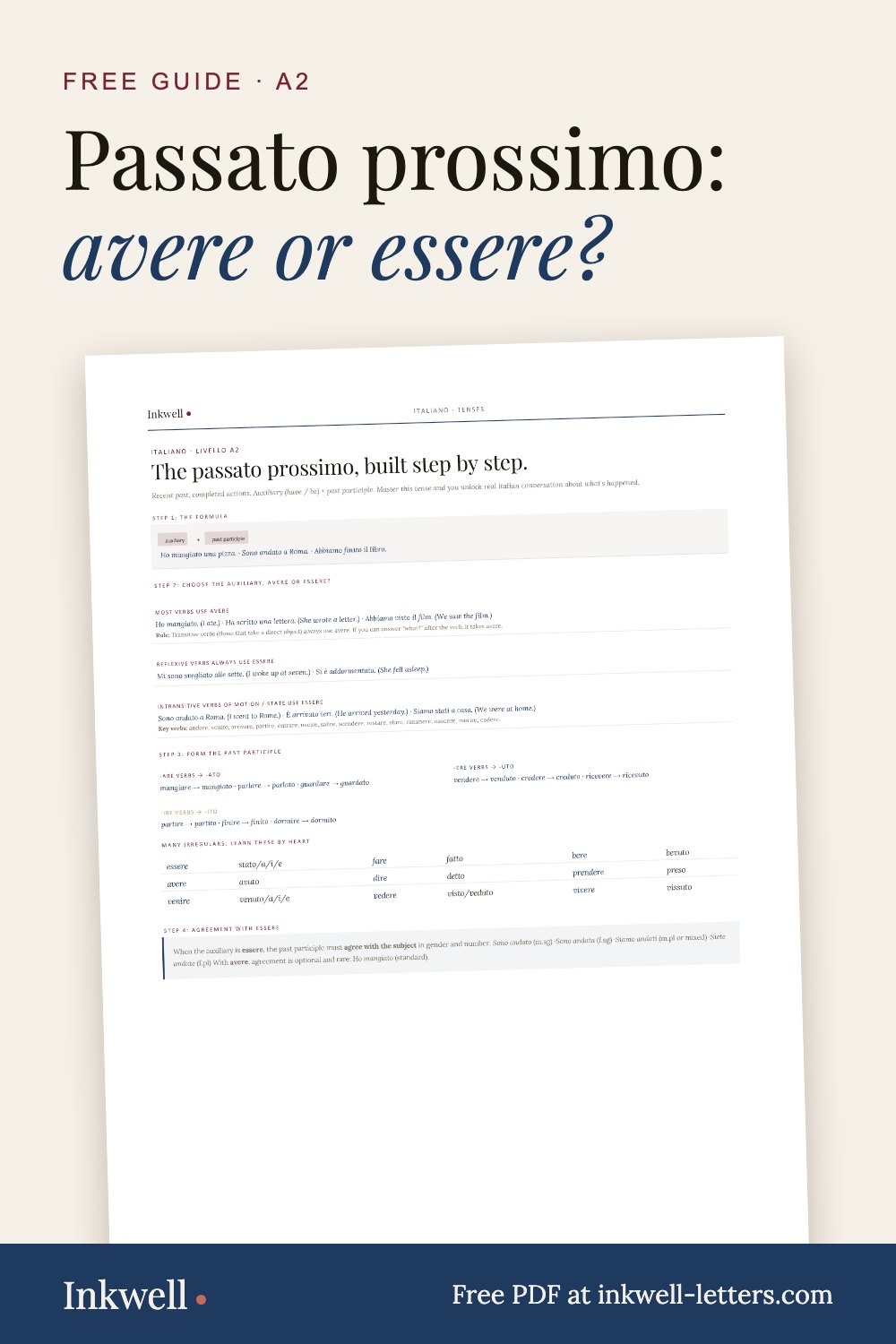 The Passato Prossimo, Built Step by StepGuide, Italian
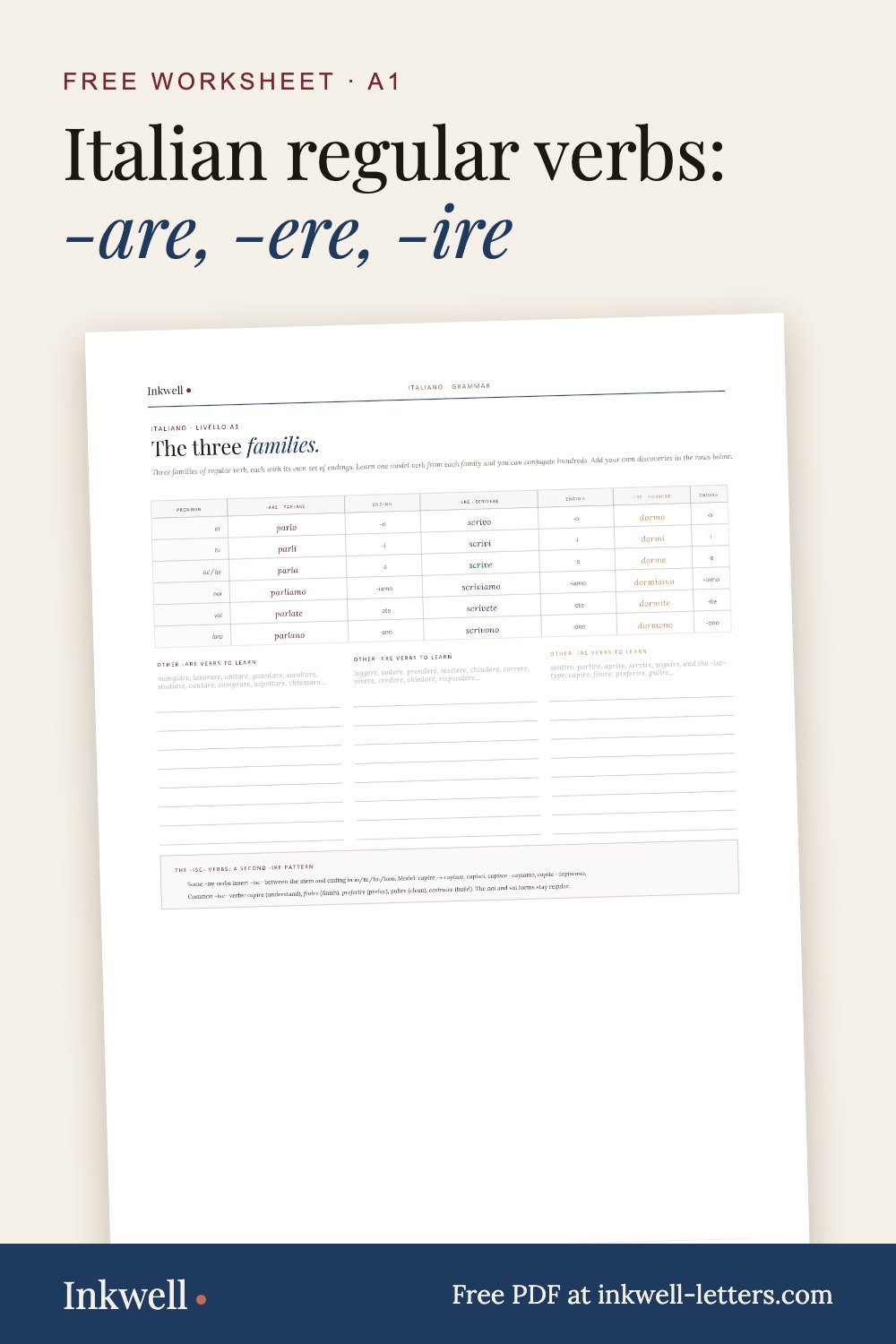 Italian Regular Verbs: The Three Families (-are, -ere, -ire)Worksheet, Italian
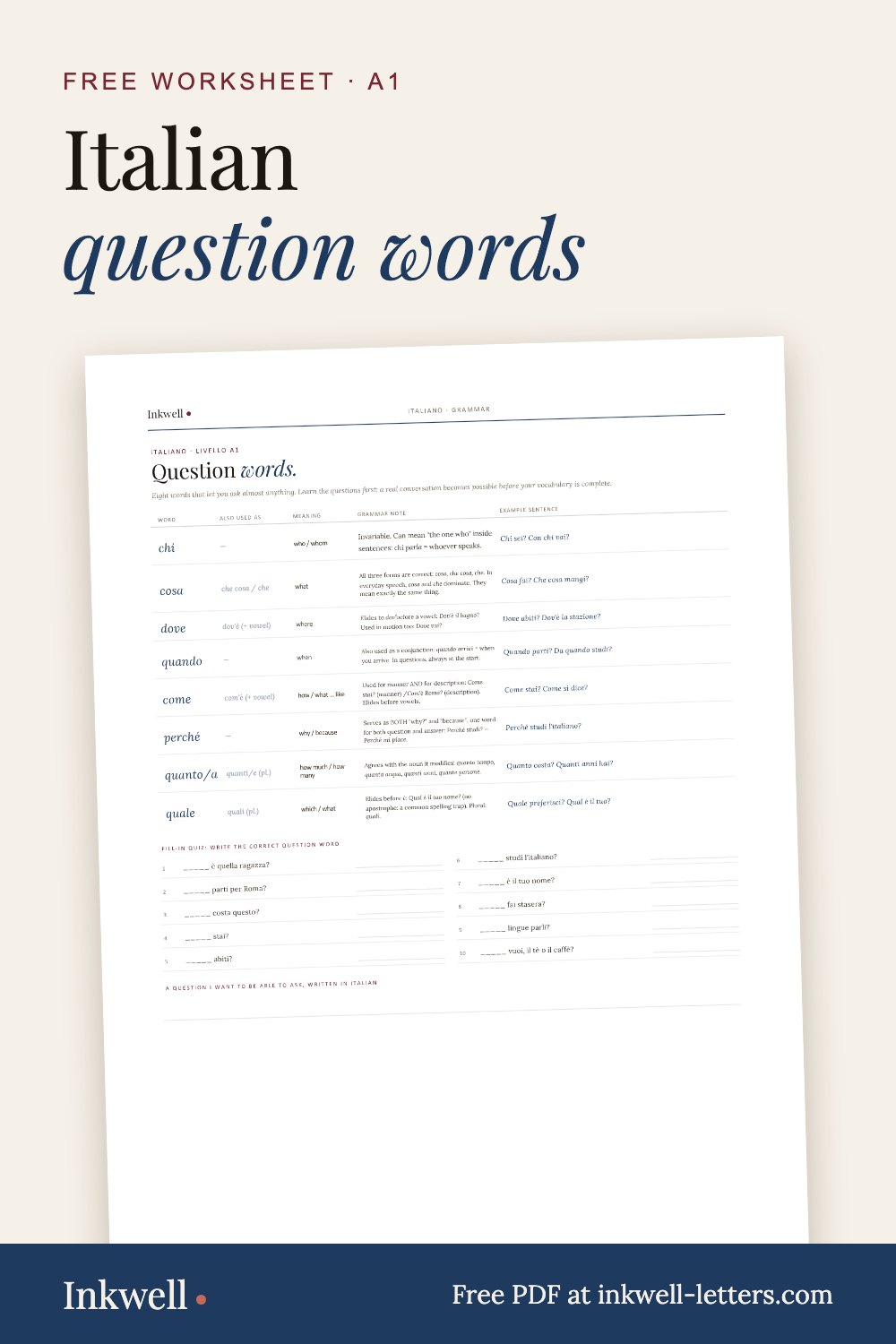 Italian Question Words: Chi, Cosa, Dove, Quando and MoreWorksheet, Italian
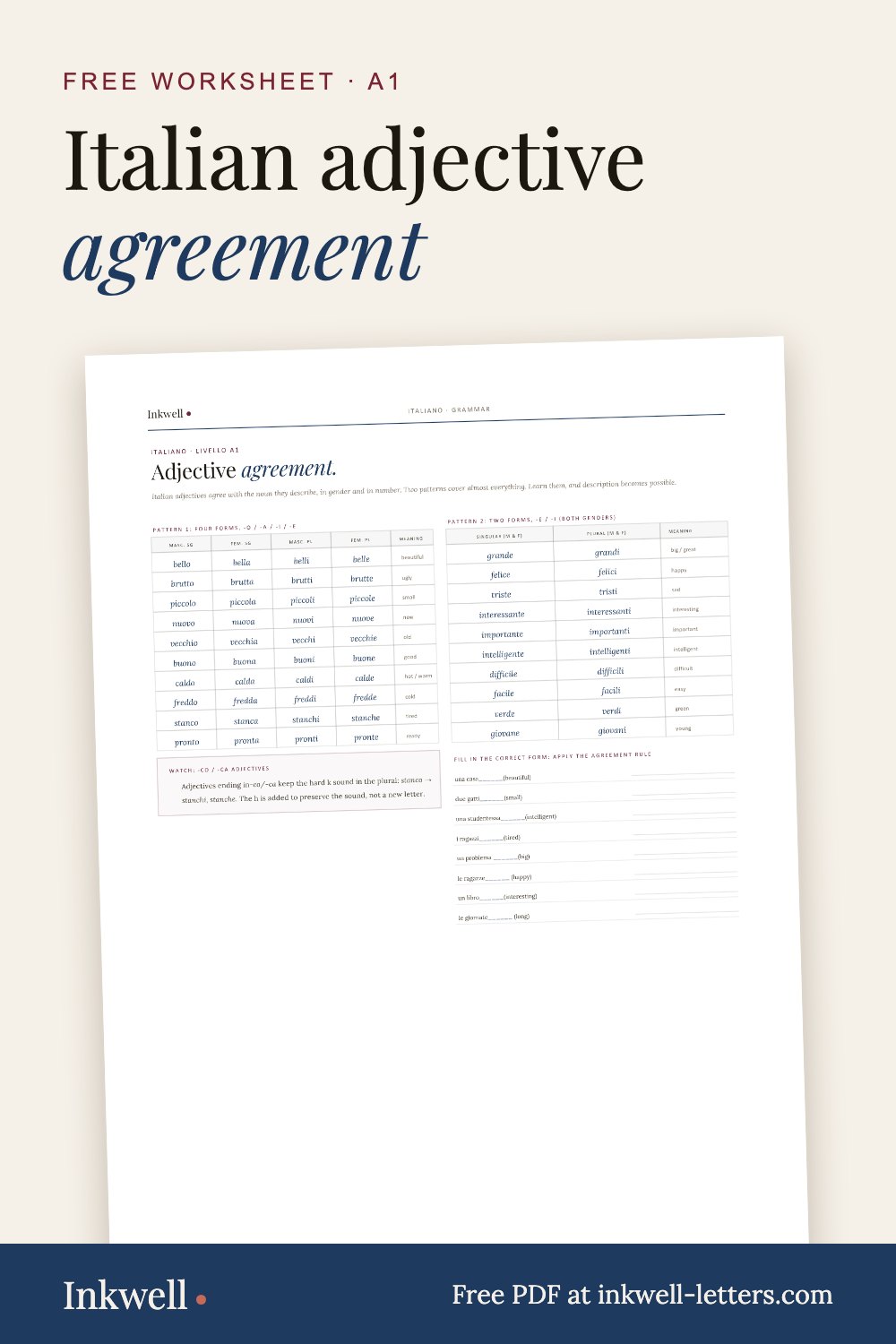 Italian Adjective Agreement: Two Patterns That Cover Almost EverythingWorksheet, Italian