Printable PDF · Italian · A2
Italian Reflexive Verbs: Pronouns, Conjugations and Daily Routine
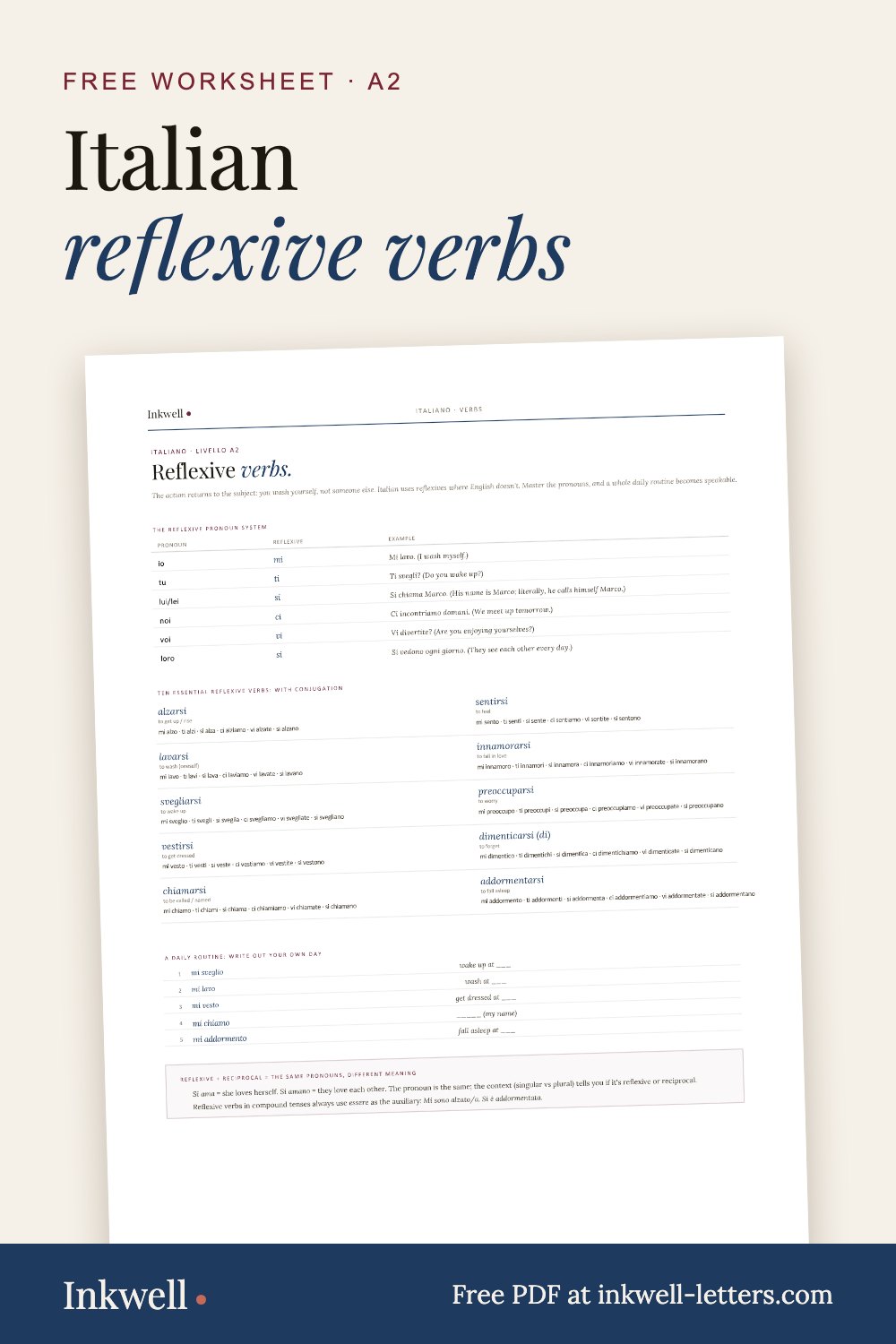
A free A2 worksheet on Italian reflexive verbs: the pronouns mi, ti, si, ci, vi, si, ten essential verbs like alzarsi, svegliarsi and sentirsi, fully conjugated, and how to describe your day.
Leave your email once and every worksheet on the Dispatch unlocks on this device. We’ll also send you new worksheets and articles. Unsubscribe at any time.
Italian uses reflexive verbs in places where English doesn’t: you don’t “wake up”, you wake yourself up, mi sveglio. Master the six pronouns and a whole daily routine becomes easy to say and to write.
What’s inside
- The reflexive pronoun system: mi, ti, si, ci, vi, si, with an example for each, including si chiama Marco (literally “he calls himself Marco”)
- Ten essential reflexive verbs, fully conjugated: alzarsi, lavarsi, svegliarsi, vestirsi, chiamarsi, sentirsi, innamorarsi, preoccuparsi, dimenticarsi and more
- Practice space to build your own routine
How to use it
- Learn the pronouns as a chant: mi, ti, si, ci, vi, si.
- Conjugate svegliarsi and alzarsi aloud. They’re the start of every routine.
- Write your morning in five sentences using five different reflexive verbs.
- Remember for later: in the past, reflexive verbs always take essere, mi sono svegliata.
An example in Italian
Mi sveglio alle sei e mezza, ma mi alzo solo alle sette. Mi lavo, mi vesto e mi preparo un caffè.
(I wake up at half past six, but I only get up at seven. I wash, get dressed and make myself a coffee.)
Notice the difference between svegliarsi (to wake up) and alzarsi (to get up). Italians keep them apart.
Who it’s for
A2 learners and anyone who wants to describe daily life with confidence. A typical day is a favorite topic in early letters. To describe yours to a native teacher, you can learn Italian by letter.
More Italian grammar
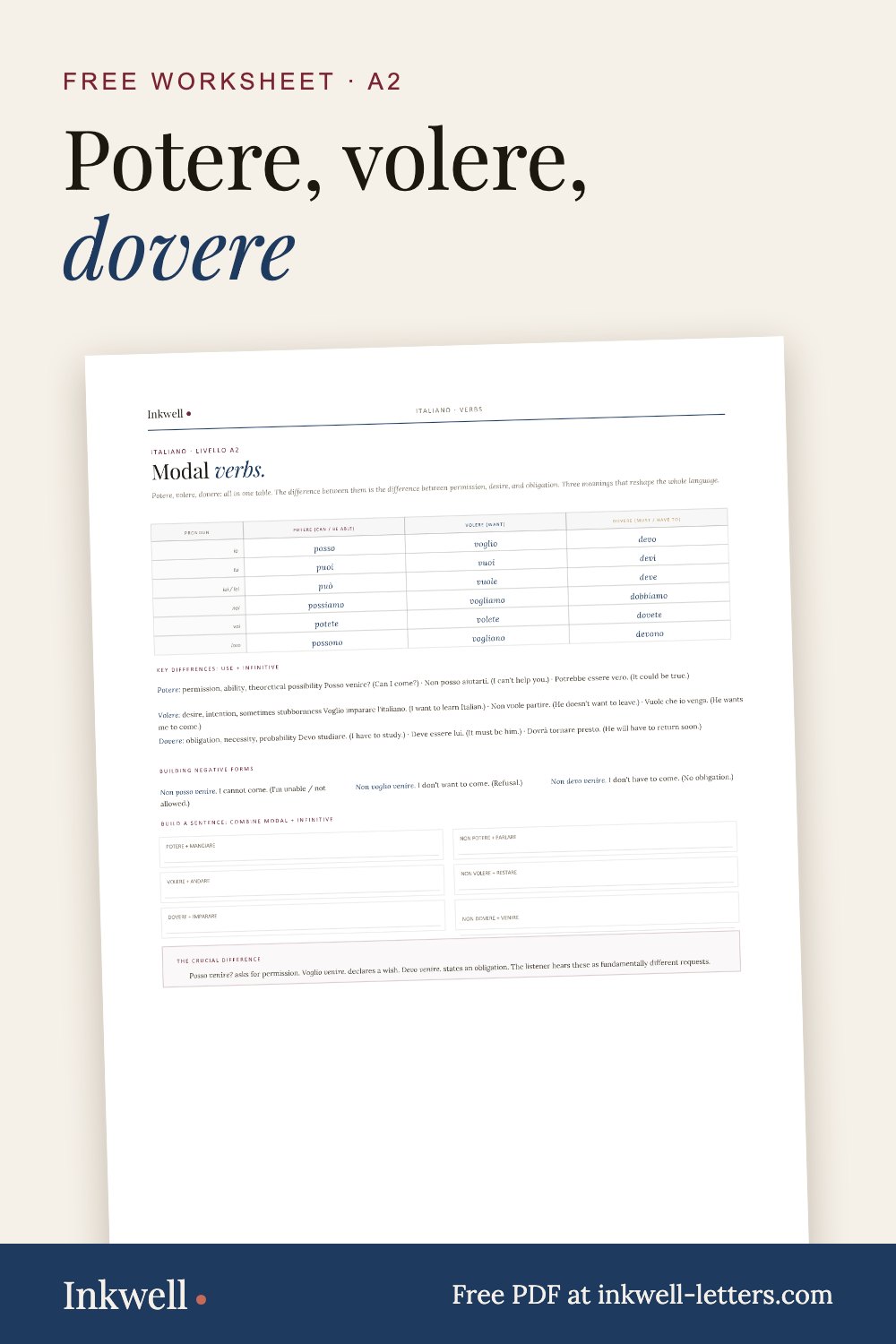 Italian Modal Verbs: Potere, Volere, DovereWorksheet, Italian
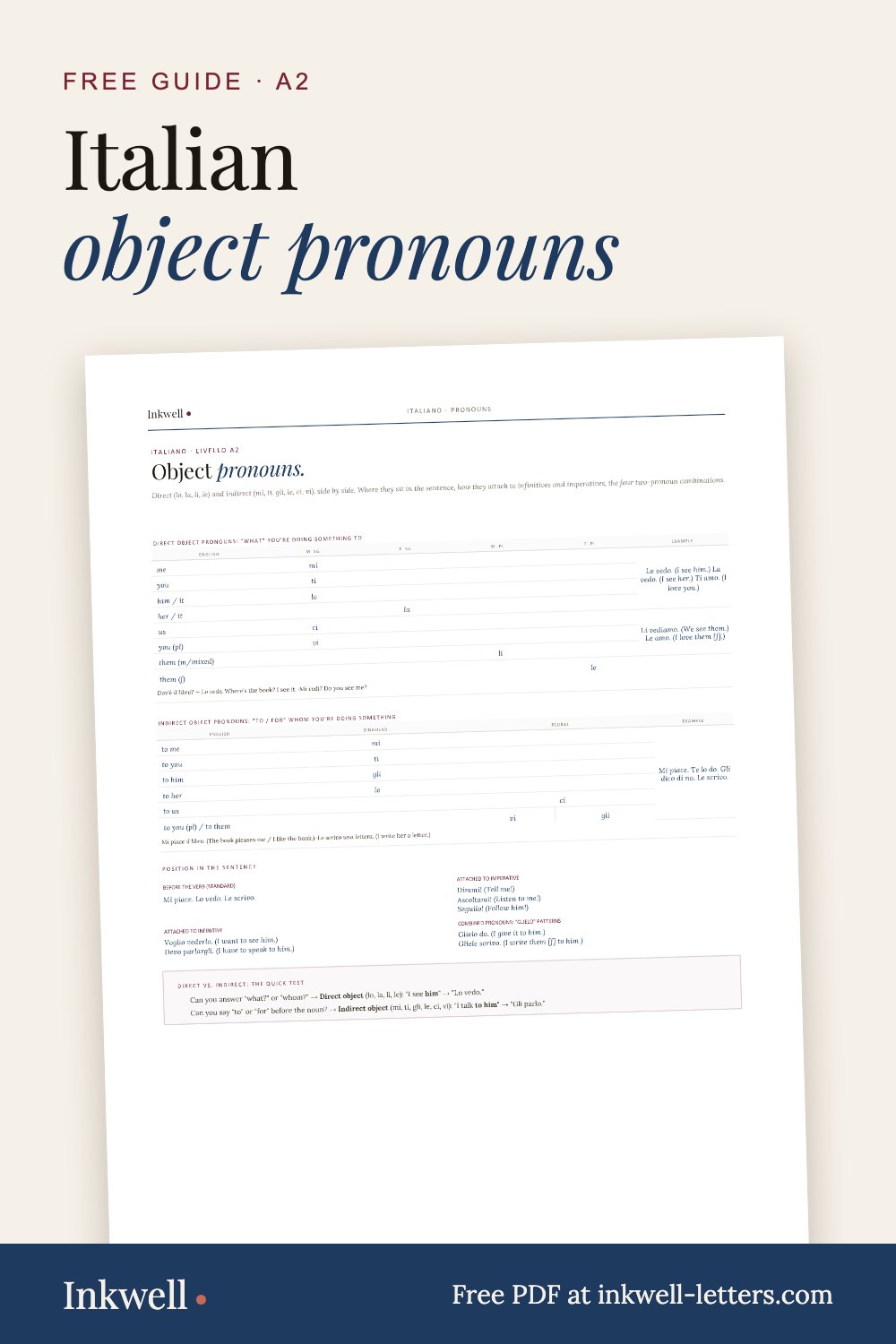 Italian Object Pronouns: Direct, Indirect and GlieloGuide, Italian
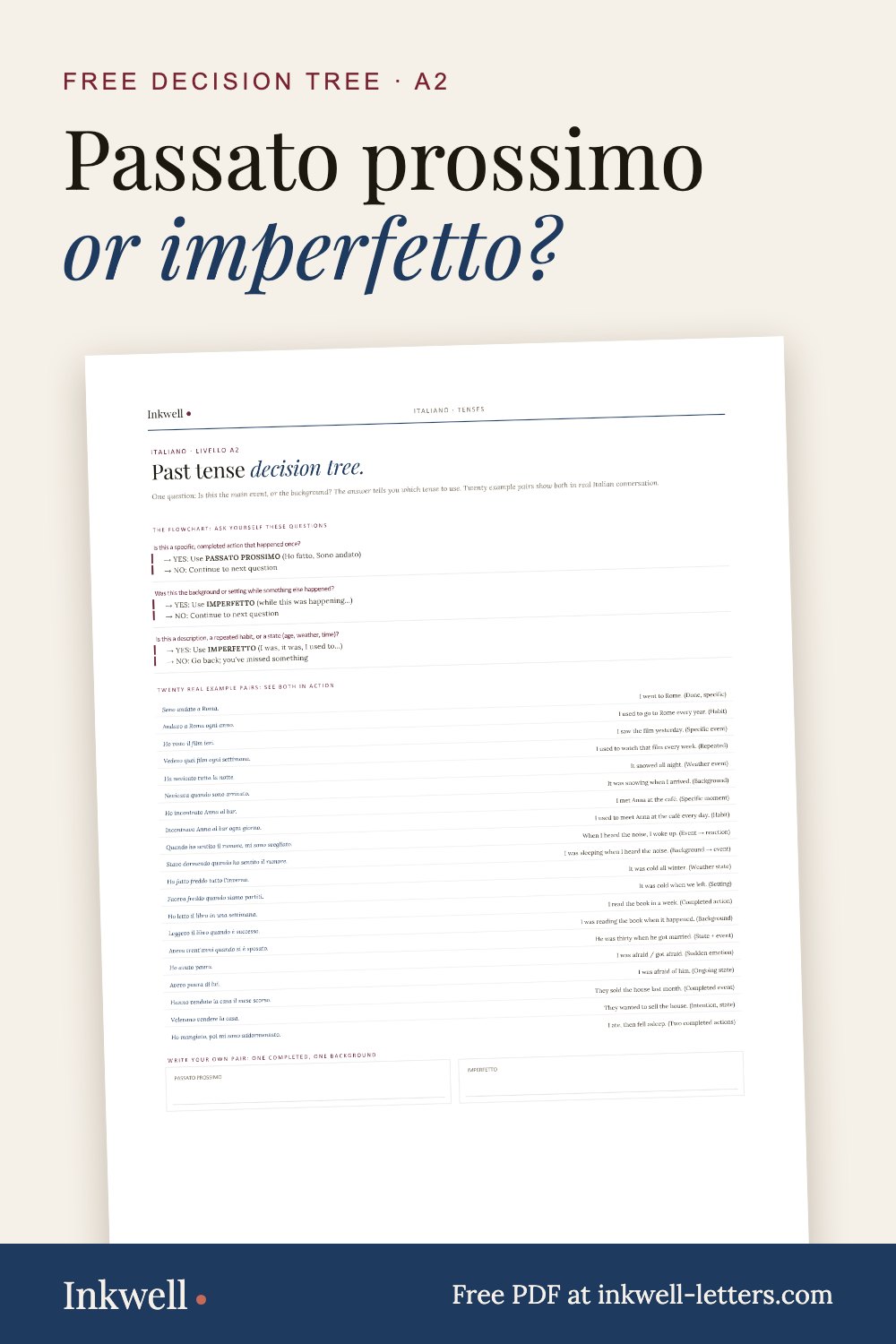 Passato Prossimo or Imperfetto? A Decision Tree With 20 ExamplesGuide, Italian
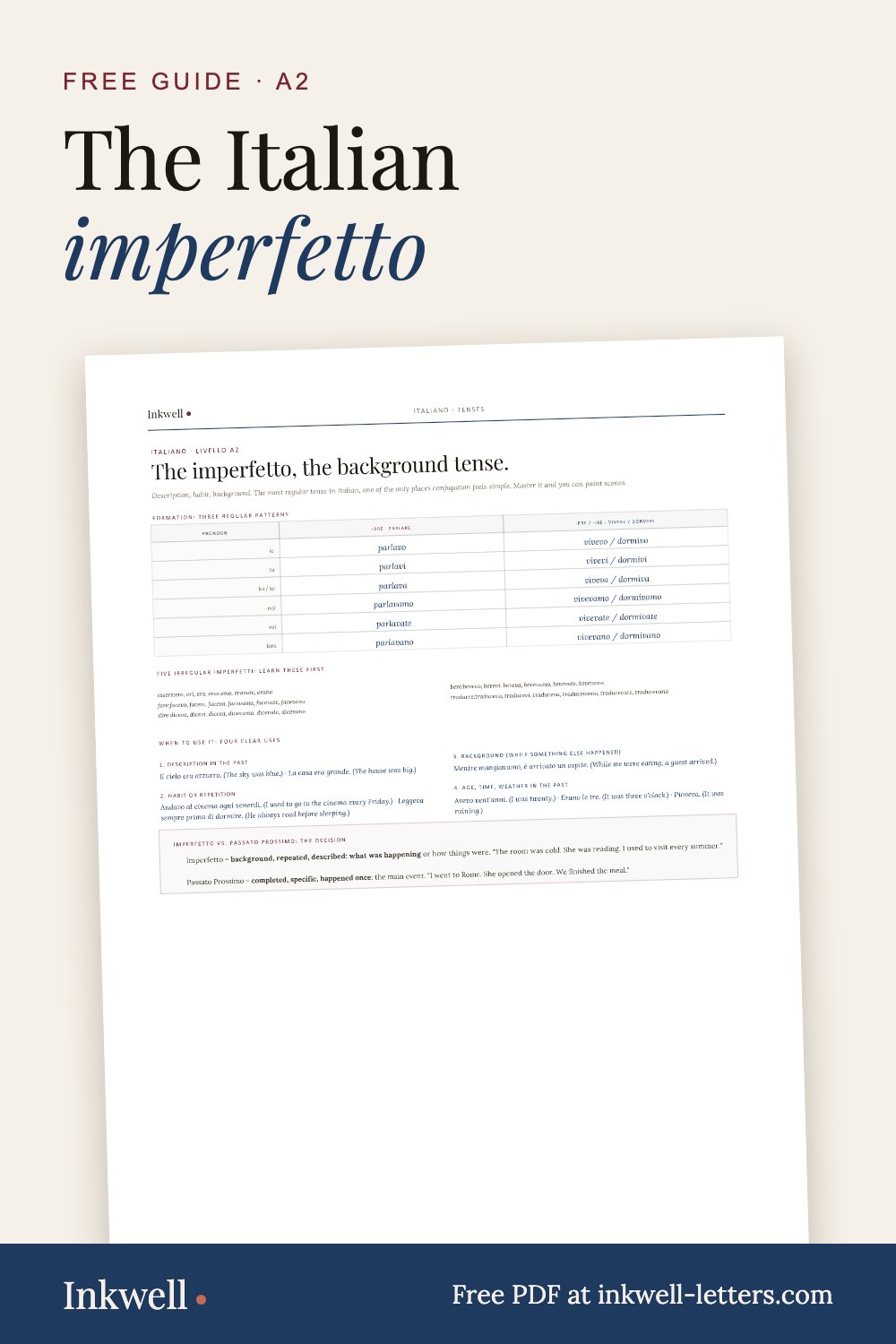 The Imperfetto: Italian's Background TenseGuide, Italian
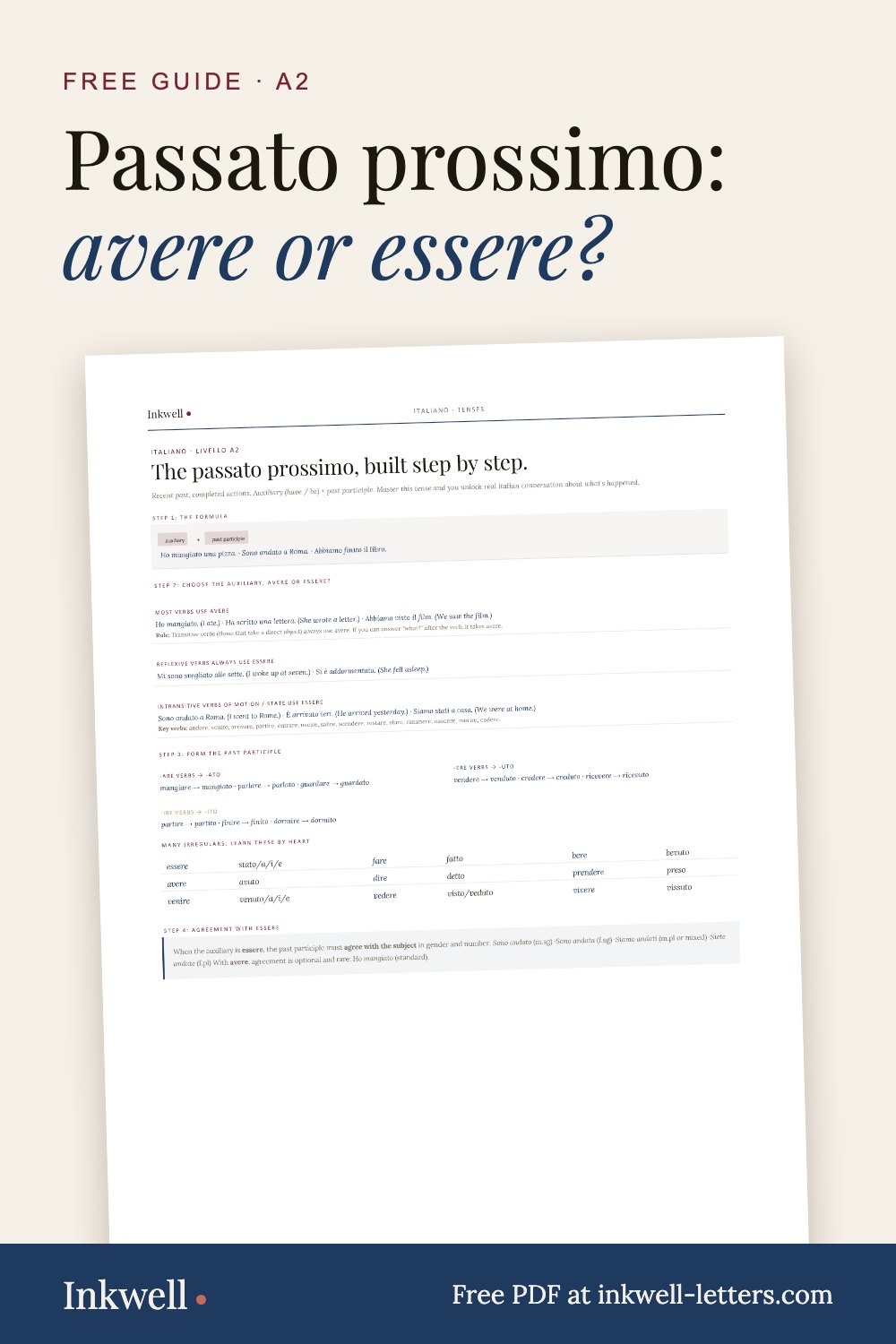 The Passato Prossimo, Built Step by StepGuide, Italian
Comments