Printable PDF · Italian · A2
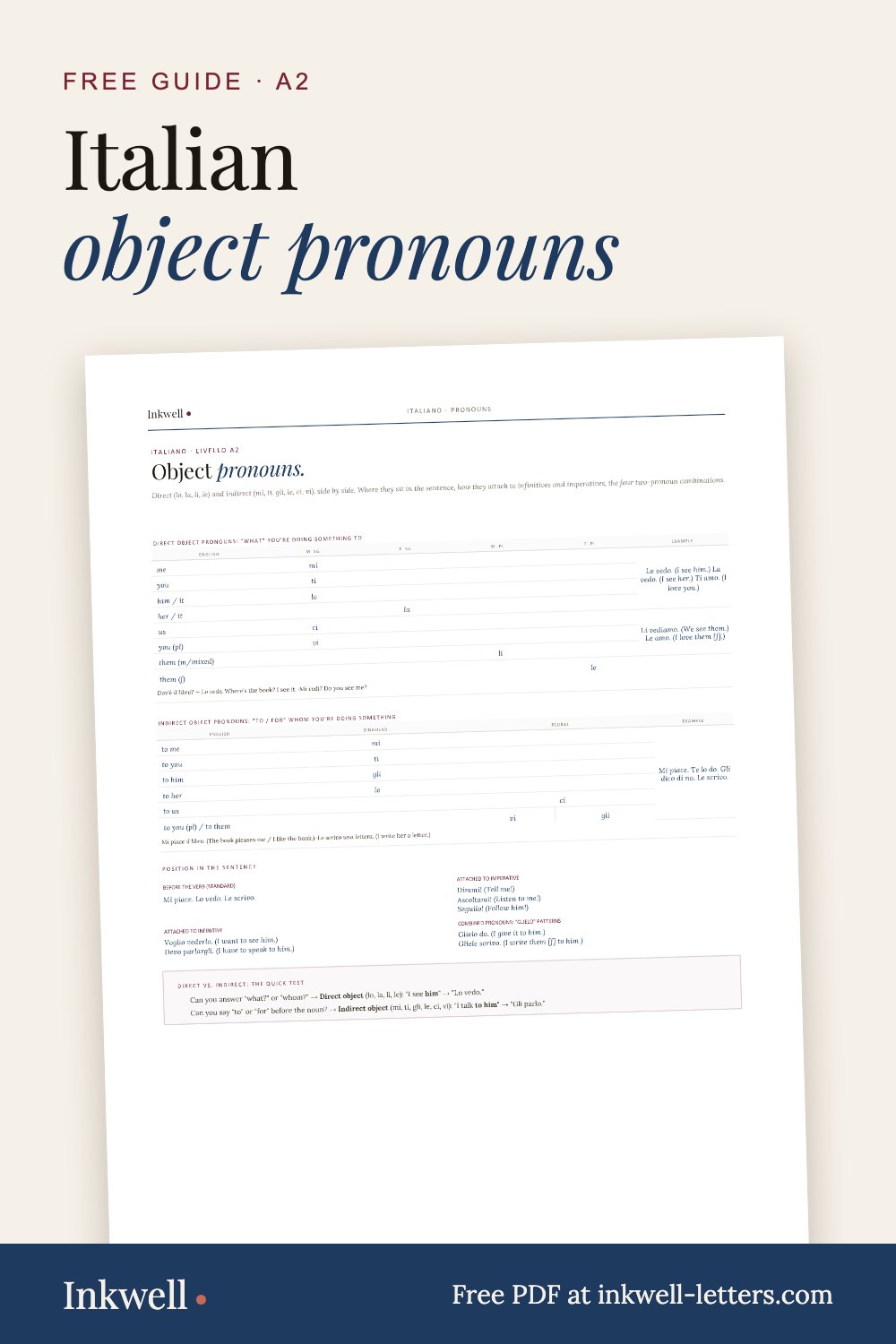
Italian Object Pronouns: Direct, Indirect and Glielo
A free A2 guide to Italian object pronouns: direct (lo, la, li, le) and indirect (mi, ti, gli, le, ci, vi), where they go in the sentence, how they attach to infinitives and imperatives, and glielo.
Leave your email once and every worksheet on the Dispatch unlocks on this device. We’ll also send you new worksheets and articles. Unsubscribe at any time.
Object pronouns are what make Italian sound natural: lo vedo instead of vedo il libro, le scrivo instead of scrivo a Maria. They’re short, they move around, and they’re worth mastering, because native speakers use them in almost every sentence.
What’s inside
- Direct object pronouns (mi, ti, lo, la, ci, vi, li, le), with examples: lo vedo, la vedo, ti amo
- Indirect object pronouns (mi, ti, gli, le, ci, vi, gli), with examples: mi piace, le scrivo una lettera
- Position in the sentence: before the verb, attached to the infinitive (voglio vederlo), attached to the imperative (dimmi!)
- Combined pronouns: glielo do, gliele scrivo
- The quick test for direct versus indirect
How to use it
- Ask: does the verb answer “what?” (direct) or “to whom?” (indirect)?
- Rewrite five sentences from your last letter, replacing nouns with pronouns.
- Practice the attached forms aloud: dimmi, scrivimi, chiamami.
- Save glielo for last. It’s B1 territory, and fine to recognize before you produce it.
An example in Italian
Hai ricevuto la mia lettera? Te l’ho spedita lunedì. Scrivimi quando la ricevi!
(Did you get my letter? I sent it to you on Monday. Write to me when you receive it!)
Three pronouns: te l’ (to you + it), scrivimi (write to me) and la (it, the letter).
Who it’s for
A2 and B1 learners who understand pronouns when they read them but avoid them when they write. If you’d like a native teacher to show you where they belong in your own sentences, you can learn Italian by letter.
More Italian grammar
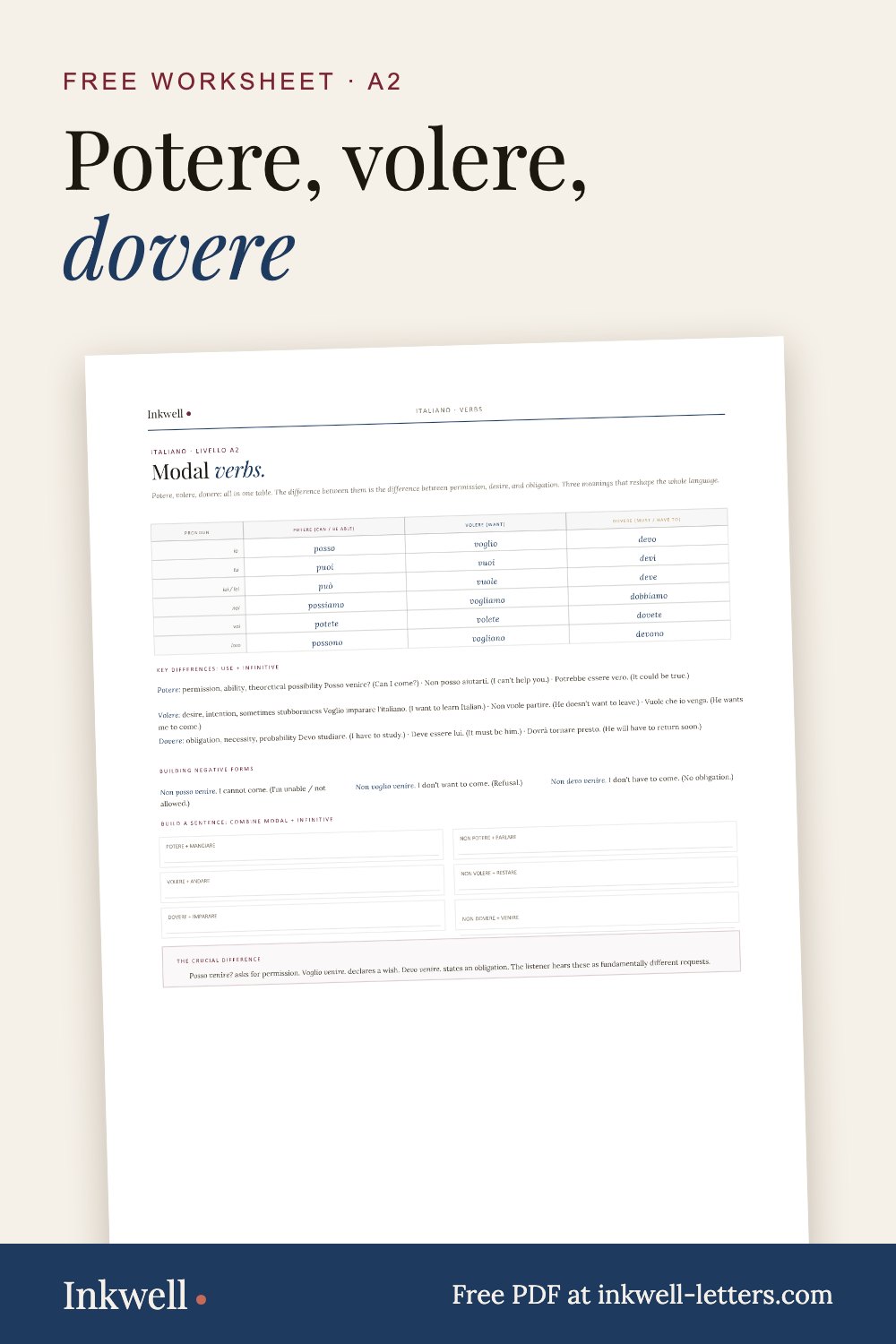 Italian Modal Verbs: Potere, Volere, DovereWorksheet, Italian
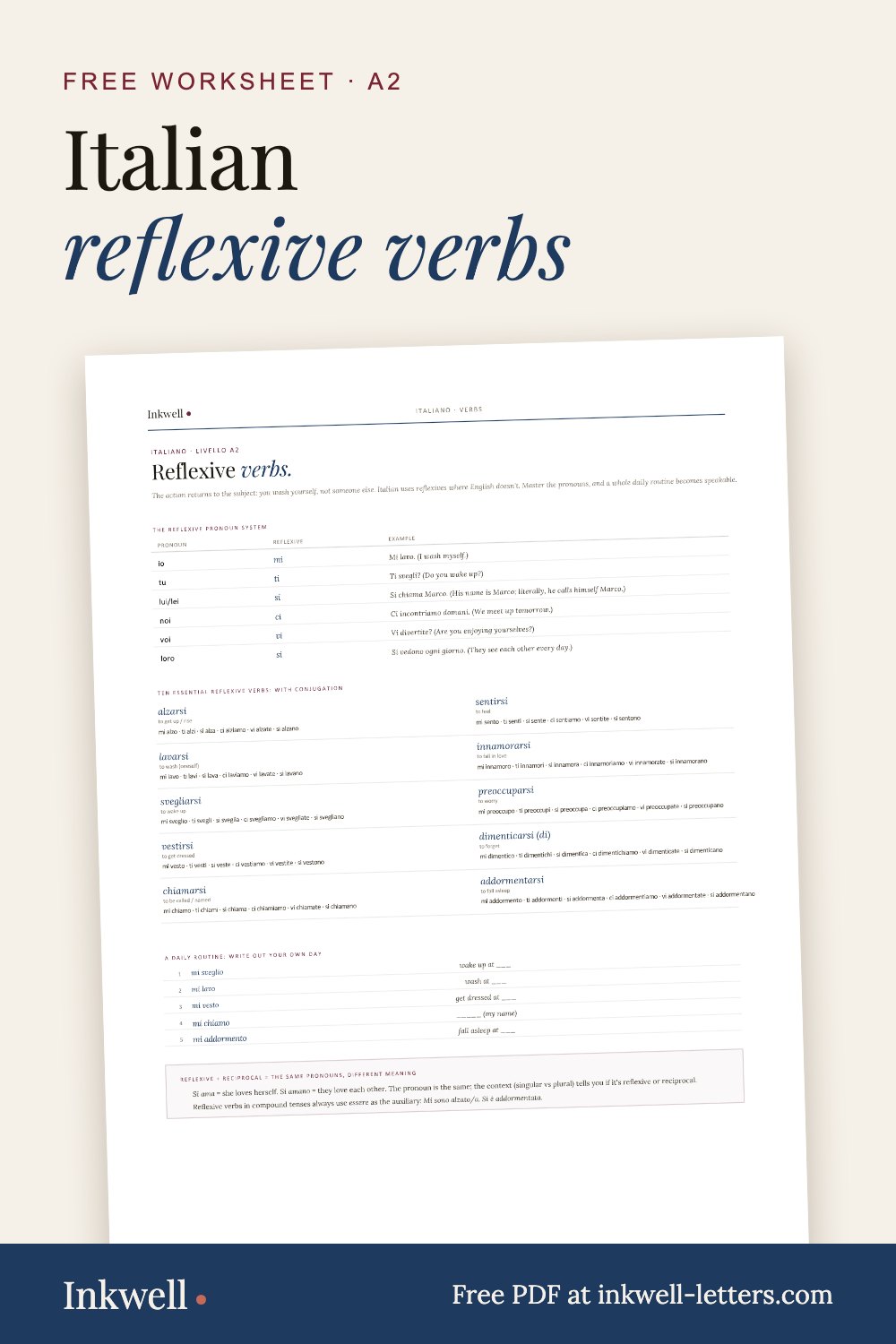 Italian Reflexive Verbs: Pronouns, Conjugations and Daily RoutineWorksheet, Italian
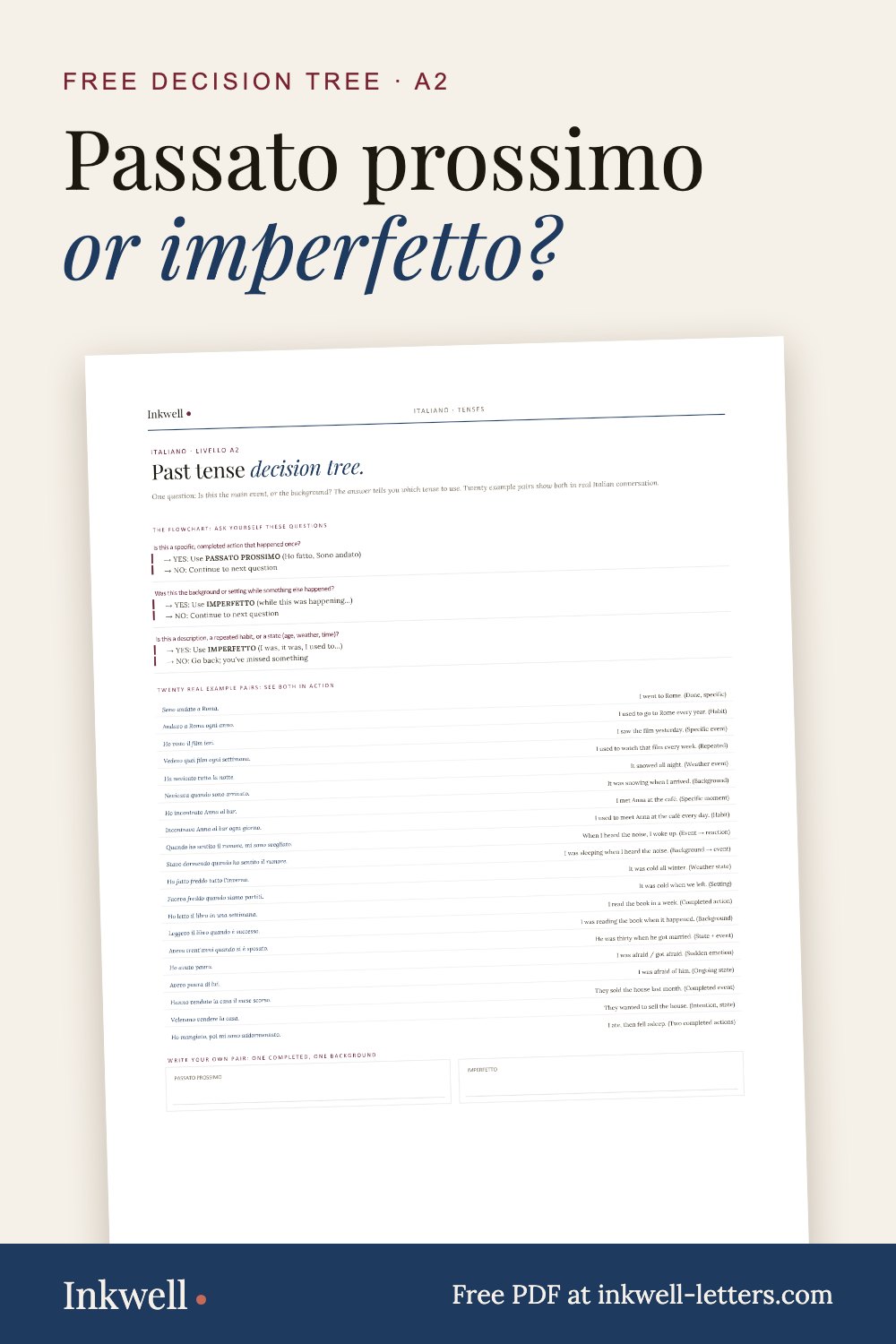 Passato Prossimo or Imperfetto? A Decision Tree With 20 ExamplesGuide, Italian
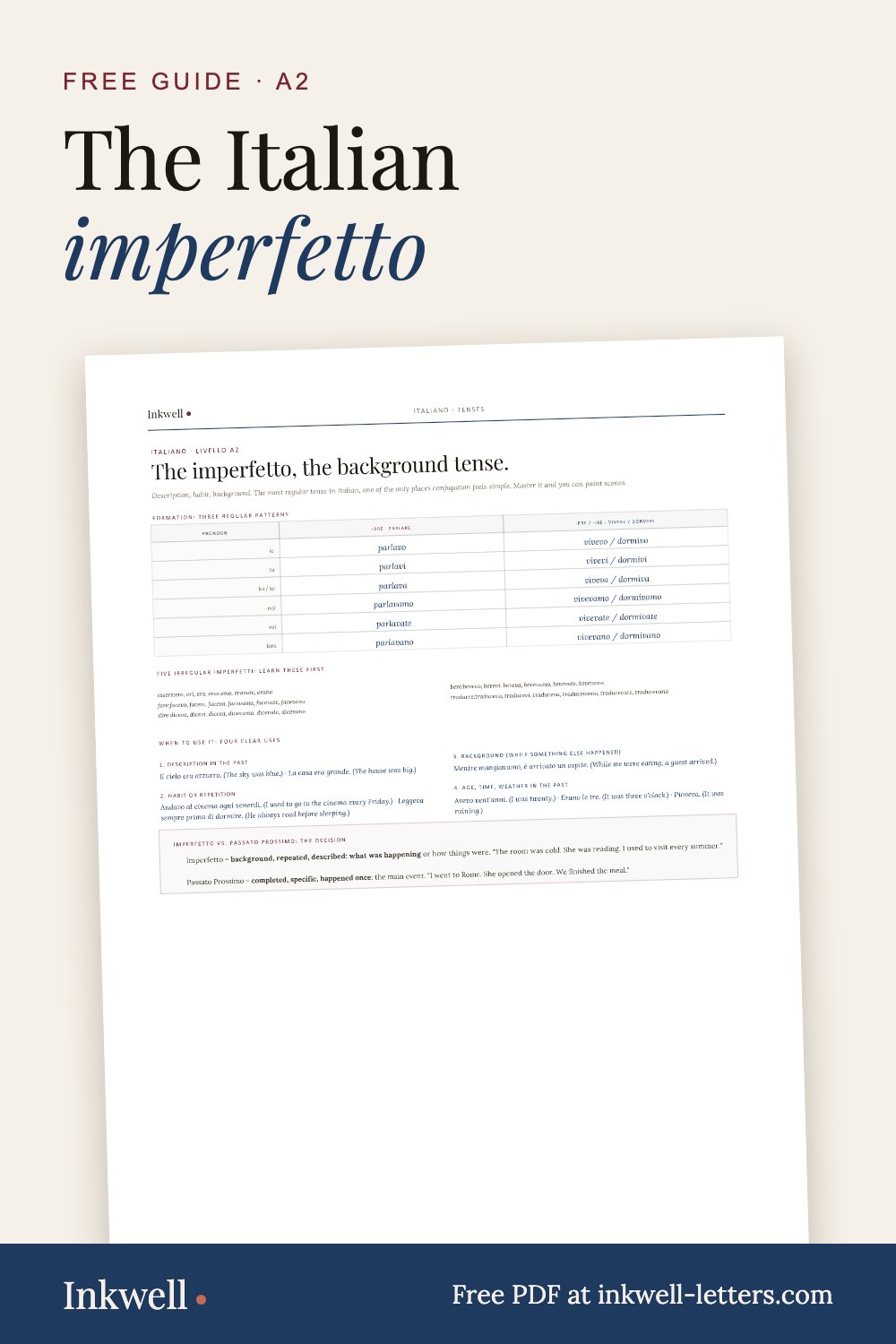 The Imperfetto: Italian's Background TenseGuide, Italian
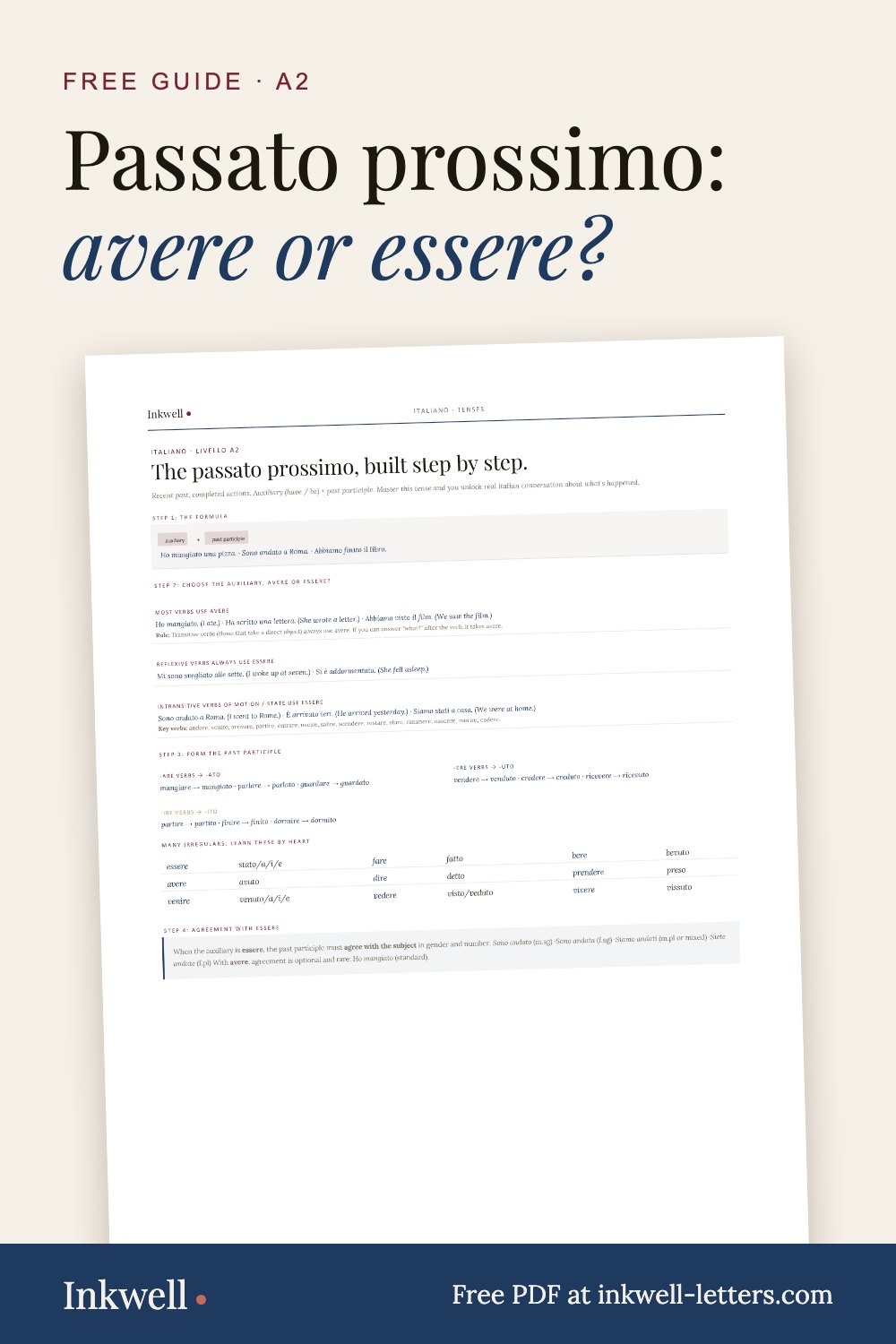 The Passato Prossimo, Built Step by StepGuide, Italian
Comments