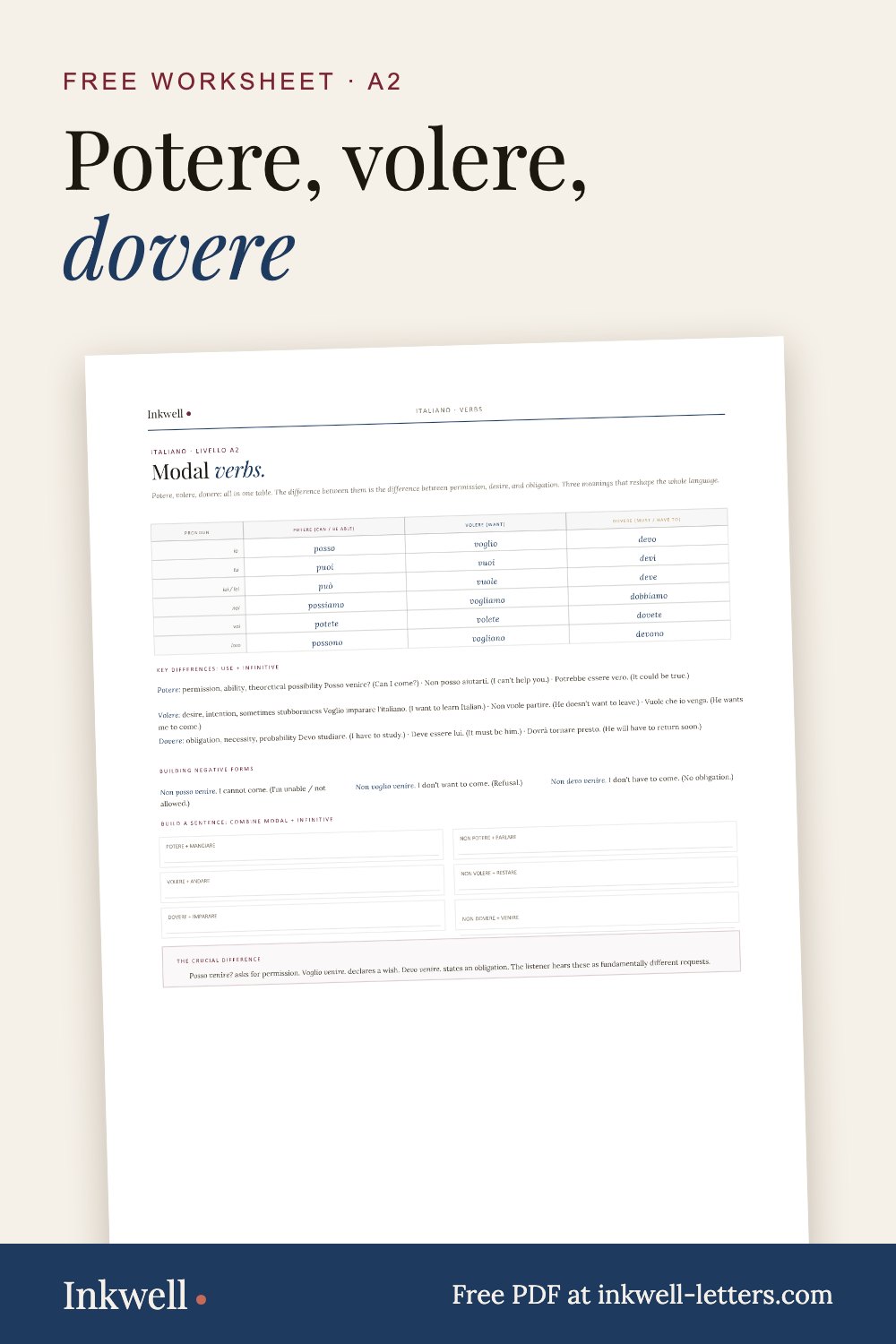
Printable PDF · Italian · A2
Italian Modal Verbs: Potere, Volere, Dovere
A free A2 worksheet on the Italian modal verbs potere (can), volere (want) and dovere (must): one conjugation table, the key differences in meaning, negative forms and sentence-building practice.
Leave your email once and every worksheet on the Dispatch unlocks on this device. We’ll also send you new worksheets and articles. Unsubscribe at any time.
Potere, volere, dovere: can, want, must. The difference between them is the difference between permission, desire and obligation, and together they let you say almost anything about plans, wishes and duties with just one more verb in the infinitive.
What’s inside
- One table with all three verbs in the present tense: posso, voglio, devo...
- Key differences with examples:
- potere: permission, ability, possibility (posso venire?)
- volere: desire, intention (voglio imparare l’italiano)
- dovere: obligation, necessity, probability (deve essere lui)
- Negative forms, and why non devo venire means “I don’t have to come”, not “I mustn’t come”
- Sentence-building practice: combine a modal with an infinitive
How to use it
- Conjugate the three verbs side by side, aloud, row by row.
- Read the negative forms carefully. The non dovere trap catches many English speakers.
- Complete the sentence-building exercise.
- Write three sentences about this weekend: one thing you can do, one you want to do and one you have to do.
An example in Italian
Sabato devo lavorare, ma domenica posso finalmente rispondere alla tua lettera, e voglio farlo con calma.
(On Saturday I have to work, but on Sunday I can finally answer your letter, and I want to do it calmly.)
Who it’s for
A2 learners and anyone who wants to talk about plans with confidence. These verbs appear in almost every letter. To practice them with a native teacher, you can learn Italian by letter.
More Italian grammar
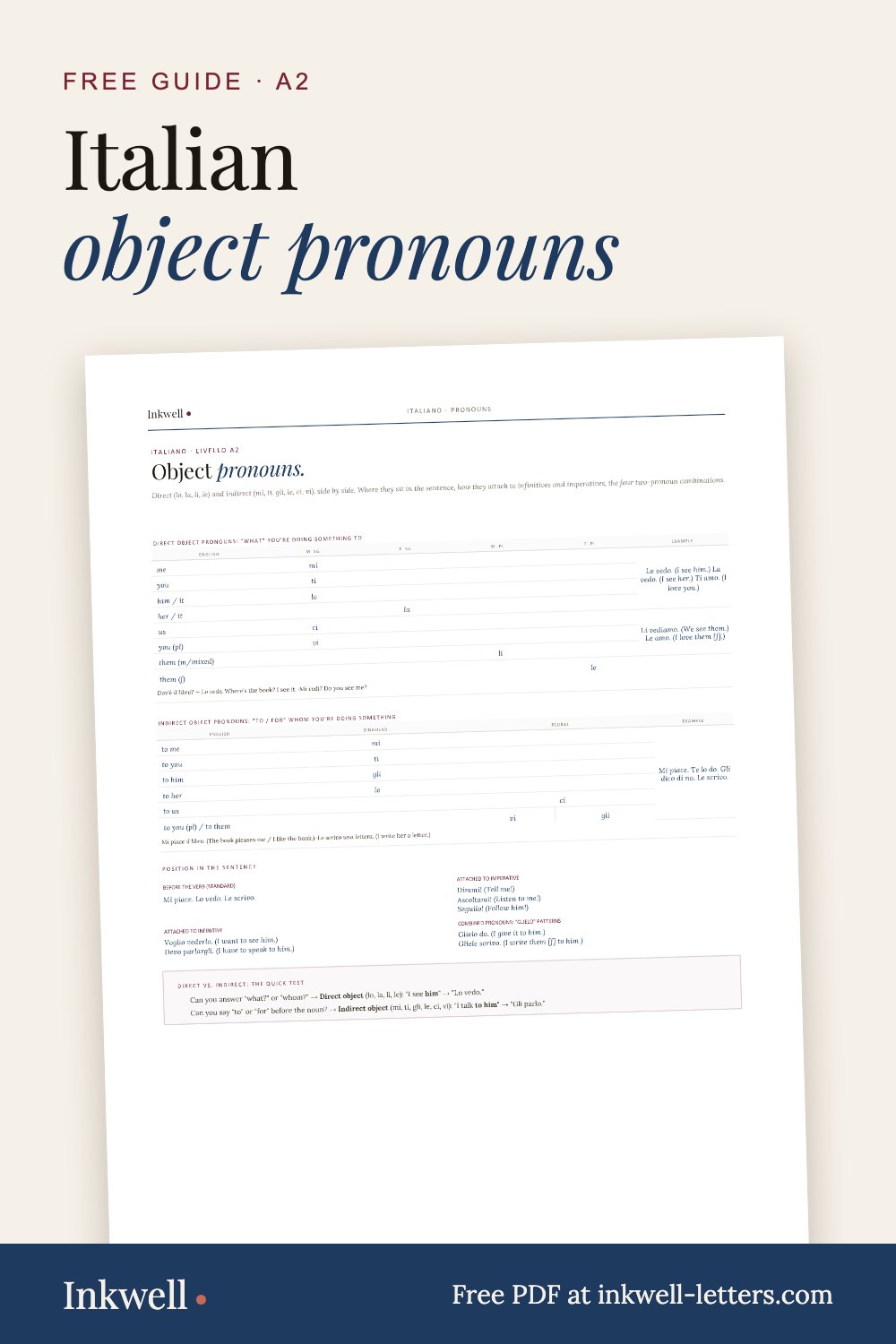 Italian Object Pronouns: Direct, Indirect and GlieloGuide, Italian
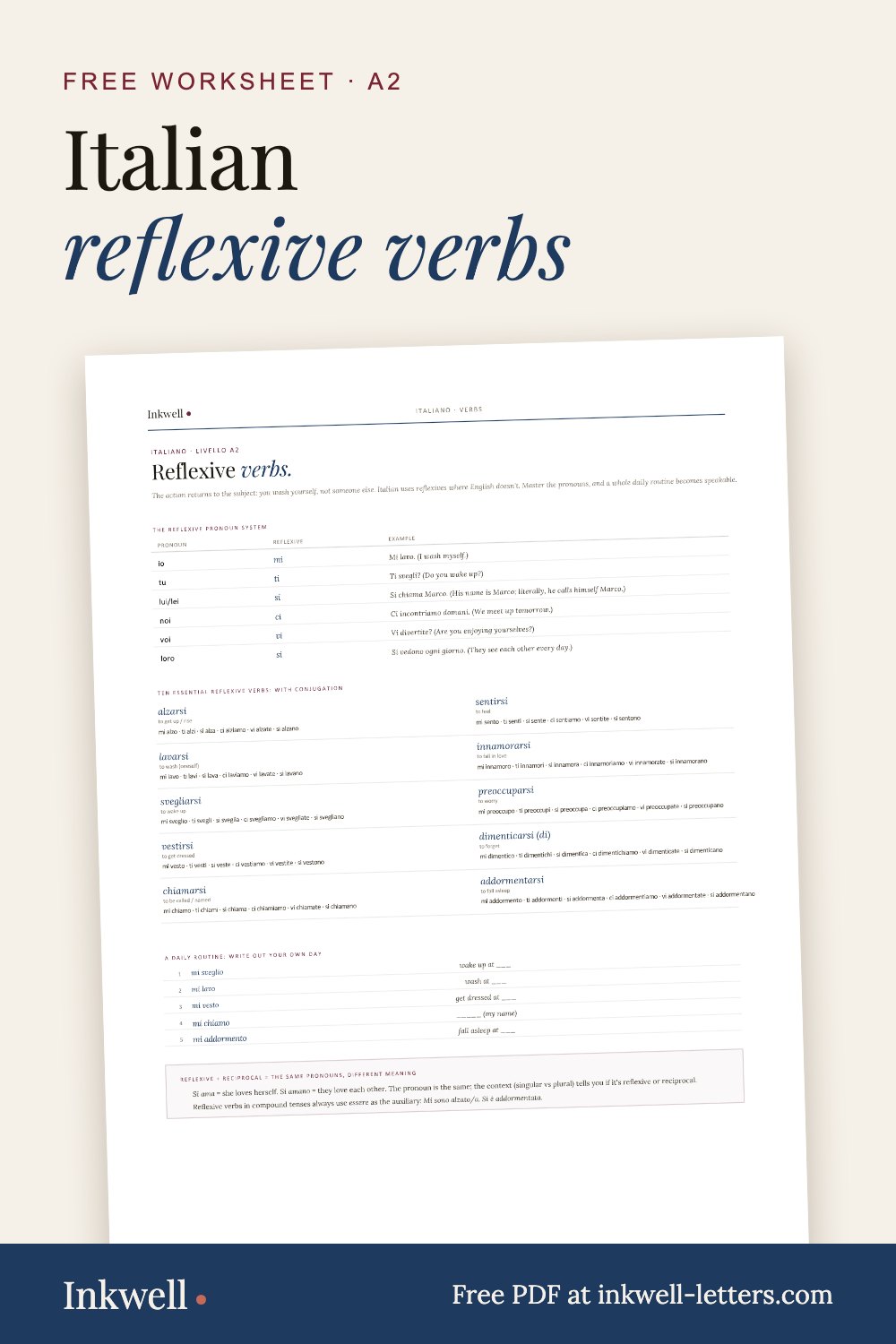 Italian Reflexive Verbs: Pronouns, Conjugations and Daily RoutineWorksheet, Italian
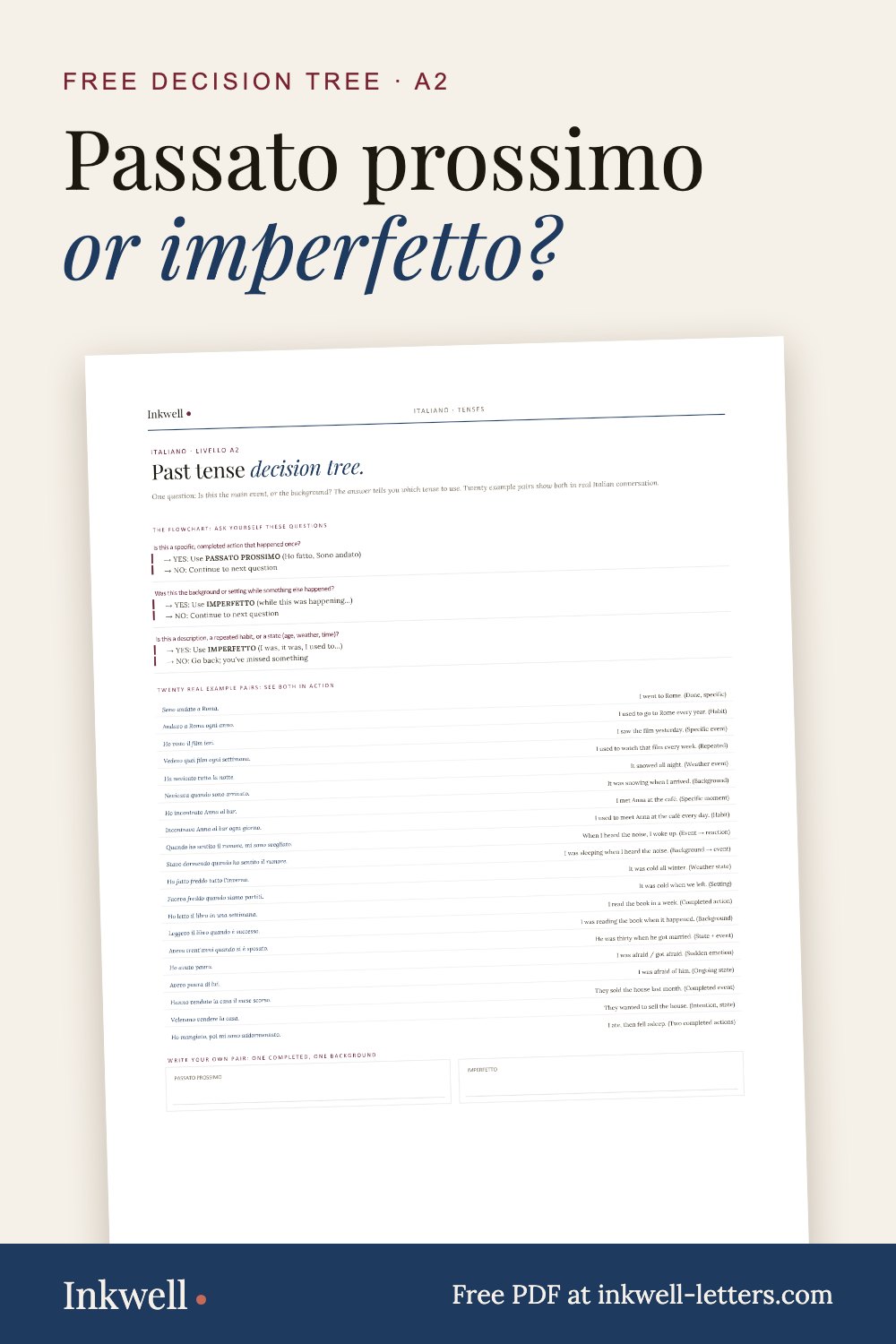 Passato Prossimo or Imperfetto? A Decision Tree With 20 ExamplesGuide, Italian
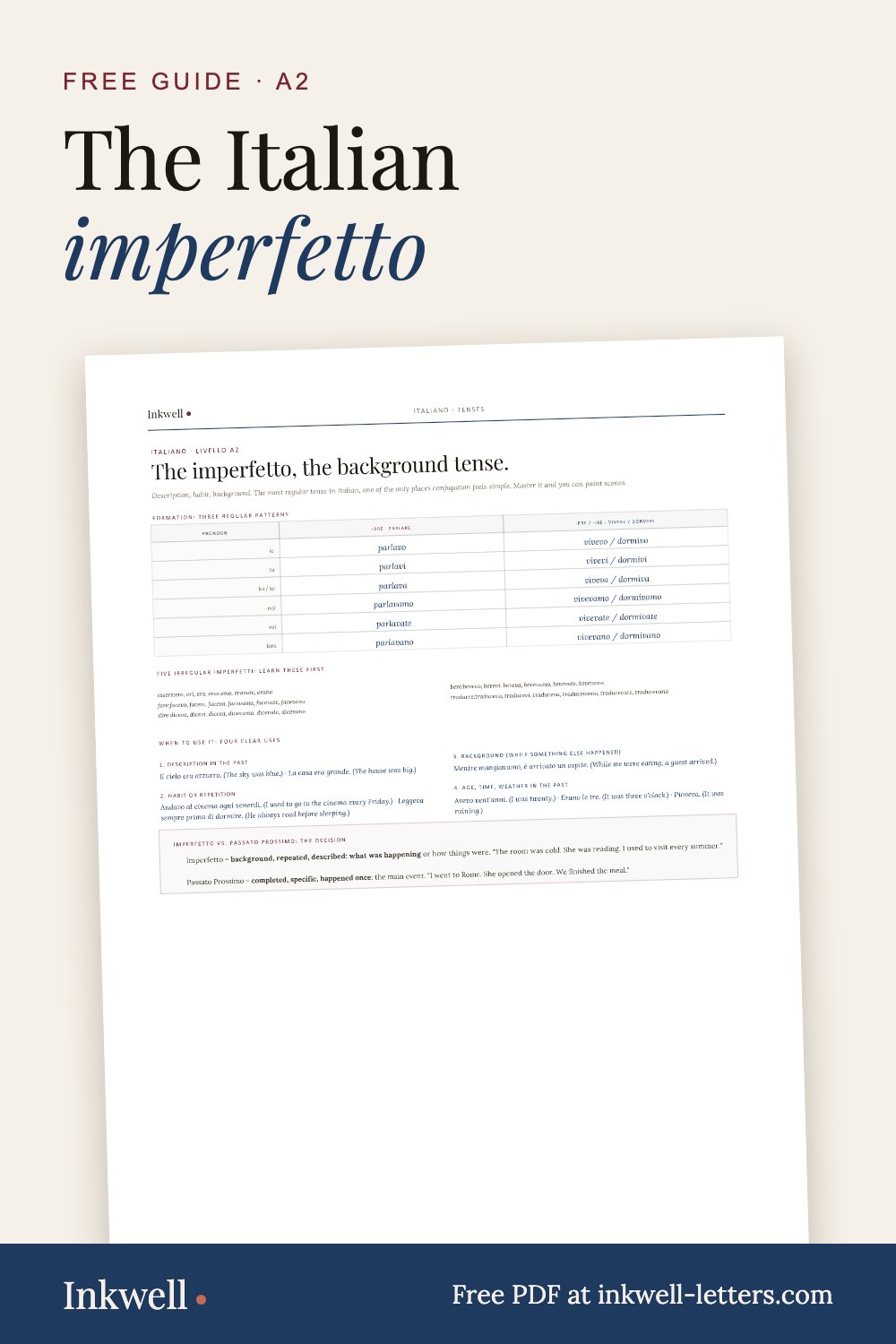 The Imperfetto: Italian's Background TenseGuide, Italian
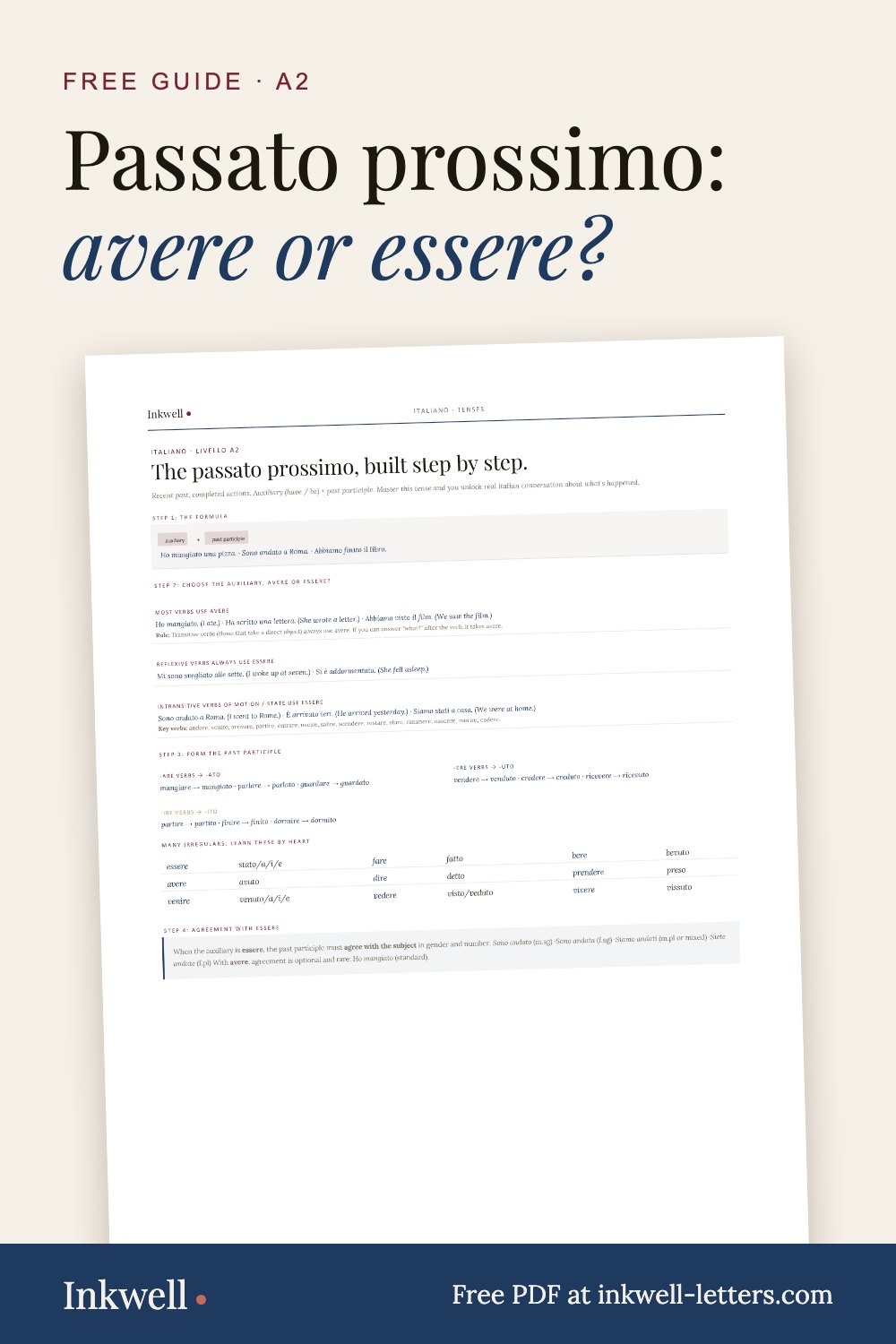 The Passato Prossimo, Built Step by StepGuide, Italian
Comments