
Pen pals have an image problem. Mention the idea to most adults and they picture a school project: a letter to a child in another country, a reply or two, then silence. But some of the most effective language practice available to an adult learner is exactly this, scaled up: a real person who reads what you write, in the language you’re learning, and writes back.
The short answer: free pen pal sites and slow-messaging apps are the easiest places to start; cultural institutes are good for meeting Italian speakers locally; and if you want consistent corrections, write to a teacher. The rest of this guide explains each option, what makes a correspondence last, and how to find an Italian pen pal in particular.
Why a pen pal helps you learn
Most language study is input: you read, you listen, you recognize. A correspondence forces output, and a particular kind of output. In a letter you can’t point, gesture or let the other person finish your sentence. You have to compose: choose the words, build the sentence, check it, commit to it.
Writing also gives you time, which speaking doesn’t. You can look up the word you need, rewrite a sentence three times, and send the best version you’re capable of. That’s why many learners find their written language moves ahead of their spoken language, and why the gap usually closes later, once the structures are familiar.
And a correspondence gives you a reason. A grammar exercise has no reader. A letter does. Knowing that someone in Bologna is waiting to hear how your week went is a better motivation than a streak counter, because it’s attached to a person.
Where adults find pen pals today
There are more options than most people realize, and they work in different ways.
- Pen pal websites. Long-running sites such as InterPals and Global Penfriends let you search for people by country and language. They’re free and large, so you’ll find many potential correspondents, but quality varies and many conversations stop after a few messages.
- Slow messaging apps. Slowly is an app that delays each message according to the real distance between you and your correspondent, so a letter to Italy from the United States takes over a day to arrive. It recreates some of the pace of postal letters on a phone.
- Language exchange apps. Tandem and HelloTalk pair you with native speakers who want to learn your language. They’re excellent for quick, casual practice, and less suited to long, considered writing, because the format encourages short messages.
- Postal pen pal clubs and swaps. Communities of letter writers, often found through stationery shops, online letter-writing groups and postcard exchanges, still swap handwritten letters by post. They’re wonderful for the love of letters, less reliable if you need a correspondent in one specific language.
- Cultural institutes. For Italian, the Istituti Italiani di Cultura abroad and local chapters of the Società Dante Alighieri run courses and events, and are good places to meet Italian speakers and other learners. Ask whether they know of correspondence or exchange programs.
What makes a correspondence last
Most pen pal exchanges end not with a decision but with a slow fade. A few habits make that less likely.
- Agree on a rhythm. Once a week, every two weeks, once a month: anything works, as long as you both know what to expect.
- Write in the language you’re learning, and say so. Many exchanges split into two halves, one in each language. That’s fair, but it halves your practice. Some pairs alternate letters instead.
- Ask real questions. Questions are what give the other person something to answer. End every letter with at least one.
- Agree on corrections. Some people want every mistake marked, others find it discouraging. Say what you’d like at the start.
- Keep it personal but safe. Use first names, keep your home address private until you trust the person, and be wary of anyone who moves the conversation quickly toward money or private platforms.
How to find an Italian pen pal
If Italian is your language, a few specific suggestions:
- Search by region, not just country. Writing to someone in Naples is different from writing to someone in Trento. Choose a region you’re curious about and you’ll have more to ask.
- Look for learners of English. Many Italians are keen to practice English, which gives you something to offer in exchange.
- Introduce yourself well. A first letter that tells your story clearly, why you’re learning Italian, where you live, what you love, gets far more replies than Ciao, cerco un amico di penna.
- Expect Italian conventions. Your correspondent will open with Caro or Cara, start the first line in lowercase and close with un abbraccio or un caro saluto. Our guide on how to write a letter in Italian explains the format.
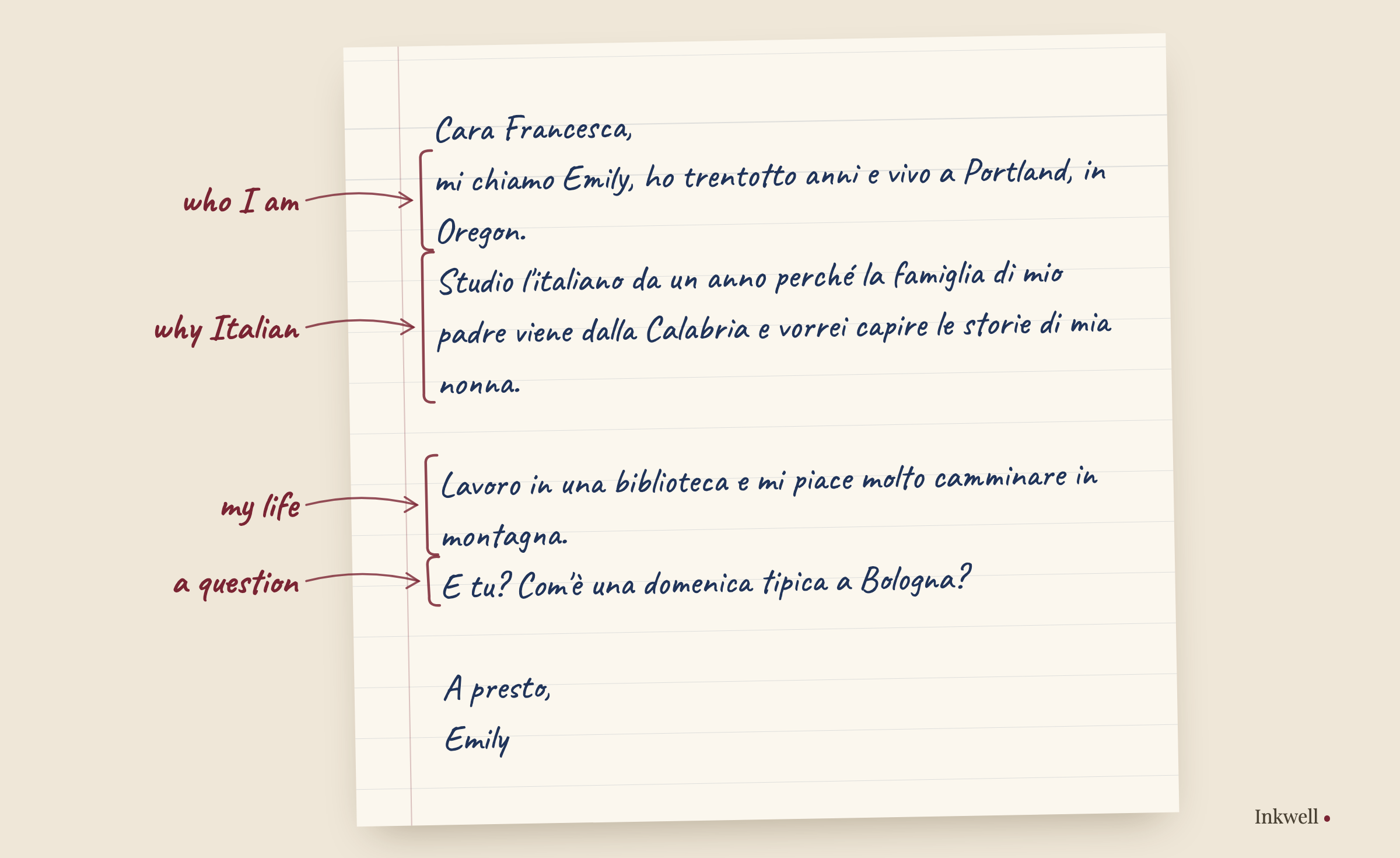
Here is the kind of first letter that gets a reply:
Cara Francesca,
mi chiamo Emily, ho trentotto anni e vivo a Portland, in Oregon. Studio l’italiano da un anno perché la famiglia di mio padre viene dalla Calabria e vorrei capire le storie di mia nonna.
Lavoro in una biblioteca e mi piace molto camminare in montagna. E tu? Com’è una domenica tipica a Bologna?
A presto,
Emily
Short, specific, honest, with a real question at the end.
Peer pen pal or teacher?
A peer pen pal is a friend who happens to speak the language. That’s a lovely thing to have, and for cultural exchange and real friendship there’s nothing better. But a friend isn’t usually a teacher. Most native speakers understand what you mean and politely ignore the mistakes, or correct them inconsistently, or can’t explain why something is wrong.
A teacher who writes to you works differently:
- Corrections are part of the deal, consistent from letter to letter, with explanations.
- The language is adapted to your level, so each letter stretches you a little without losing you.
- The rhythm doesn’t depend on someone else’s motivation: the letters keep coming.
This is what we do at Inkwell. A native Italian teacher living in Italy writes you letters by post, reads your handwritten replies, and sends back the next letter with notes on your grammar and a little of Italian life. If you’d like a correspondence that keeps going and teaches you as it goes, you can learn Italian by letter with a native teacher.
Many learners do both: a teacher for steady progress, a pen pal for friendship and extra practice.
Write it in a letter
Write the first letter you would send to a new Italian pen pal, in six to ten sentences:
- Who you are: name, age if you like, where you live
- Why you’re learning Italian, in one honest sentence
- Two details about your daily life
- One question that only someone in Italy could answer
- A friendly closing: A presto or Un caro saluto
Before you start, download the free pen pal profile worksheet, which guides you through a full self-introduction section by section. For later letters, the pen pal letter planner helps you gather what you want to say before you write.
Whether you send it to a pen pal you find online or to a teacher who will answer from Italy, the first letter is the hardest. After that, the replies do the work. When you’re ready, you can start your own correspondence in Italian.
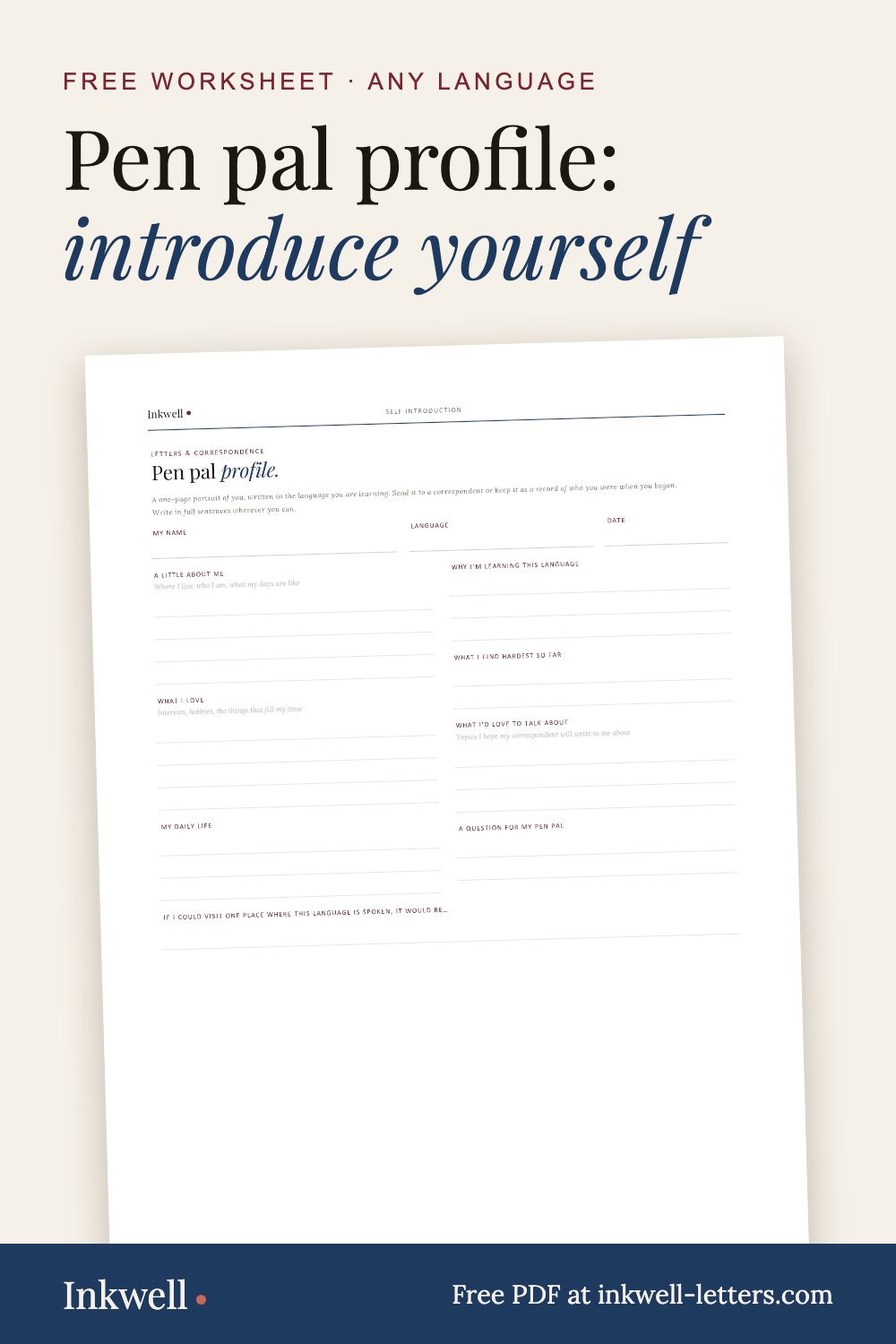 Pen Pal Profile: Introduce Yourself in Your New Language
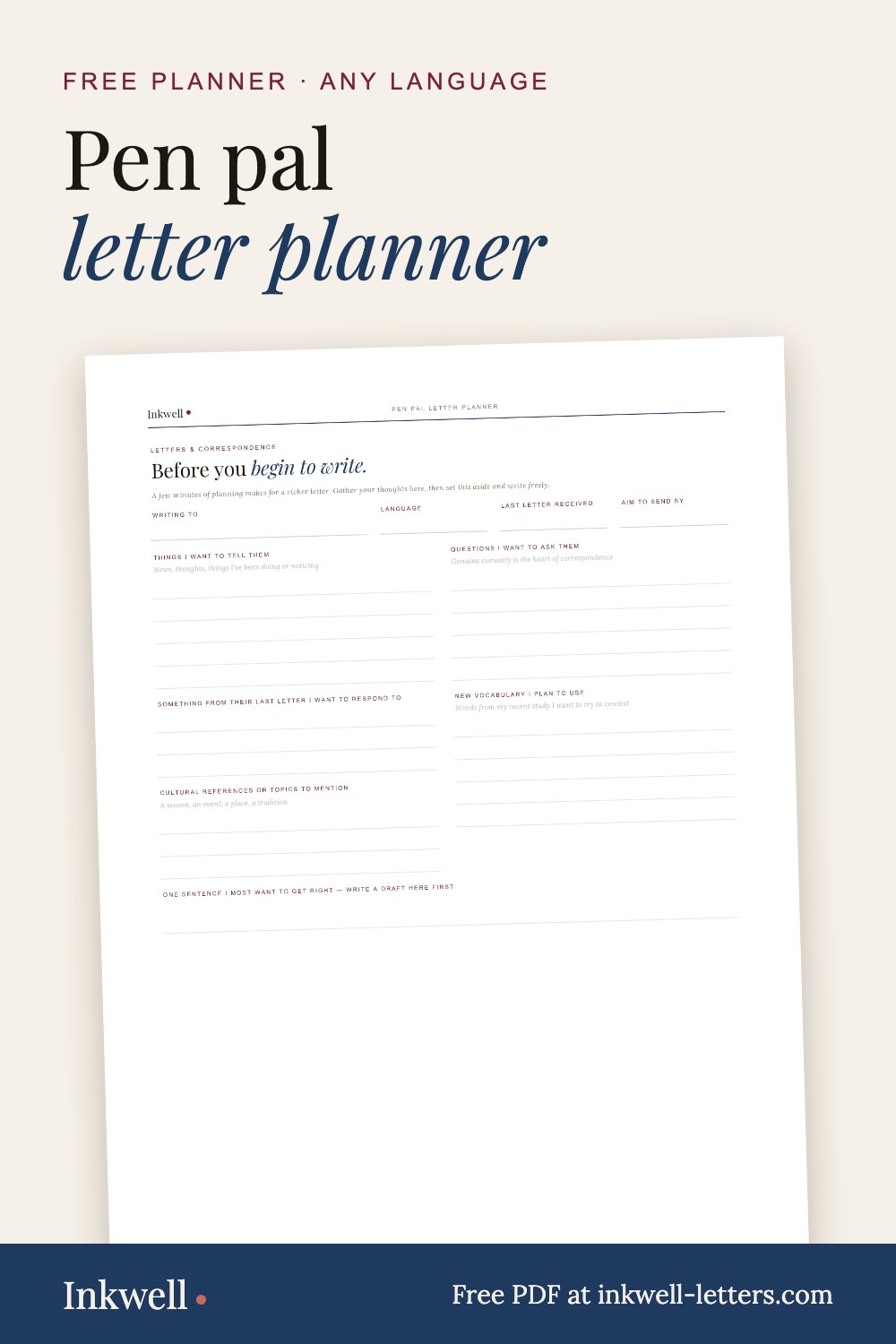 Pen Pal Letter Planner: Gather Your Thoughts Before You Write