Printable PDF · Italian · A1
Essere and Avere: The Two Italian Verbs to Learn First
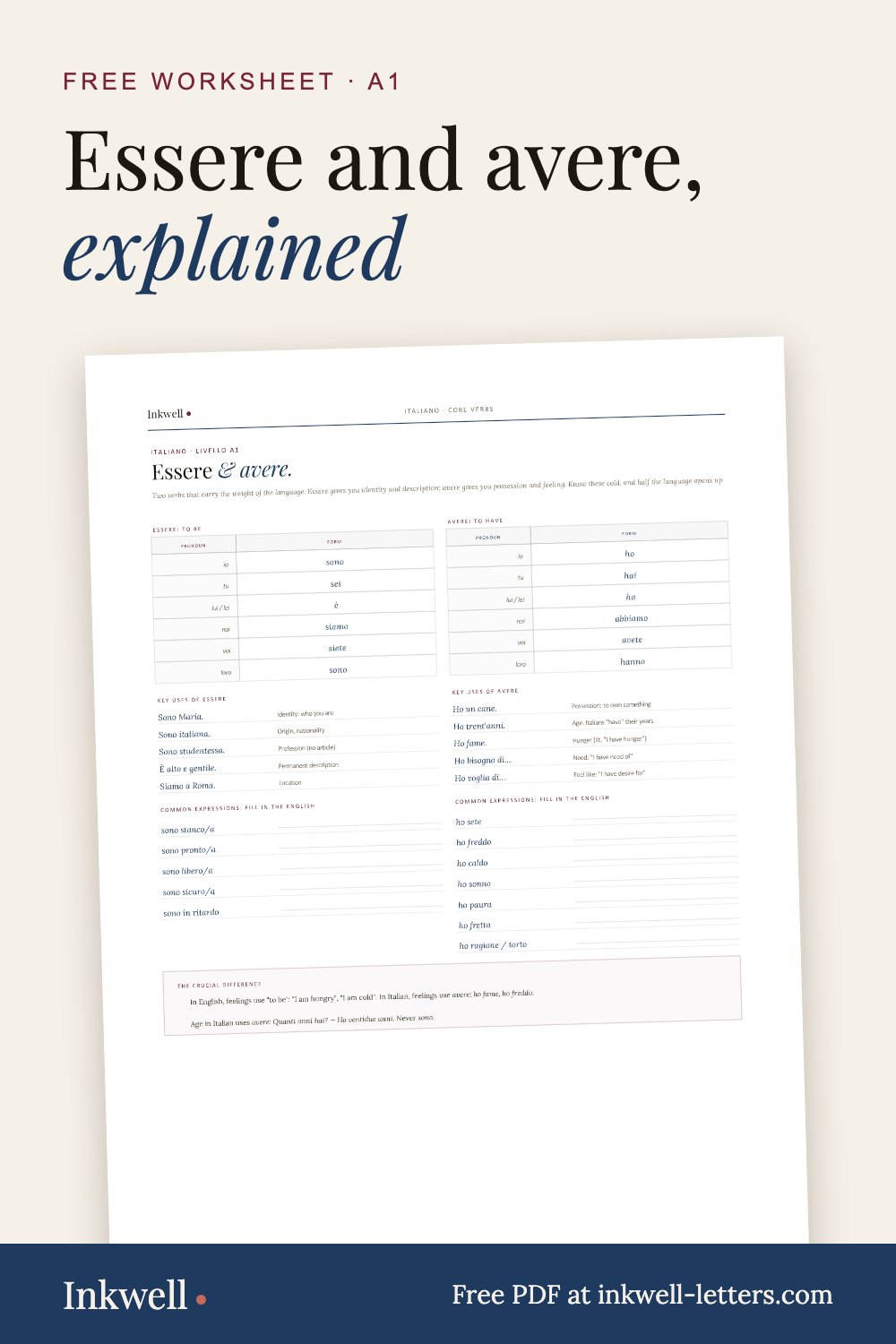
A free A1 worksheet on essere (to be) and avere (to have): full present-tense tables, their key uses, and the everyday expressions where Italian says "I have" and English says "I am".
Leave your email once and every worksheet on the Dispatch unlocks on this device. We’ll also send you new worksheets and articles. Unsubscribe at any time.
If you learn only two Italian verbs this month, make them essere and avere. They describe who you are and what you have, they build the past tense of almost every other verb, and they hide the mistake English speakers make most often at A1: saying sono fame when Italians say ho fame.
What’s inside
- Present tense of essere (sono, sei, è, siamo, siete, sono) and five key uses: identity, origin, profession, description, location
- Present tense of avere (ho, hai, ha, abbiamo, avete, hanno) and five key uses: possession, age, hunger, need, desire
- Two short fill-in lists of common expressions, sono stanco, sono in ritardo, ho sete, ho paura, ho fretta, where you write the English meaning
- A box on the key difference: feelings and age take avere in Italian
How to use it
- Say both tables aloud until you can recite them without looking.
- Fill in the English for each expression, then cover the English and translate back.
- Write five true sentences about yourself today: three with essere, two with avere.
- Reread the box on age. Ho trent’anni, never sono trent’anni.
An example in Italian
Sono di Chicago e ho quarantadue anni. Oggi sono un po’ stanca, ma ho voglia di scriverti.
(I’m from Chicago and I’m forty-two. Today I’m a little tired, but I feel like writing to you.)
Two verbs, four uses in two sentences: origin, age, a state and a desire.
Who it’s for
A1 learners in their first weeks of Italian, and anyone at A2 who still says sono freddo. These two verbs appear in the first lines of almost every letter you will write. To write those lines to a real Italian teacher, you can learn Italian by letter.
More Italian grammar
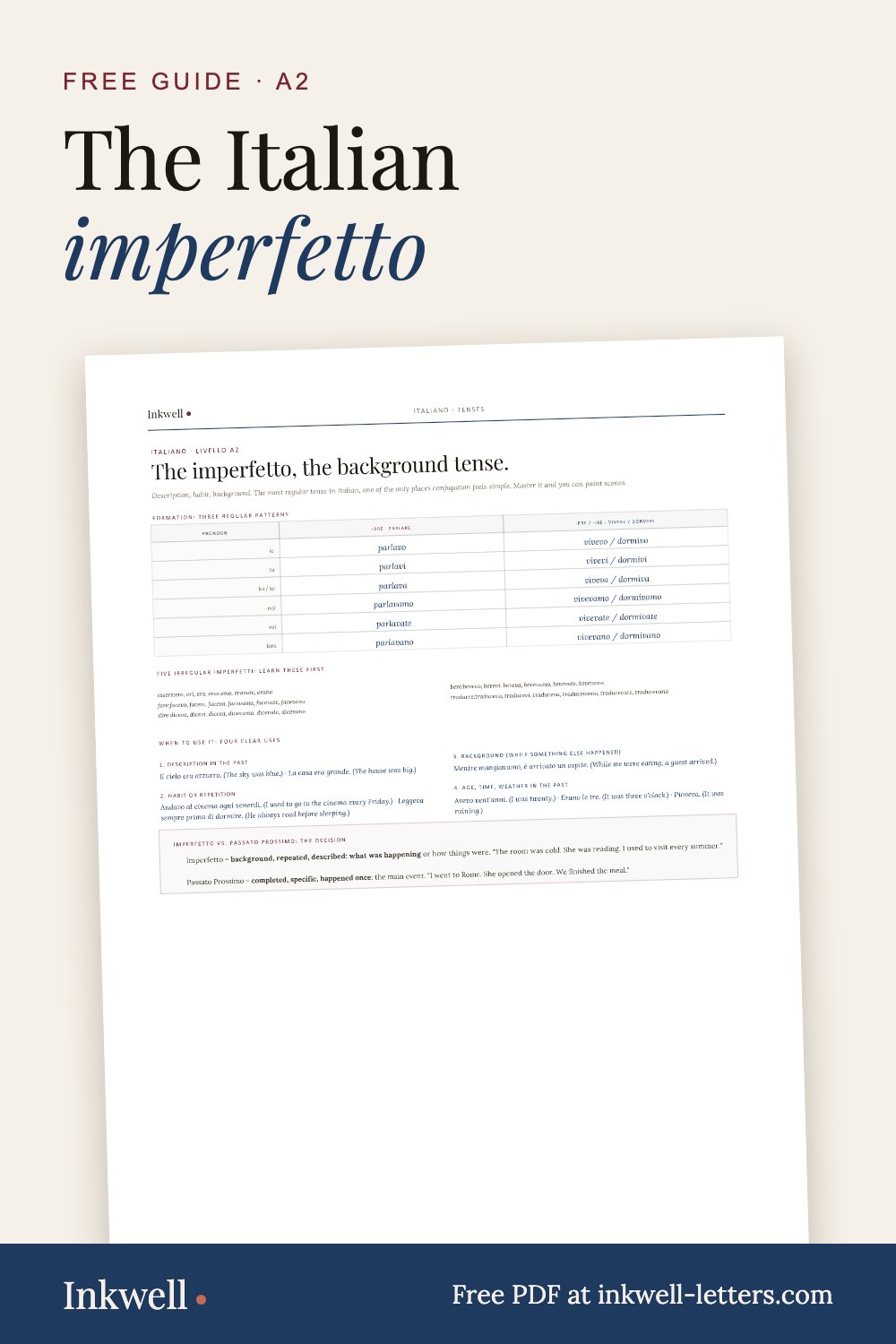 The Imperfetto: Italian's Background TenseGuide, Italian
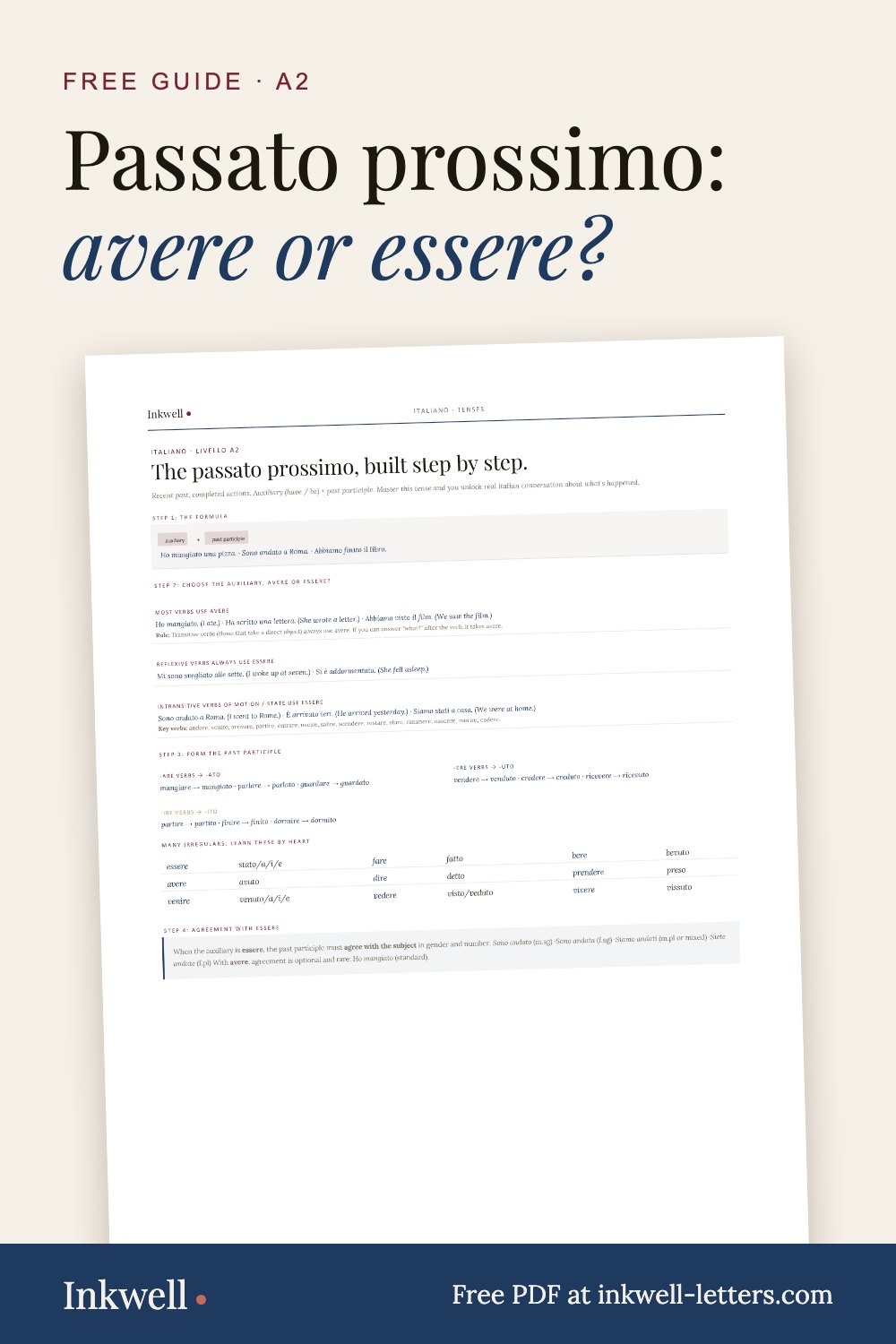 The Passato Prossimo, Built Step by StepGuide, Italian
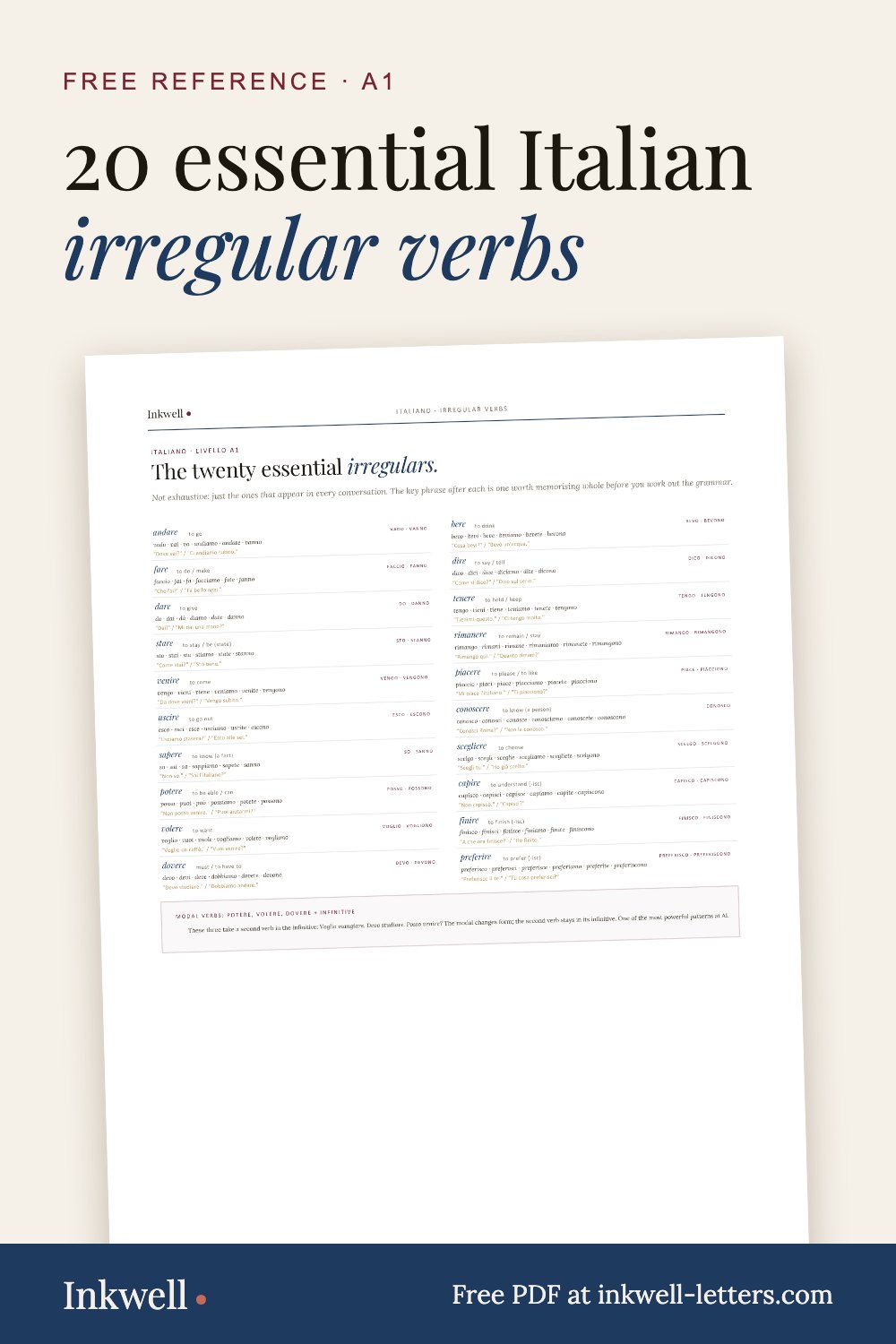 The Twenty Essential Italian Irregular VerbsReference, Italian
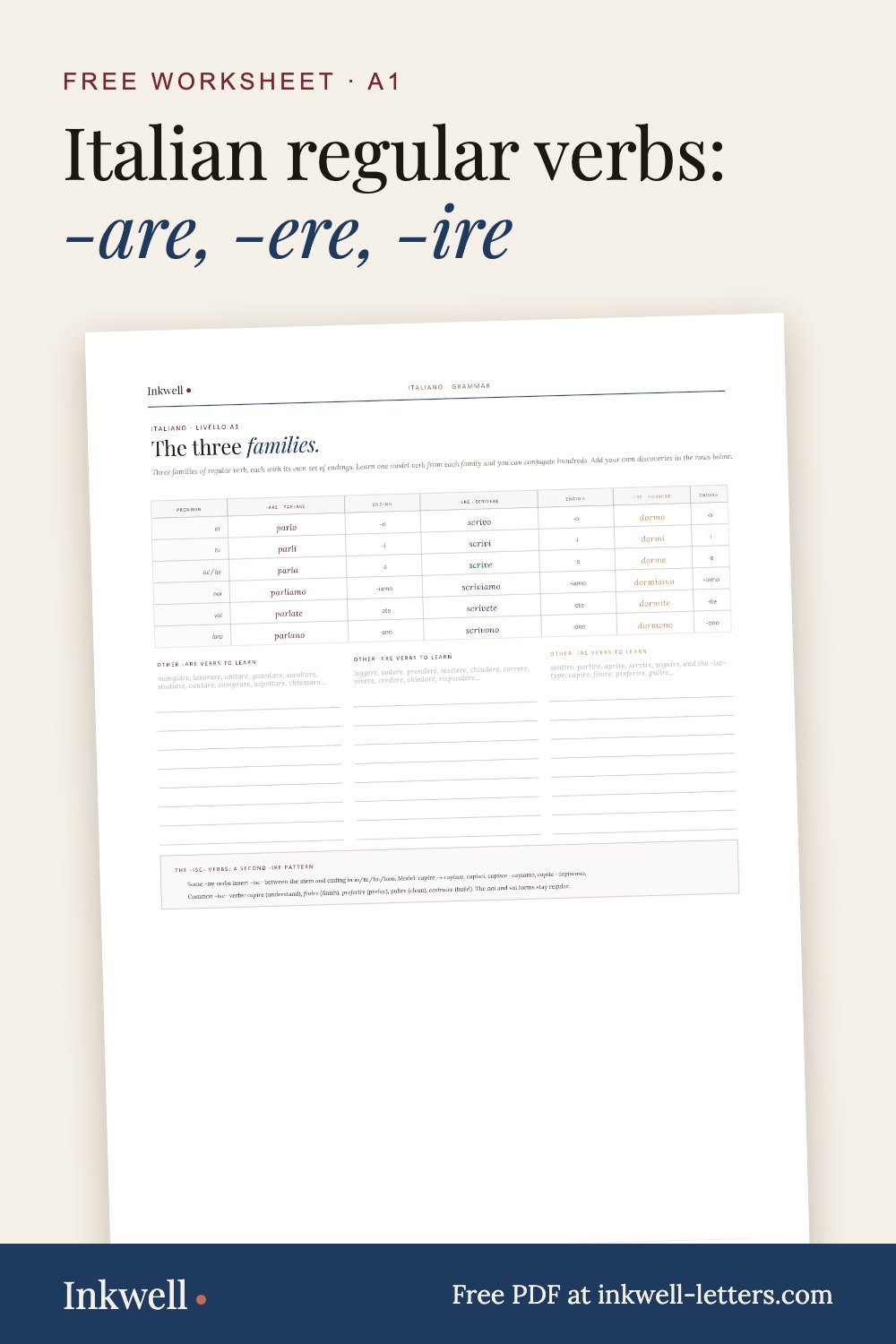 Italian Regular Verbs: The Three Families (-are, -ere, -ire)Worksheet, Italian
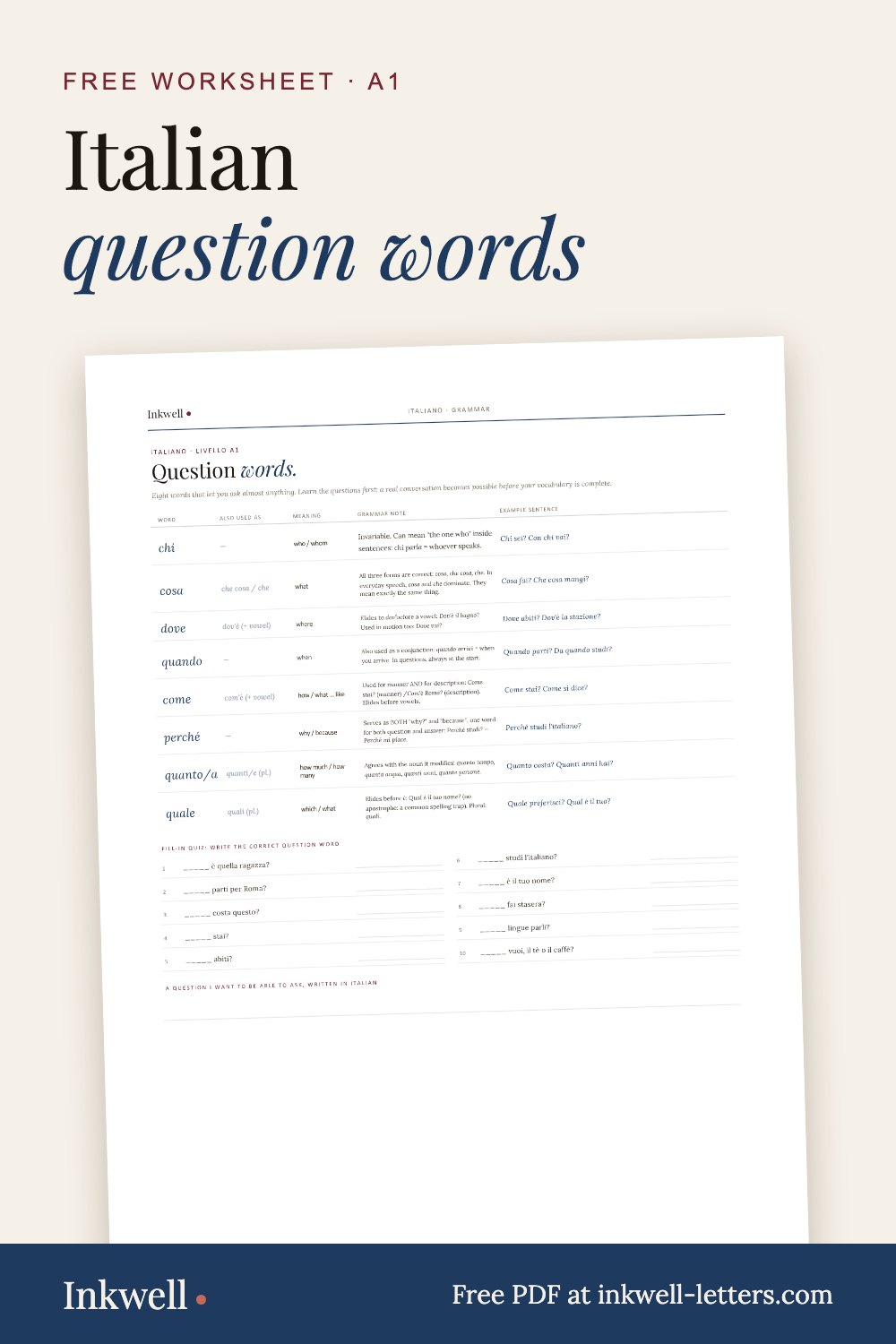 Italian Question Words: Chi, Cosa, Dove, Quando and MoreWorksheet, Italian