Printable PDF · Italian · B1
Il Condizionale: The Italian Conditional for Wishes, Hypotheses and Politeness
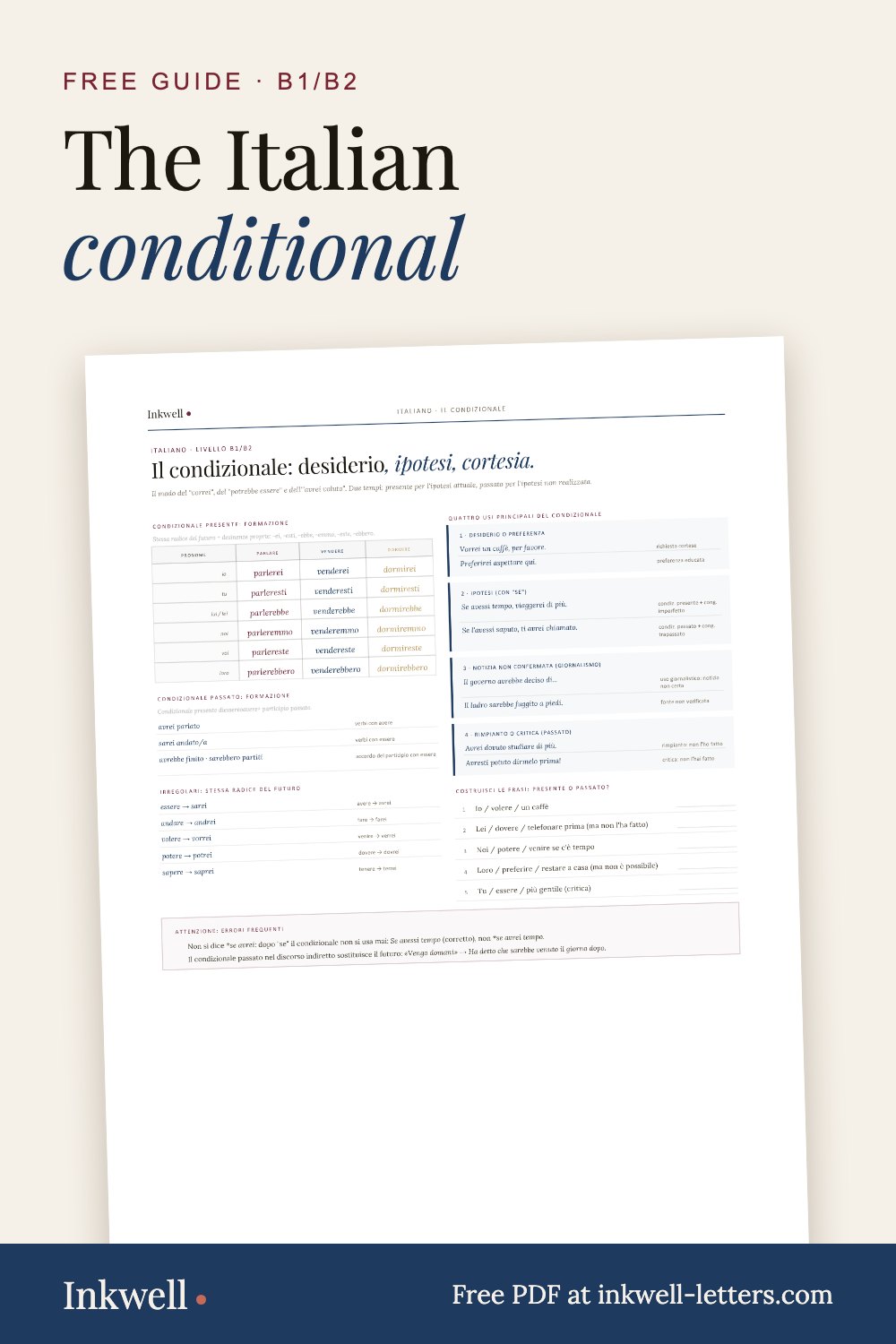
A free B1/B2 guide to the Italian conditional: present and past forms, the irregular stems, its four main uses from polite requests to unconfirmed news, and the classic mistake after "se".
Leave your email once and every worksheet on the Dispatch unlocks on this device. We’ll also send you new worksheets and articles. Unsubscribe at any time.
Vorrei, potrebbe, avrei voluto: the conditional is the mood Italians use to ask politely, imagine, and regret. It’s also the form that makes a formal letter sound courteous, so it’s worth learning both of its tenses properly.
What’s inside
- Present conditional: the full pattern for parlare, vendere and dormire (parlerei, venderei, dormirei)
- Past conditional: avrei parlato with avere, sarei andato/a with essere, and participle agreement
- Ten irregular stems, the same as the future: sarei, avrei, andrei, farei, vorrei, verrei, potrei, dovrei, saprei, terrei
- Four main uses, each with two examples:
- wishes and polite requests: Vorrei un caffè, per favore
- hypotheses with se: Se avessi tempo, viaggerei di più
- unconfirmed news, as in newspapers: Il ladro sarebbe fuggito a piedi
- regret or criticism: Avrei dovuto studiare di più
- Five sentences to build, choosing present or past
- Two frequent mistakes, including the conditional in reported speech
How to use it
- Learn the ten irregular stems first. If you know the future, you already know them.
- Read the four uses aloud and say what each example means in English.
- Build the five sentences on the sheet, then check which ones needed the past.
- Rewrite two requests from your last email or letter with vorrei or potrebbe.
An example in Italian
Potrebbe dirmi se la camera è ancora libera? Vorrei prenotarla per marzo.
(Could you tell me if the room is still free? I’d like to book it for March.)
Potrebbe is the conditional of potere in the formal Lei form. It turns a question into a polite request.
Who it’s for
B1 and B2 learners who want their requests to sound polite and their hypotheses correct. To use it in real letters with a native teacher, you can learn Italian by letter.
More free worksheets
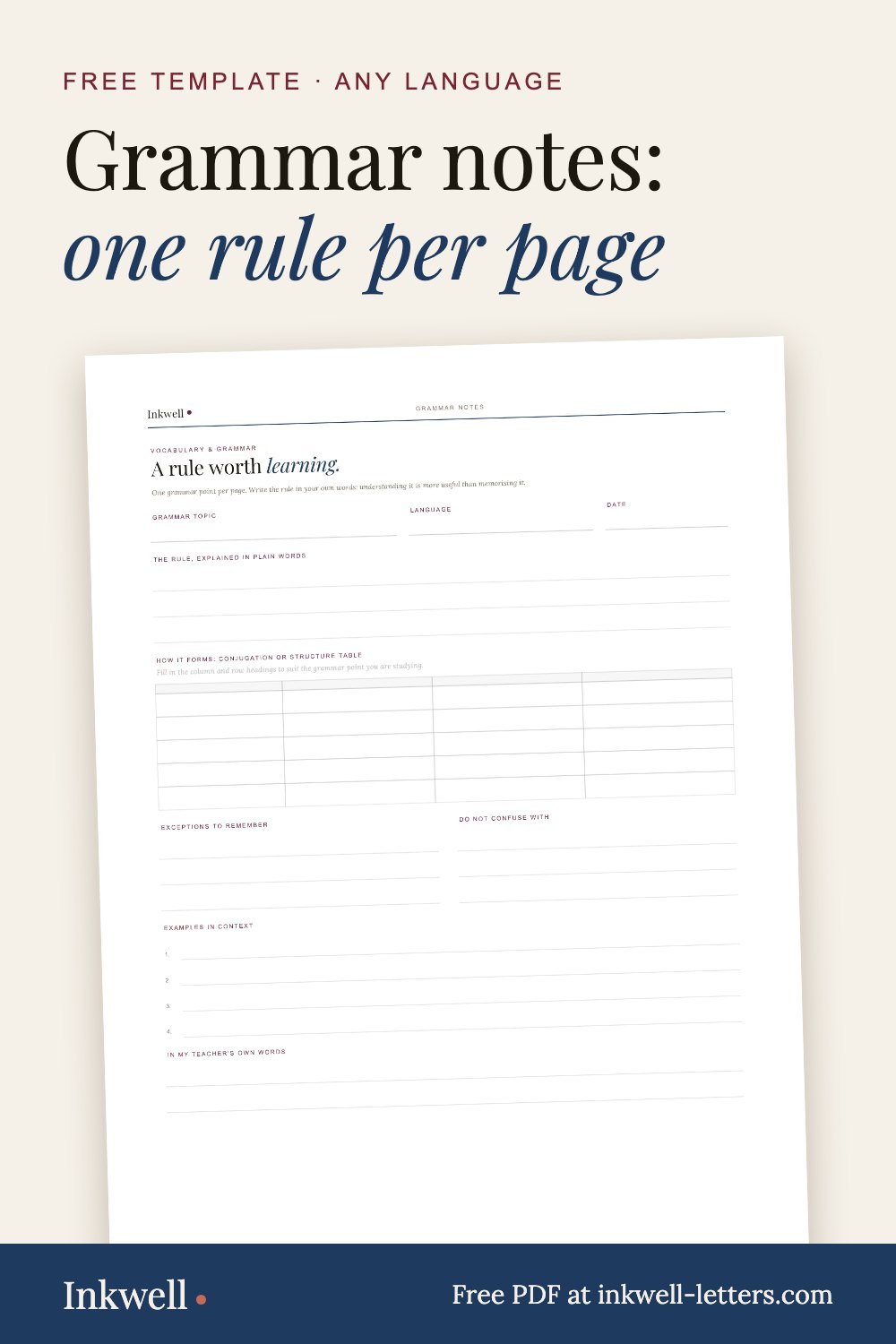 Grammar Notes Template: One Rule per PageTemplate, any language
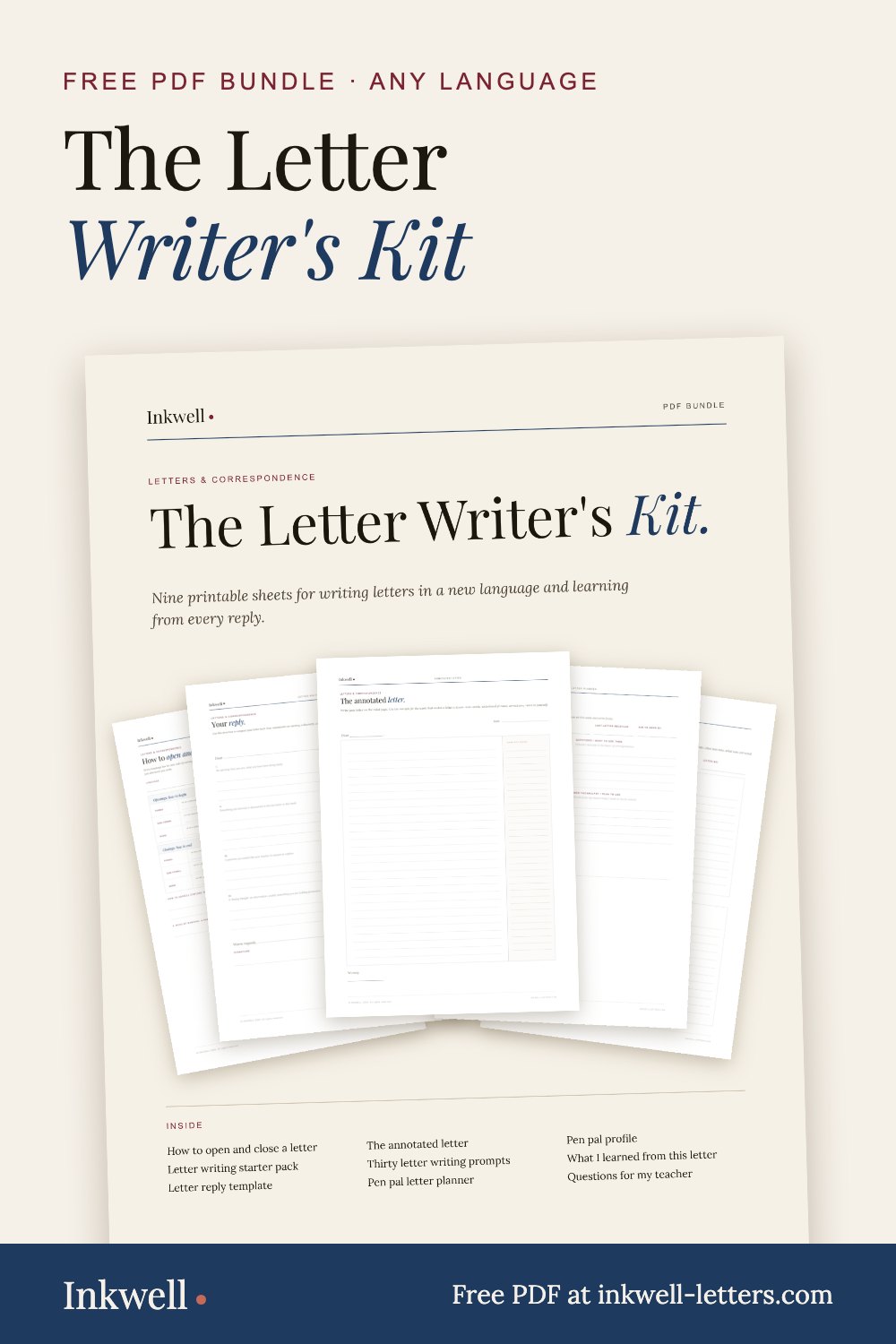 The Letter Writer's Kit: Nine Printable Sheets in One BundleBundle, any language
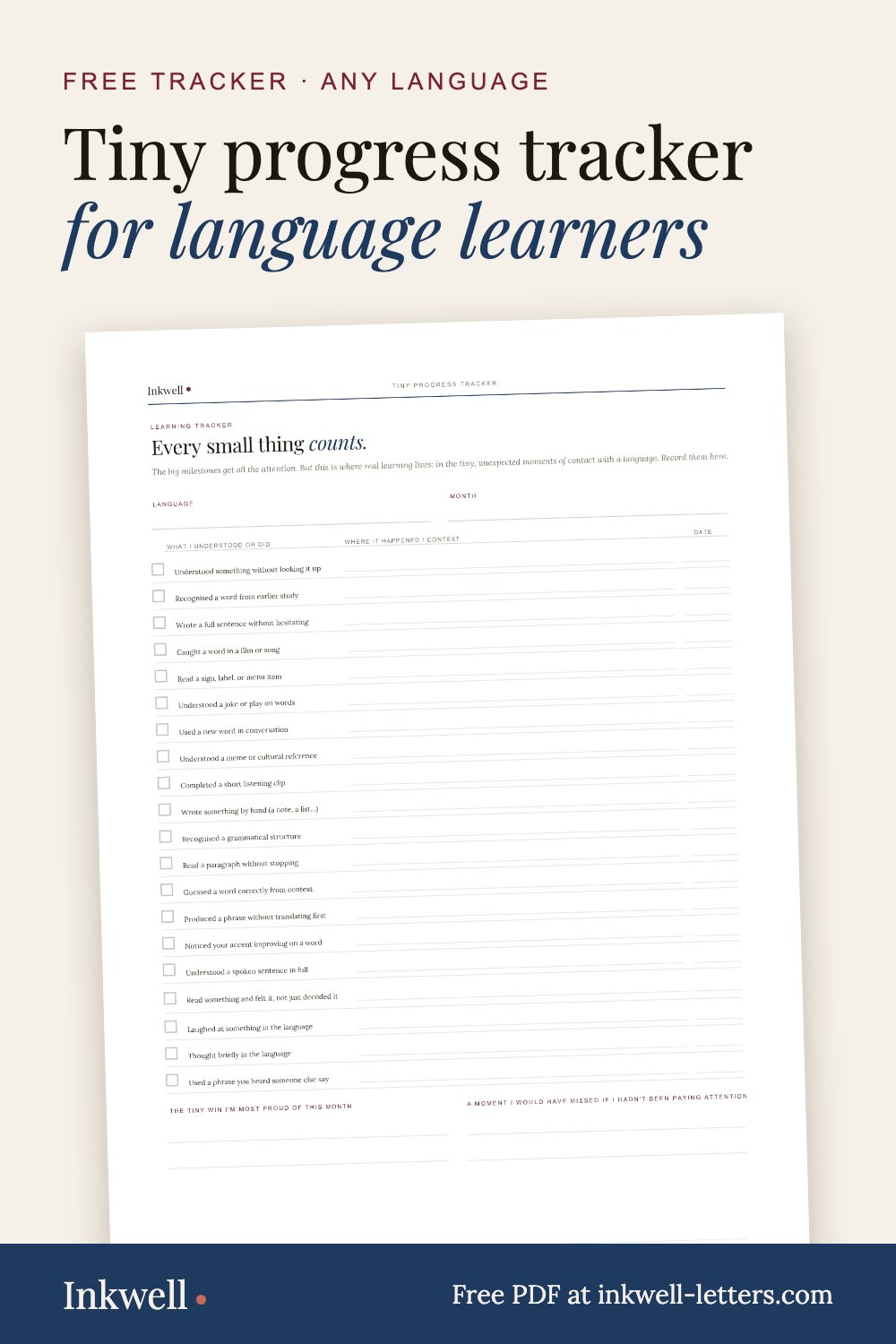 Tiny Progress Tracker: The Small Wins of Language LearningTracker, any language
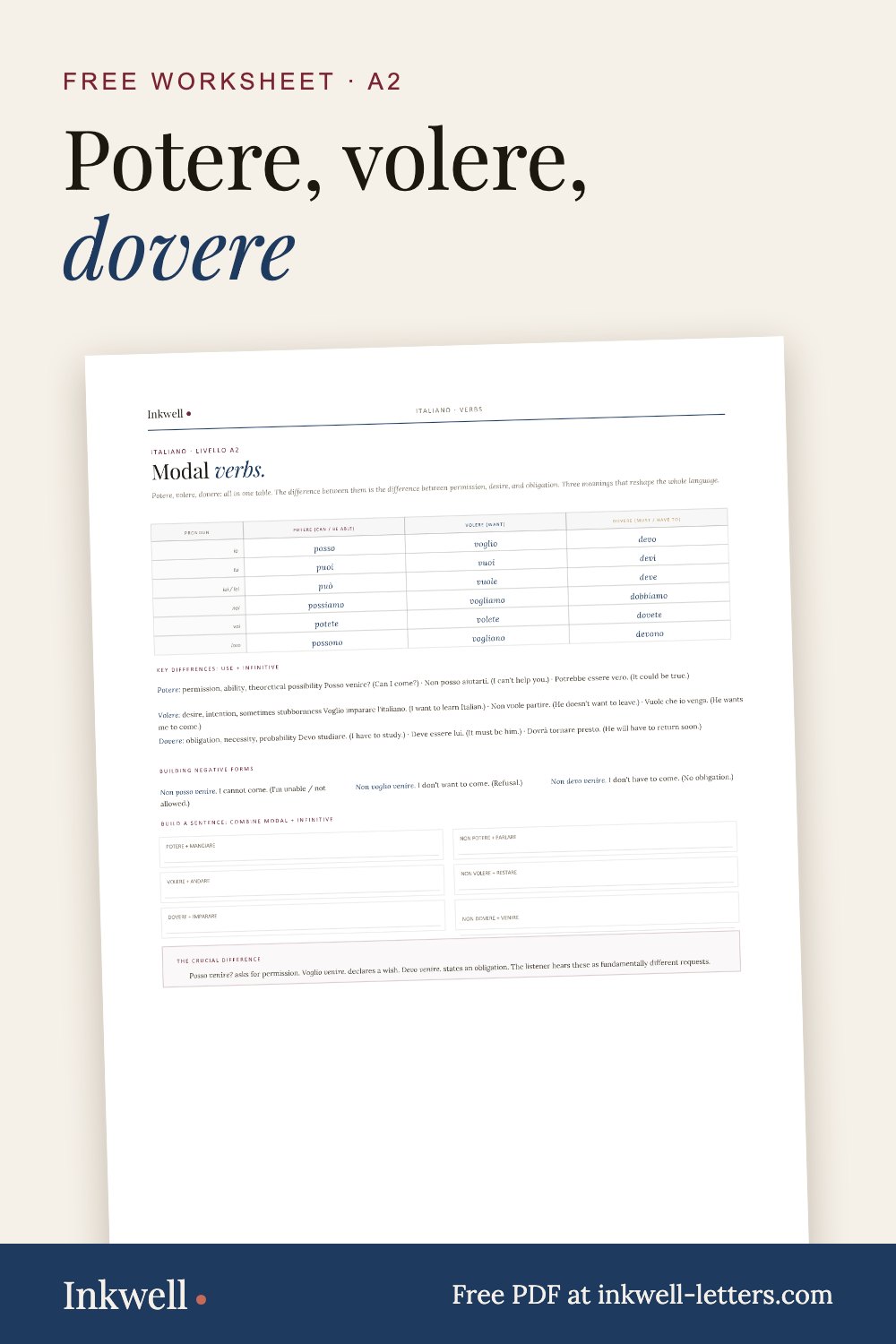 Italian Modal Verbs: Potere, Volere, DovereWorksheet, Italian
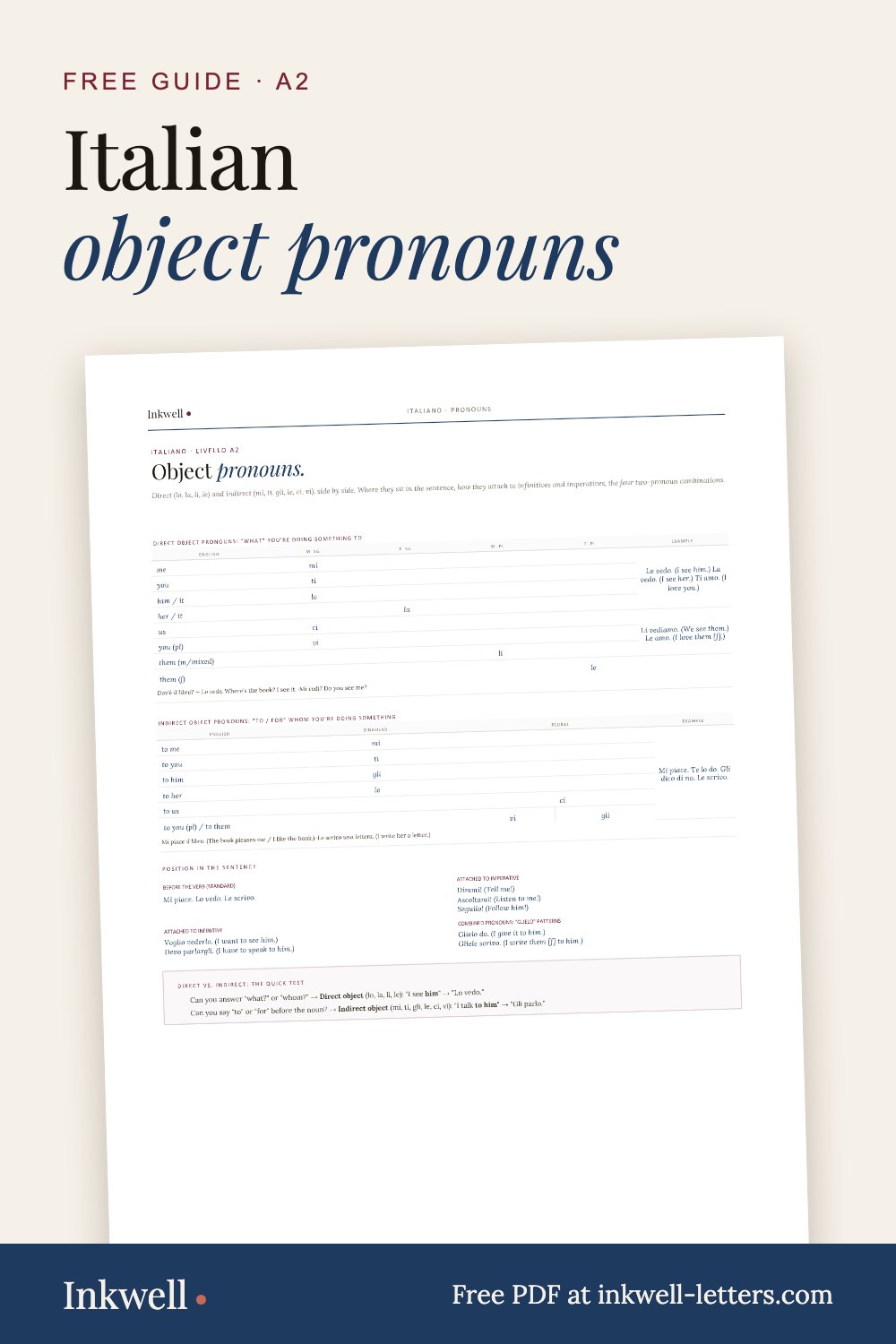 Italian Object Pronouns: Direct, Indirect and GlieloGuide, Italian
Comments