Printable PDF · Italian · A1
Italian Greetings and Small Talk: A1 Cheat Sheet
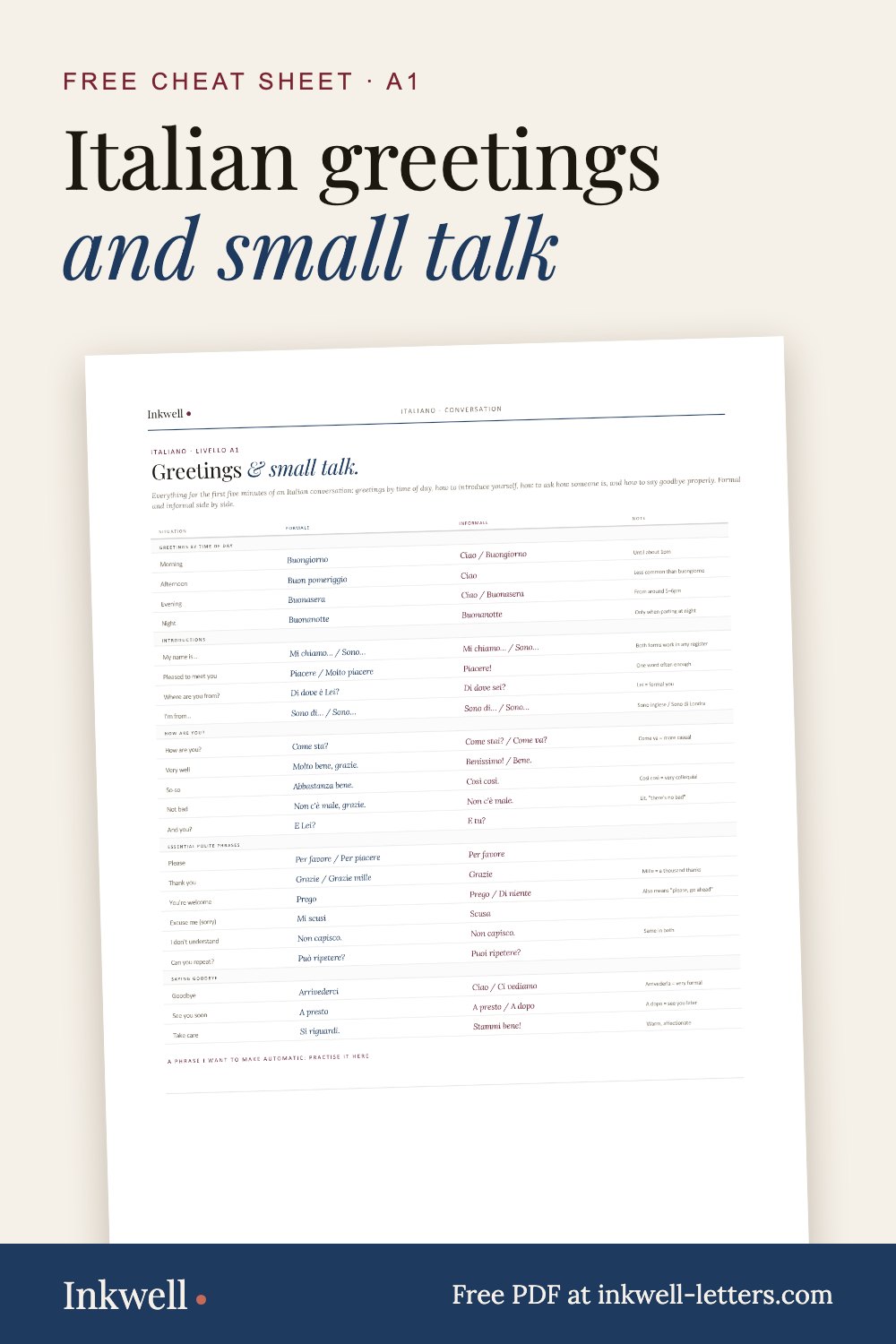
A free one-page cheat sheet for the first five minutes of any Italian conversation: greetings by time of day, introductions, how are you and goodbyes, formal and informal side by side.
Leave your email once and every worksheet on the Dispatch unlocks on this device. We’ll also send you new worksheets and articles. Unsubscribe at any time.
The first five minutes of a conversation in Italian follow a script, and the script changes with the clock and with the person in front of you. Buongiorno at the bakery in the morning, buonasera from late afternoon, ciao only with people you would call by their first name. This sheet puts that script on one page.
What’s inside
- Greetings by time of day: buongiorno, buon pomeriggio, buonasera, buonanotte, with a note on when each one starts
- Introductions: mi chiamo, sono, piacere, di dove sei? and how to answer
- How are you: come sta? and come stai?, plus five honest answers from benissimo to così così
- Polite phrases: please, thank you, you’re welcome, excuse me, I don’t understand
- Goodbyes: from the formal arrivederci to a warm stammi bene
Every line has a formal column (with Lei) and an informal one (with tu), and a short note where the difference matters.
How to use it
- Read the formal column aloud first. It is the safer default with strangers, shopkeepers and anyone older than you.
- Cover the Italian and try to produce each phrase from the English.
- Use the box at the bottom to write the one phrase you want to make automatic this week.
- Next time you write a letter or message in Italian, open it with a greeting from this sheet.
An example in Italian
Buonasera! Mi chiamo Sarah, sono di Boston. Piacere. E Lei, di dov’è?
(Good evening! My name is Sarah, I’m from Boston. Nice to meet you. And you, where are you from?)
Notice Lei with a capital L: in writing, the formal “you” is often capitalized as a mark of respect.
Who it’s for
Beginners at A1 and anyone about to travel to Italy. It also works as a refresher for learners who know the words but still hesitate between tu and Lei. If you’d like to practice these openings in real correspondence, you can learn Italian by letter with a native teacher.
More Italian vocabulary
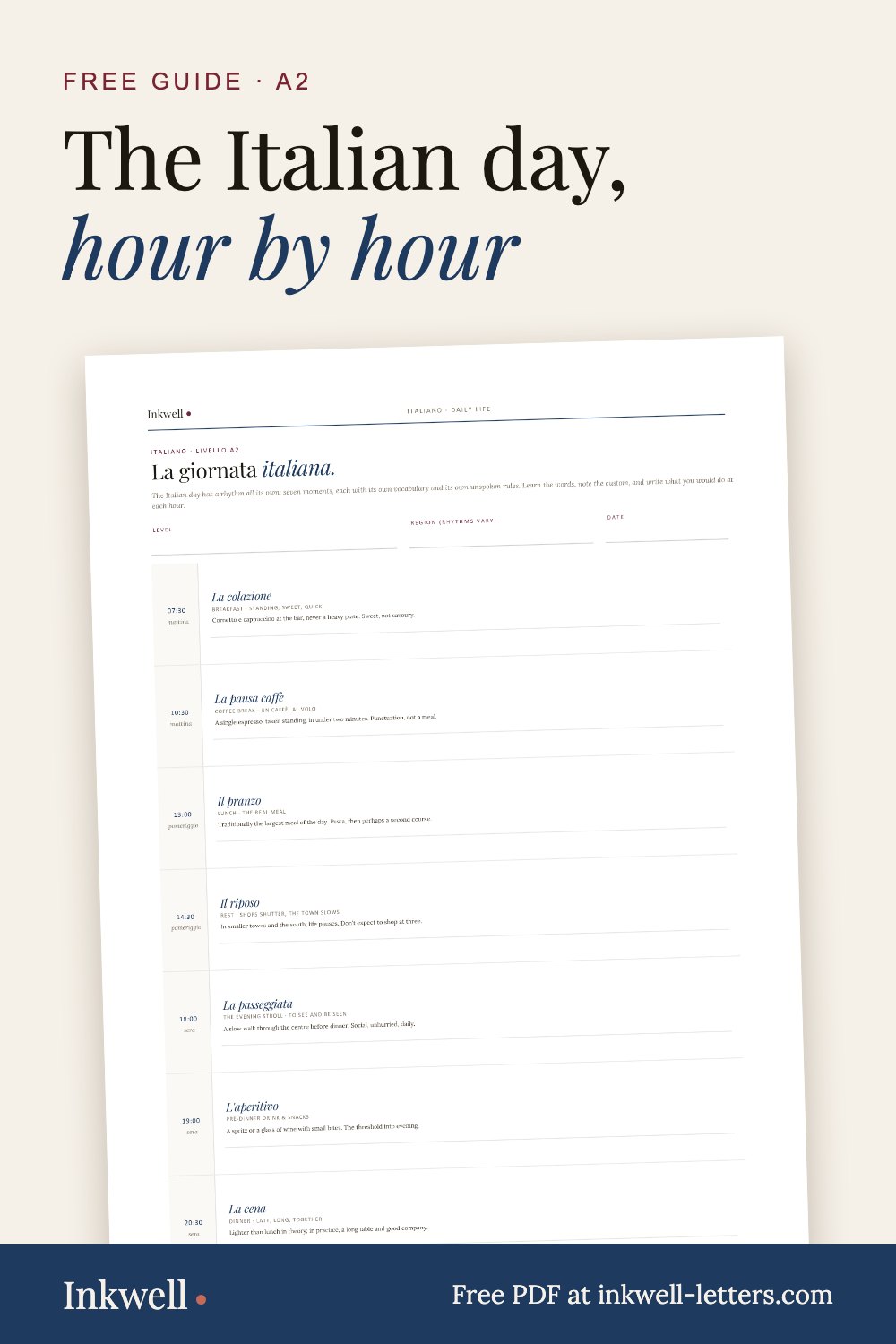 La Giornata Italiana: The Rhythm and Vocabulary of an Italian DayGuide, Italian
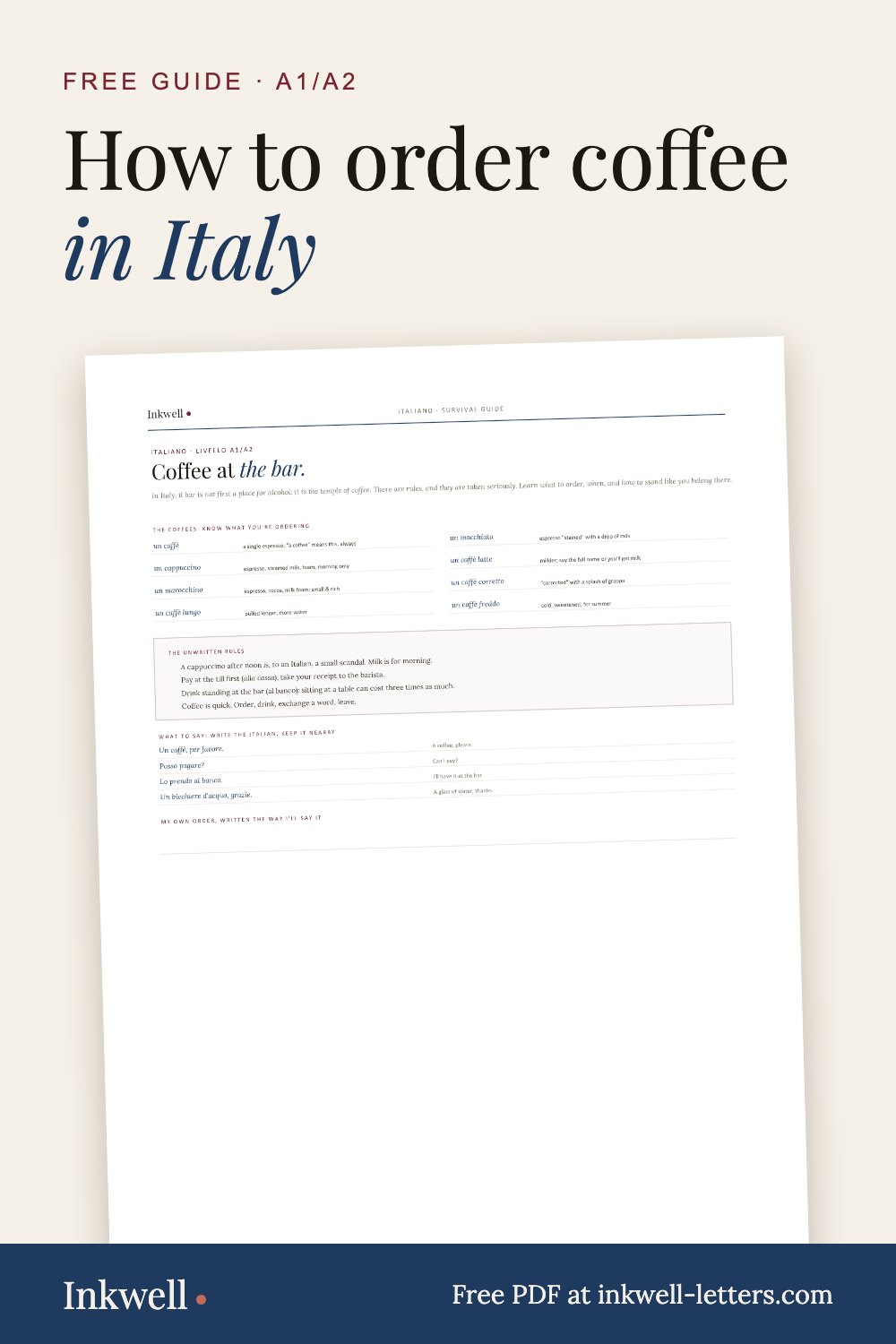 How to Order Coffee in Italy: A Survival Guide to the BarGuide, Italian
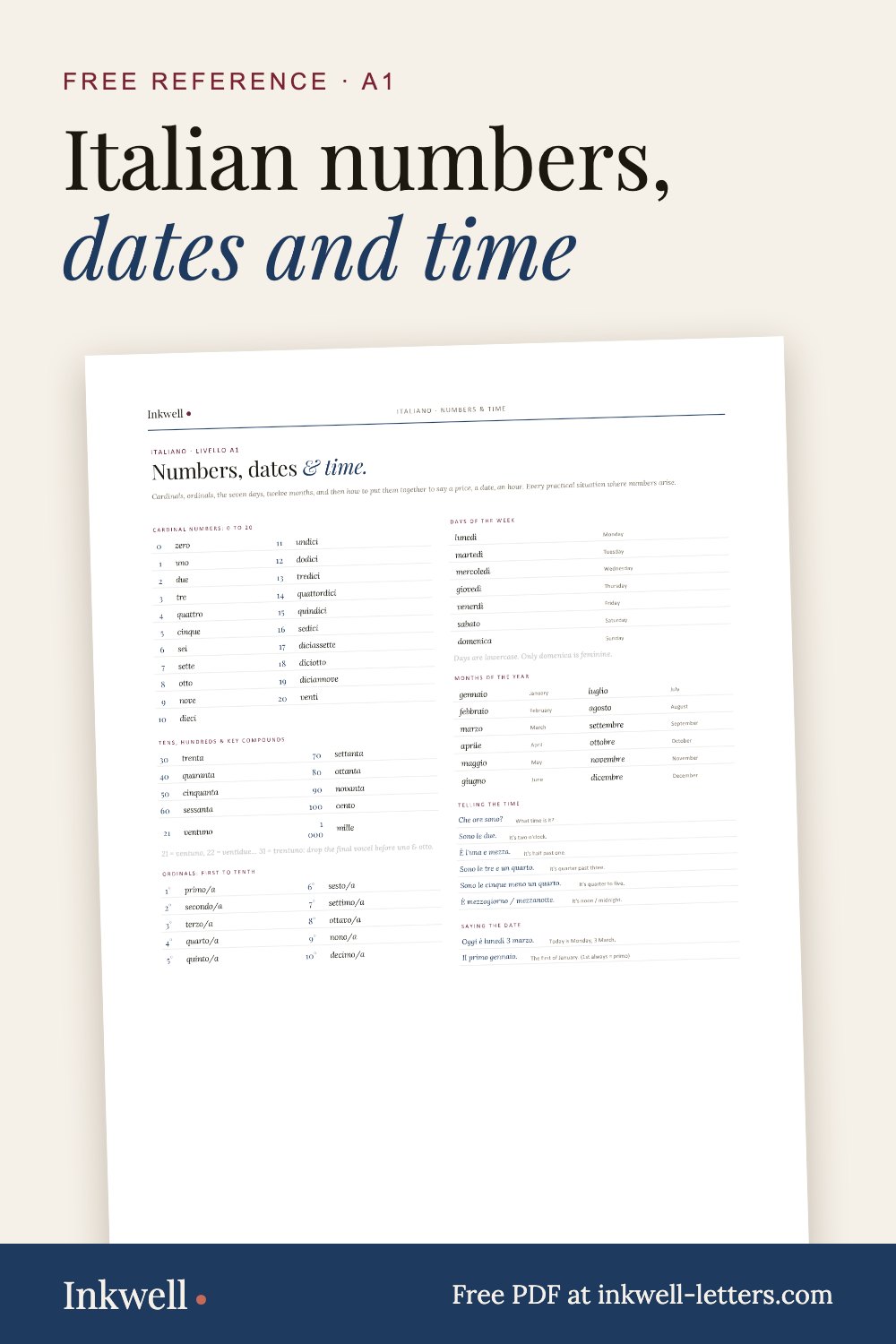 Italian Numbers, Dates and Time: A1 Reference SheetReference, Italian
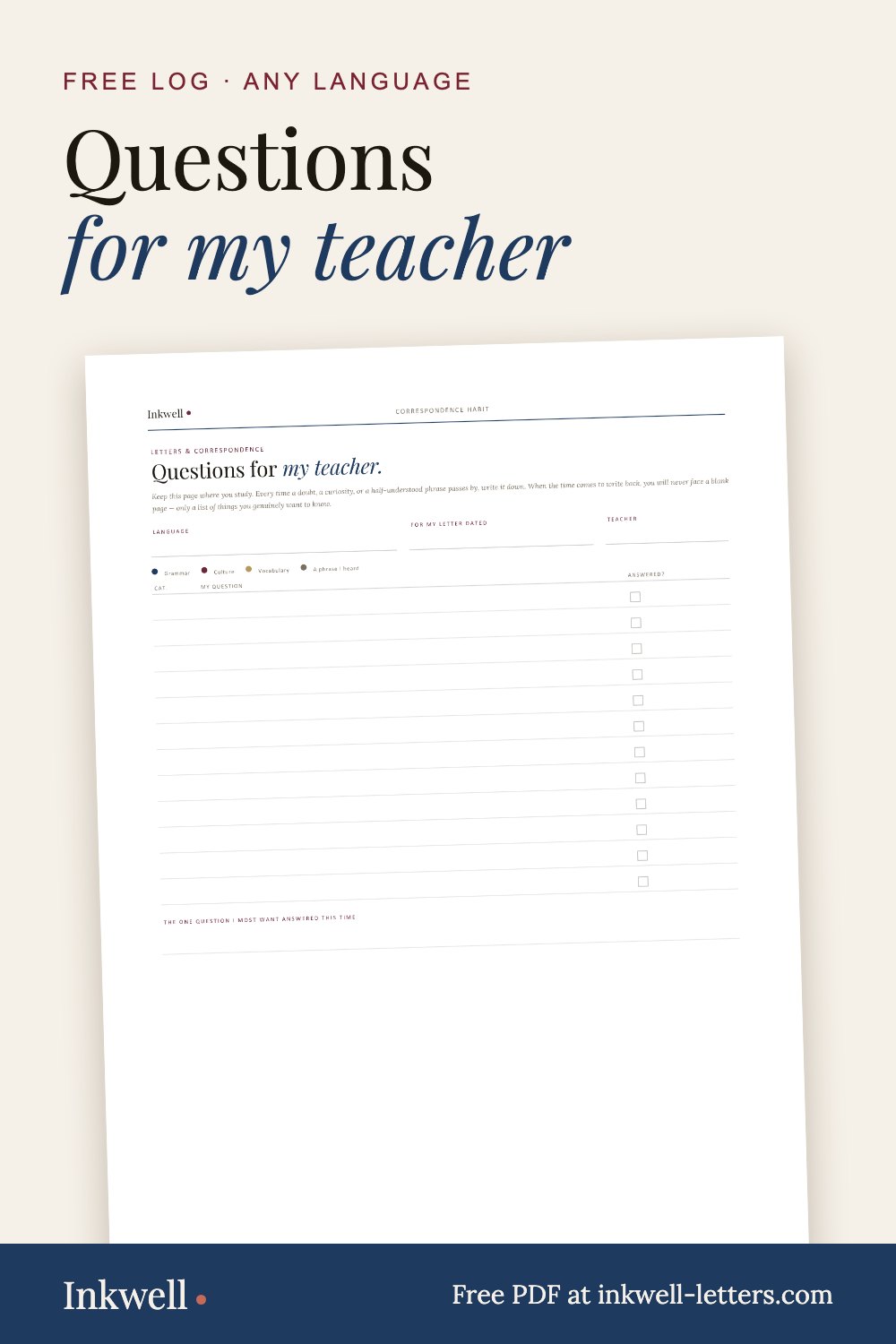 Questions for My Teacher: A Running LogLog, any language
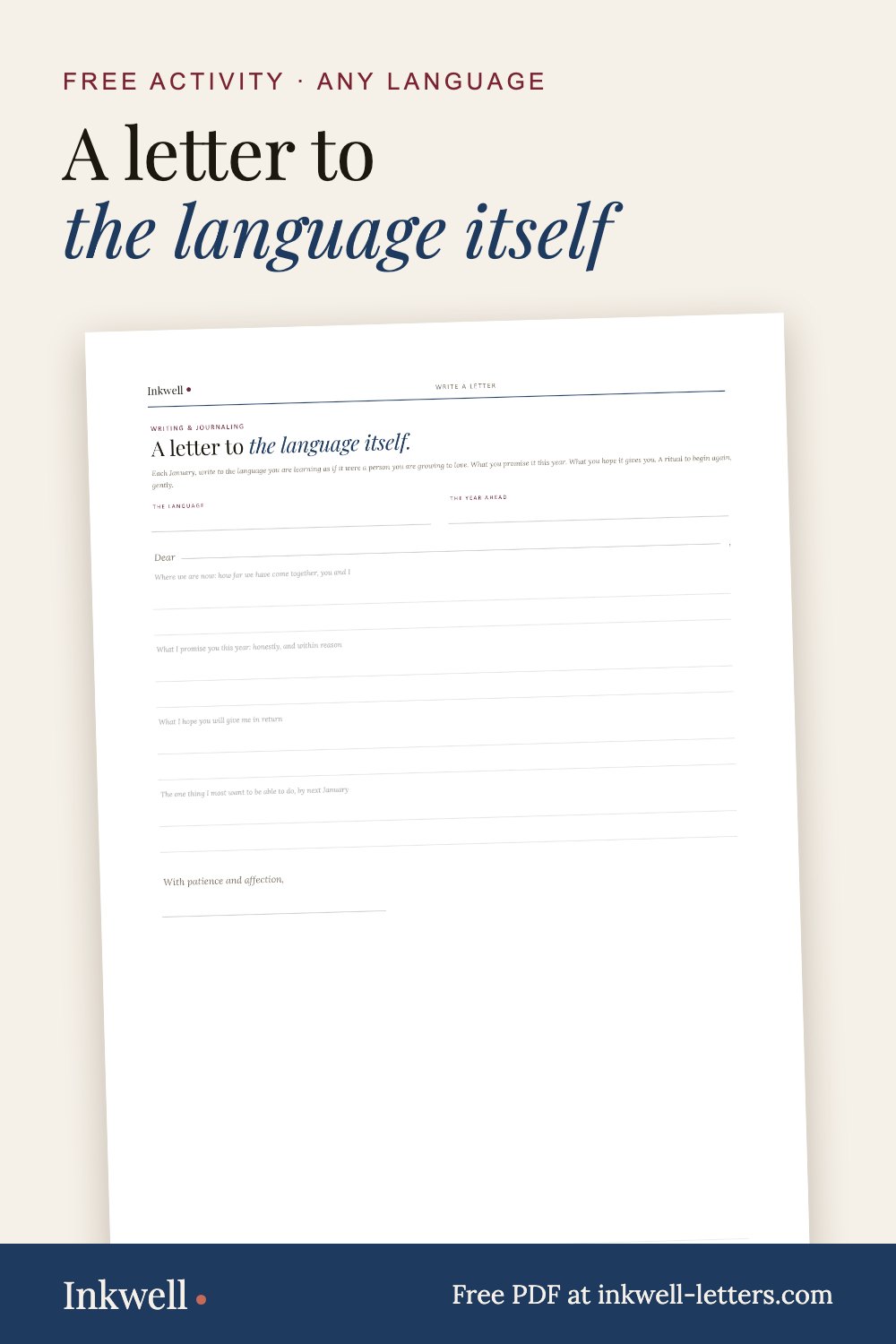 A Letter to the Language ItselfActivity, any language