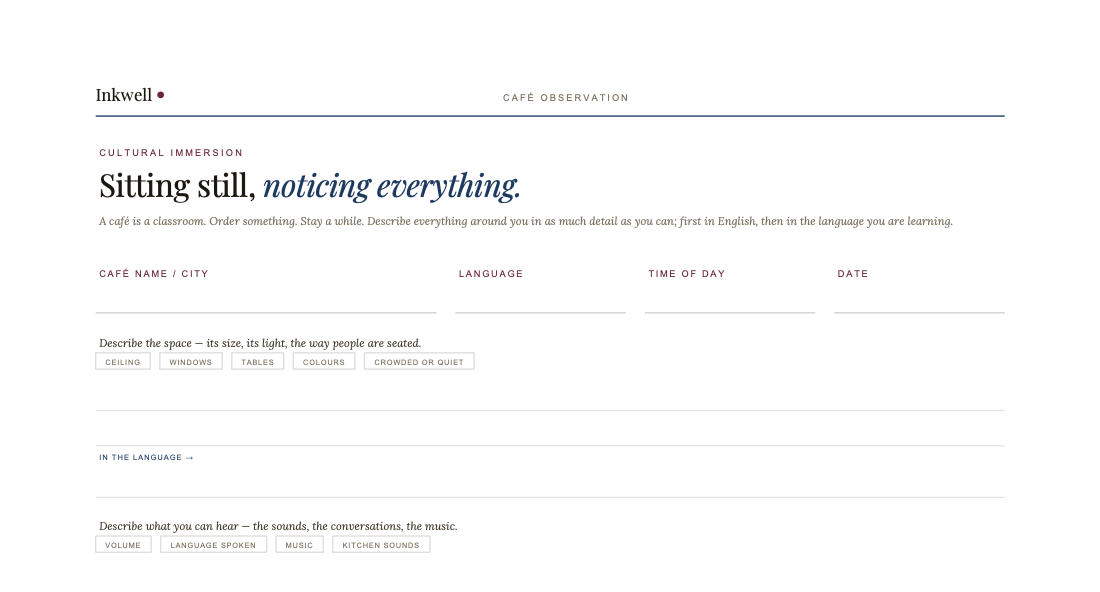
A café is one of the best classrooms you can find: real conversations, real menus, and nobody expecting you to perform. This worksheet asks you to order something, stay a while and describe everything around you in detail, first in English and then in the language you are learning.
What's inside
A header for café, city, language, time and date, then four guided descriptions:
- The space: ceiling, windows, tables, colors, crowded or quiet
- What you can hear: volume, languages spoken, music, kitchen sounds
- What you ordered: cup or glass, color, temperature, taste, price
- A person nearby, described without identifying details: posture, what they're doing, their mood
Each section ends with a line for your target language, and the page closes with one question: what did you notice that you would have missed while looking at a screen?
How to use it
- Leave your phone in your bag for the whole visit.
- Fill the English prompts in single words while you sit.
- Write the target-language sentences there and then, or at home the same day.
- If you are abroad, try ordering in the language first and note the exact words you used.
An example in Italian
Il bar è piccolo e rumoroso: la macchina del caffè fischia, due signori parlano di calcio al bancone e io bevo un cappuccino tiepido vicino alla finestra.
(The café is small and noisy: the coffee machine hisses, two men talk about soccer at the counter, and I drink a lukewarm cappuccino by the window.)
In Italy il bar is the everyday café, and standing al bancone (at the counter) is often cheaper than sitting at a table.
Who it's for
Learners from A2 upward, at home or traveling. It builds the descriptive vocabulary that everyday conversation and letters rely on. If you'd like a native teacher to read what you write and send it back with corrections, you can learn Italian by letter.